Dakbokkeumtang, the Spicy Korean Chicken Stew That Runs Itself
Jump to recipe ↓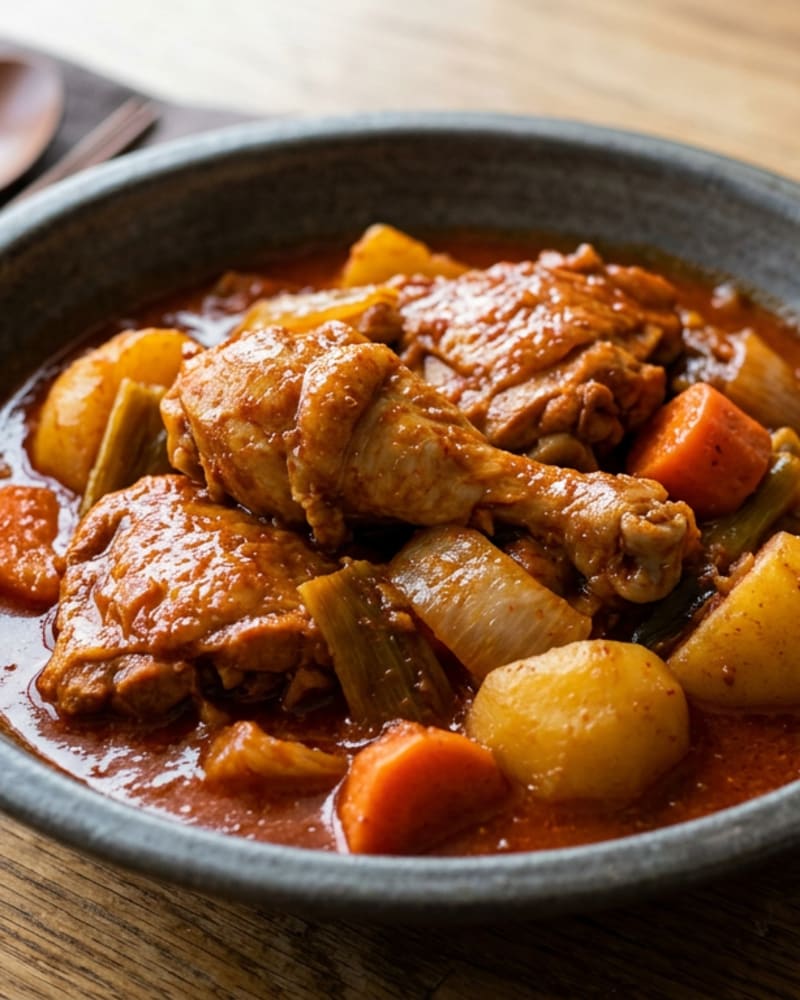
It is 6:30 on a Sunday, the kind of evening where the cold has opinions and you want a pot that bubbles for you. This dakbokkeumtang recipe is a spicy Korean chicken stew with potatoes, carrots and onion, braised in gochujang until the sauce clings to everything. It is the dinner for the day that went badly, because it is warm, it is red, and it never asks how you are doing. It asks only that you turn on one burner and then leave it alone.
Brown the chicken, build the sauce, and walk away for 25 minutes.
The work is all up front, before the lid goes on. You cut the potatoes and carrots into bite-size pieces, dice the onion, and mince the garlic. The chicken browns in a large pot over medium heat for 8 minutes, then the vegetables go in for 4 minutes. The sauce is only three things stirred together: gochujang, soy sauce and garlic.
Pour that over the chicken and vegetables, add enough water to barely cover, put the lid on and simmer for 25 minutes. The rice cooks in the meantime. What you serve is chicken that falls apart under a spoon, potatoes that have soaked up the sauce, and a pot that smells like you know what you are doing.
The rice is part of the dish, and the recipe says to cook it according to the package while the stew simmers. Start the rice when the lid goes on the pot, and both will be ready together. This dakbokkeumtang recipe is built around that overlap.
What you need
- 2 lb chicken thighs
- 3 potatoes, bite-size pieces
- 2 carrots, bite-size pieces
- 1 onion, diced
- 3 tbsp gochujang
- 2 tbsp soy sauce
- 4 cloves garlic, minced
- 4 cups rice
- 1 tsp salt
- 1 tsp black pepper
How to make it
- Cut the 3 medium potatoes and 2 medium carrots into bite-size pieces and dice the 1 large onion, which takes about 8 minutes.
- Mince the 4 garlic cloves and set aside.
- Brown the 2 lbs chicken thighs in a large pot over medium heat for 8 minutes.
- Add the chopped potatoes, carrots, and onion to the pot and stir for 4 minutes.
- Stir together the 3 tbsp gochujang, 2 tbsp soy sauce, and minced garlic, then pour the mixture over the chicken and vegetables.
- Add enough water to barely cover the ingredients, cover the pot, and simmer for 25 minutes.
- Cook the rice according to package directions, about 20 minutes. Keep warm.
- Taste and adjust with salt and black pepper if needed, then serve hot over the 4 cups cooked rice.
Notes
Cooked leftovers keep three to four days refrigerated, per USDA FSIS. The stew reheats well in a pot over low heat with a splash of water, and the potatoes keep their shape better if you do not boil it hard.
Potatoes can turn grainy after freezing, so this is a stew to eat from the fridge instead of the freezer. If you want to freeze it, freeze the chicken and sauce and cook fresh potatoes when you reheat.
Chicken should reach 165°F, the USDA safe minimum for poultry. After 8 minutes of browning and 25 minutes of simmering it should be well past that, but a thermometer in the thickest piece tells you for sure.
Gochujang varies from brand to brand, so taste at the end before you reach for the salt and pepper.
Swipe it into your week on SwipeCart and the agent has the gochujang in the cart before you have finished deciding whether tonight is a stew night. You still have to make the commitment, but at least the pantry is not standing in the way of it.
If you want the dakbokkeumtang recipe to feel more like the versions you may have eaten out, you can add a handful of sliced scallions at the end. They are not part of this version, but they bring a little fresh bite against the heat.
Swaps that actually work
The chicken thighs and the gochujang are the point. Thighs stay juicy and tender through a 25-minute simmer and give the sauce body. Leave them alone, and leave the gochujang alone. Without it you have a chicken and potato stew, which is a different dinner.
Potatoes can be any waxy or all-purpose type, cut into similar-sized pieces so they cook together. The carrots can be swapped for a bit of extra onion or other firm vegetables. Bone-in pieces, such as drumsticks, also work in place of the thighs, though the sauce will be a little looser.
If you want the stew milder, stir in a little extra soy sauce and water at the end, or serve it with plain rice and a side of cool vegetables. If you want it hotter, there is nothing stopping you from adding some chili flakes, though it changes the dish.
Swapping the chicken for a lean cut is the kind of choice you make when you want the date to end early.
One more thing to watch: the water. The recipe says to barely cover, and it means it. If the pot looks like soup at the start, it will be a thin sauce at the end, so take a little out with a ladle before you cover the pot.
If it goes wrong
The sauce is too thin. There was too much water, or the lid was too tight. Take the lid off, simmer for a few more minutes, and stir gently until it clings to the chicken.
The potatoes are mush. They were cut too small or simmered too hard. Next time, cut them larger. For now, spoon some of the sauce over the top and serve it as a thicker stew.
It is too spicy. Stir in a splash of water and a little soy sauce, and serve it over a generous bed of rice to soften the heat.
The bottom is scorching. Gochujang has sugar in it, and it can catch on the pot. Lower the heat and scrape with a wooden spoon, adding a splash of water if needed.
The sauce is flat. Taste it and add salt a pinch at a time. Soy sauce can help if you want depth rather than sharpness.
What to serve with it
Steamed rice is the default and it is already part of the plan. The better version is a bowl of rice with the sauce spooned over, so each bite is balanced between heat and plain.
A cold side such as cucumber, a simple lettuce salad or kimchi lifts the plate. A fried egg on top is not part of the recipe but suits it well.
It works as lunch the next day. Reheat it gently with a splash of water.
The dakbokkeumtang recipe is an easy way to make one pot feel like a whole dinner. Meat, potato, carrot and rice are all in the same sitting, and the sauce brings them together.
Why this one earns its place
This is the stew for the evening you want something to simmer in the corner while you do your own thing, the kitchen turning slowly red and garlicky and the lid rattling now and then like a pot clearing its throat. Put it on and you are free to answer a text, change out of your work clothes, or flirt with the idea of a second bowl. The pot does the managing, so you can do the lingering.
When you swipe it into your week, the agent shops the chicken, the potatoes, the carrots and the gochujang, so the only job left is the browning.
If you like this kind of braise, try Andong Jjimdak, Korean Fried Chicken, or use up what is left in the fridge with some thoughts on meal planning and food waste.
More like this: all Korean recipes in Crave Corner.