Dak Galbi With Chewy Rice Cakes and a Red, Sticky Skillet
Jump to recipe ↓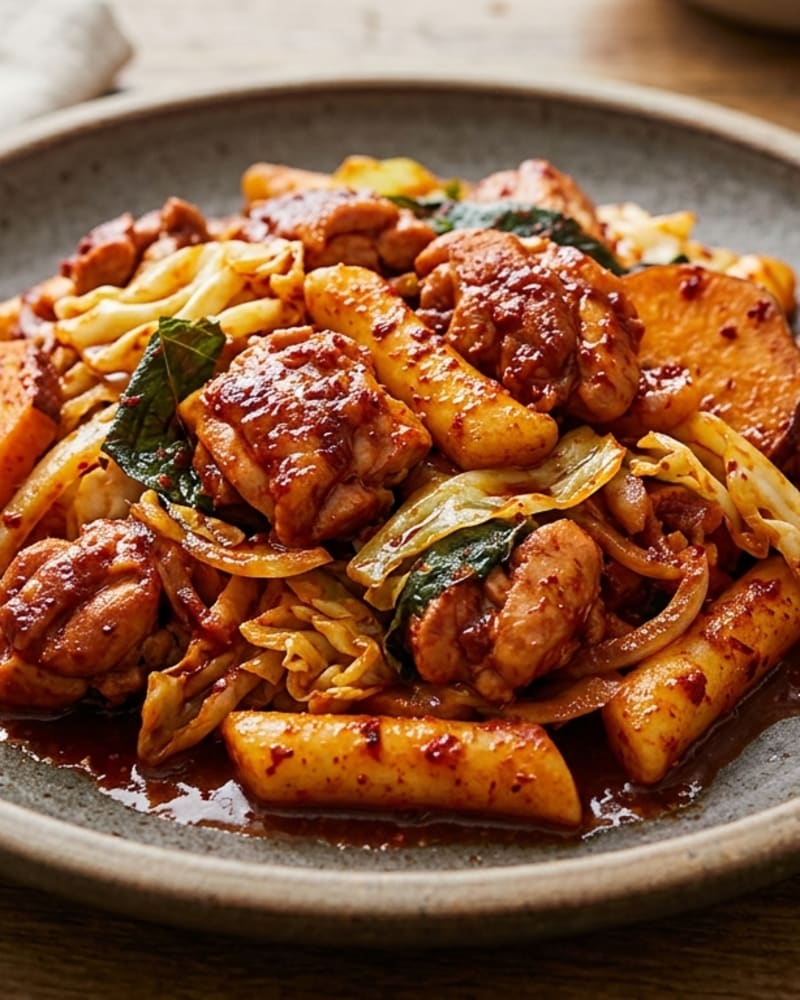
It is 6:40 on a Friday, the week has been a lot, and you want something red, loud and a little bit messy. This dak galbi recipe is a one-skillet argument for ordering nothing: chicken thighs in gochujang, chewy rice cakes, and cabbage that wilts into the sauce. It is the dinner you make when you want to be the interesting one, and we won't tell anyone it took one pan.
Marinate while you chop, then let the skillet do the talking.
The prep is quick. You mince 4 cloves of garlic, cut 2 cups of cabbage into bite-size pieces, and stir the chicken with 3 tbsp of gochujang, the garlic and 2 tbsp of soy sauce. Ten minutes at room temperature is the whole marinade. The chicken goes into a hot skillet for 8 minutes of stirring and browning.
The tteok and the cabbage go in next for 6 minutes of stir-frying, then a splash of water and a lid for 5 more minutes. The steam softens the rice cakes, and the sauce goes from sticky to saucy. The finish is a pan of tender chicken and bouncy rice cakes that you eat right out of the skillet.
This dak galbi recipe works on four things: chicken, tteok, cabbage and the gochujang sauce. If you are cooking for more people, scale the chicken and the gochujang together so the ratio stays the same, and give the chicken a bigger skillet so it browns instead of steaming. Extra vegetables are a bonus if you have them; cut anything you add small enough to cook in the 6 minutes of stir-frying.
What you need
- 1½ lb chicken thighs
- 8 oz tteok
- 2 cups cabbage
- 3 tbsp gochujang
- 4 cloves garlic
- 2 tbsp soy sauce
- ¼ tsp salt
- ¼ tsp black pepper
How to make it
- Mince the 4 cloves garlic and cut 2 cups cabbage into bite-size pieces.
- In a bowl combine 1.5 lbs chicken thighs with 3 tbsp gochujang, the minced garlic, and 2 tbsp soy sauce.
- Let the chicken marinate 10 minutes at room temperature.
- Heat a large skillet or pan over medium-high heat and add the marinated chicken.
- Cook the chicken 8 minutes, stirring occasionally, until it begins to brown.
- Add 8 oz tteok and the cabbage pieces and stir-fry 6 minutes.
- Pour in a splash of water, cover, and simmer 5 minutes until everything is tender.
Notes
Cooked leftovers keep three to four days refrigerated, per USDA FSIS. The rice cakes are the part that changes: they firm up in the cold, so reheat the dish in a skillet with a splash of water, covered, until they soften again.
This one is better eaten fresh than frozen, because tteok can turn hard and crumbly when thawed. If you want to freeze it, freeze the chicken and sauce and cook fresh rice cakes when you reheat.
Chicken thighs should reach 165°F, the USDA safe minimum for poultry. The steps cook them for roughly 19 minutes in total, so they get there, but a thermometer in the thickest piece is how you know.
Gochujang varies in heat and sweetness by brand. Taste the sauce at the end, and season with the salt and pepper only if it needs it.
If you are cooking for a mixed crowd, you can make this dak galbi recipe milder by using a little less gochujang and adding a splash more soy sauce. Taste the sauce before the tteok goes in, because once the rice cakes are in the pan you are committed.
Swaps that actually work
The point of dak galbi is the gochujang and the tteok. Leave those two alone. The chewy rice cakes are what make this different from any other spicy chicken stir-fry, and the gochujang is the entire sauce.
Chicken thighs stay juicy in a skillet like this, and breast meat dries out. If you use breast, cut it a little larger and watch the time. Cabbage can stand in for or be joined by other vegetables, as long as they are cut small enough to cook in the same 6 minutes.
If you cannot find tteok, which is sold in the refrigerated or frozen section of many Asian grocery stores, there is no real stand-in. Without the rice cakes you have a spicy chicken and cabbage stir-fry that is perfectly good, but it is no longer this dish.
Swapping the gochujang for another chili paste is like swiping on someone because they look similar to your type: the vibe changes. Stay with gochujang.
If it goes wrong
The rice cakes are hard in the middle. They did not steam long enough. Add another splash of water, cover the pan, and cook for a few more minutes until a rice cake squishes between two fingers.
The sauce is scorching. Gochujang has sugar in it, and it can catch on a hot pan. Lower the heat, add a splash of water and scrape the bottom with a spatula.
The sauce is too watery. The cabbage released more liquid than expected. Take the lid off and simmer for a minute or two until it clings to the chicken.
It is too spicy. Stir in a little water to loosen the sauce and serve it over rice, or with a side of plain cabbage or lettuce leaves to cool it down.
The chicken is pale. The pan was crowded or not hot enough. Next time, give it the full 8 minutes without moving it too much.
If you want to eat it the way many people do, bring the skillet to the table and let people pick from it. A pan of red, sticky chicken in the middle of the table is a conversation starter.
What to serve with it
Steamed rice is the default and soaks up the sauce. The better version is rice with a fried egg on top, which is not in the recipe above but suits the sauce well.
Lettuce leaves, if you have them, turn the whole thing into wraps. A cold side of cucumber or kimchi cuts through the heat and brings some acid to the plate.
It works as lunch the next day if you reheat the tteok with a splash of water.
The marinade in this dak galbi recipe is 10 minutes, the cooking is under 20 and there is one pan to wash. For the amount of flavor you get, that is a fair trade.
Why this one earns its place
A dish like this is good for the nights you want company and not a whole production. It is one pan, one marinade and a big pile of something chewy and red in the middle of the table. It asks to be shared, or fought over.
When you swipe it into your week, the agent shops the thighs, the tteok, the cabbage and the gochujang in one go, so you only have to show up with a pan.
If you are in a Korean mood, try Buldak, Korean Beef Bulgogi Bowls, or read why a good plan beats decision fatigue at dinner time.
More like this: all Korean recipes in Crave Corner.