Crispy French Toast Sticks That Survive the Syrup Dunk
Jump to recipe ↓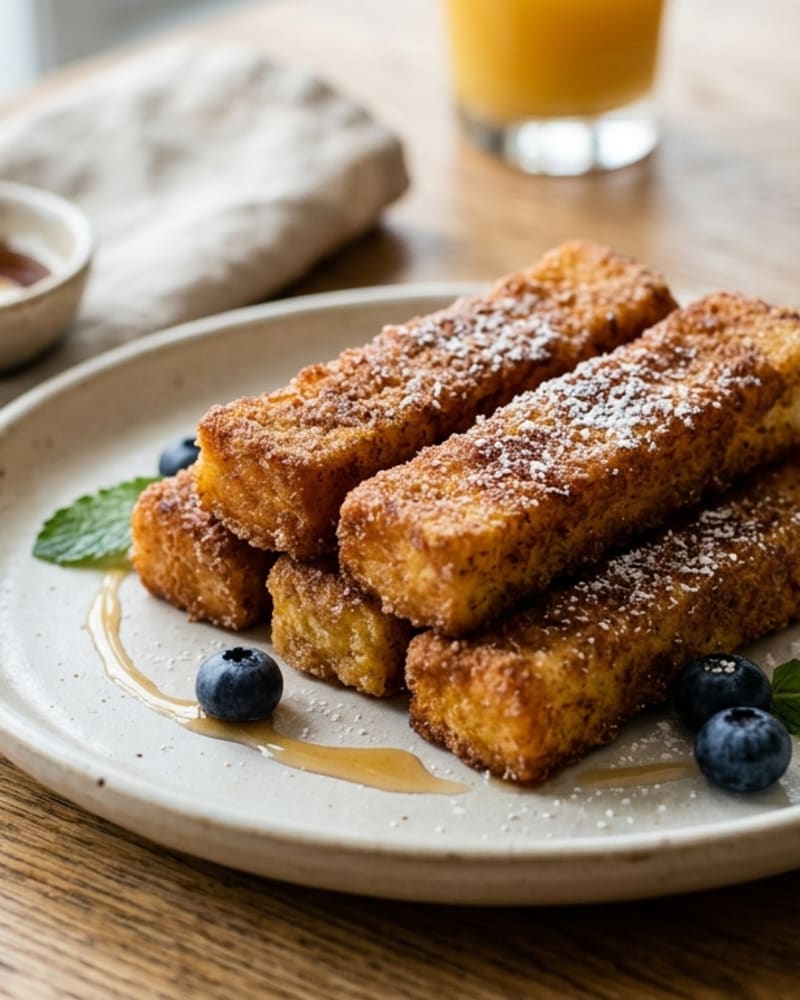
It is 7:15 on a school morning, someone has just announced they are not eating that, and you have eight slices of bread and three eggs. These crispy french toast sticks take about fifteen minutes and are built for dunking. Dipping is a love language, and syrup is the one that shows up on time.
Golden outside, soft inside, and sturdy enough to survive the syrup.
Cut the bread into sticks, dip them in a quick egg and cinnamon mix, and fry them in butter until they are golden. Then toss them in cinnamon sugar while they are still warm, so the sugar has something to cling to. Four people can share a plate of crispy french toast sticks without negotiating over a fork.
What you need
- 8 slices white bread
- 3 eggs
- ½ cup milk
- 2 tbsp cinnamon sugar
- 2 tbsp butter
- 0.1 oz ground cinnamon
- 1 cup maple syrup
- ¼ tsp salt
How to make it
- Cut each of the 8 slices white bread into 3 sticks and set them aside, which takes about 5 minutes.
- Whisk the 3 large eggs with the 1/2 cup milk, 1 tsp ground cinnamon, and a pinch of salt in a shallow dish.
- Melt the 2 tbsp butter in a large skillet over medium heat.
- Dip both sides of the bread sticks in the egg mixture and cook them in the skillet for 2 minutes per side until golden and crisp.
- While the sticks are still warm, toss them in the 2 tbsp cinnamon sugar.
- Serve the french toast sticks with the 1 cup maple syrup for dipping.
Notes
The cutting is the longest step for crispy french toast sticks, at about 5 minutes. Cut each slice into three sticks and set them aside, then whisk the eggs, milk, cinnamon and a pinch of salt in a shallow dish. A shallow dish matters, because you want to dip each stick quickly rather than wrestle it into a bowl.
Hold each stick by the end, let the extra egg drip back into the dish, and then lay it in the pan. Dip each stick on both sides, and cook for 2 minutes per side in the butter over medium heat. If your skillet is crowded, cook in batches so the sticks have room to brown rather than steam. Add a little extra butter between batches if the pan looks dry.
Leftover crispy french toast sticks keep three to four days refrigerated, per USDA FSIS. They will not stay crisp, so reheat them in a toaster or a dry skillet until the edges firm up again. A microwave will warm them, but it takes the crunch with it.
You can cut the sticks ahead and keep them in a bag, which turns the morning into a whisk and a pan. Hold off on the dipping until you are ready to cook.
Choosing between french toast and pancakes is the breakfast version of "where do you want to eat." On SwipeCart you do not have to pick one. Swipe both into the week and let the agent worry about the shopping.
Swaps that actually work
The bread is the point, and plain white sandwich bread is exactly what this recipe asks for. It cuts into neat sticks and soaks up the egg quickly. Slightly dry bread tends to hold up better than very fresh bread, so if a few slices have been open for a day or two, they are good candidates.
Brioche or thick-cut bread makes richer sticks, but they take more care in the pan, so go slowly and check the color. Whole wheat works and tastes nuttier.
Milk can be any milk, including oat or almond. Keep the cinnamon in the egg mix even if you change everything else, because it is what makes the kitchen smell like a weekend. Butter can be a neutral oil, though you lose the browned flavor. Cinnamon sugar can be plain sugar with an extra shake of cinnamon.
For dunking, maple syrup is the method, and honey, warm jam or a cup of yogurt with a little vanilla also work. A bowl of fruit alongside keeps things from tipping into pure dessert. If you are feeding a mixed crowd, put the syrup in several small bowls so each person has their own and the dunking does not turn into a queue.
The swap that costs you the dish is soaking the sticks. Bread that sits in the egg turns limp and cannot go crisp, so dip and move on.
The sticks are a good project for small helpers. Cutting the bread and tossing the finished sticks in the cinnamon sugar are both jobs a kid can do, and the hot pan stays with the adult.
If it goes wrong
They are soggy inside. They sat in the egg too long. Dip both sides quickly and put the stick straight into the pan. If a batch comes out soft, return the sticks to the skillet for another minute a side.
They are dark outside and raw in the middle. The heat was too high. Turn the skillet down to medium and cook the full 2 minutes per side.
They are pale and limp. The pan was not hot enough, or too many sticks went in at once. Wait for the butter to melt and foam, and cook fewer sticks at a time.
The cinnamon sugar slid off. The sticks cooled before you tossed them. Toss them while they are still warm, and do it in a bowl so they get a full coat.
What to serve with it
For a school morning, the default is a small bowl of maple syrup for dunking. It is what the method calls for, and it is the whole point.
The better version adds fresh fruit, such as blueberries or sliced strawberries, and a glass of orange juice, which is how they look in the photo. Scrambled eggs or a slice of bacon turns it into a full breakfast.
These work as lunch-box food the next day, packed cold with a small container of syrup for dipping. They are less crisp but still good, and a dunk in syrup brings them back to life. If the lunch box has a small sealed pot, that is all the packaging they need.
Why this one earns its place
Because crispy french toast sticks are a forgiving recipe and an easy one to hand to a hungry person. The ingredients are mostly pantry staples, and the sticks come off the pan crisp enough to feel like a treat.
Swipe it into your week for the mornings you want to be the cook someone remembers. For more of the same, try the cinnamon roll french toast bites, the cheesy scrambled egg quesadilla, or the what's for dinner tonight guide for when breakfast turns into dinner.
More like this: all American recipes in Crave Corner.