Creamy Cajun Shrimp Pasta With Tender Shrimp and a Sauce That Clings
Jump to recipe ↓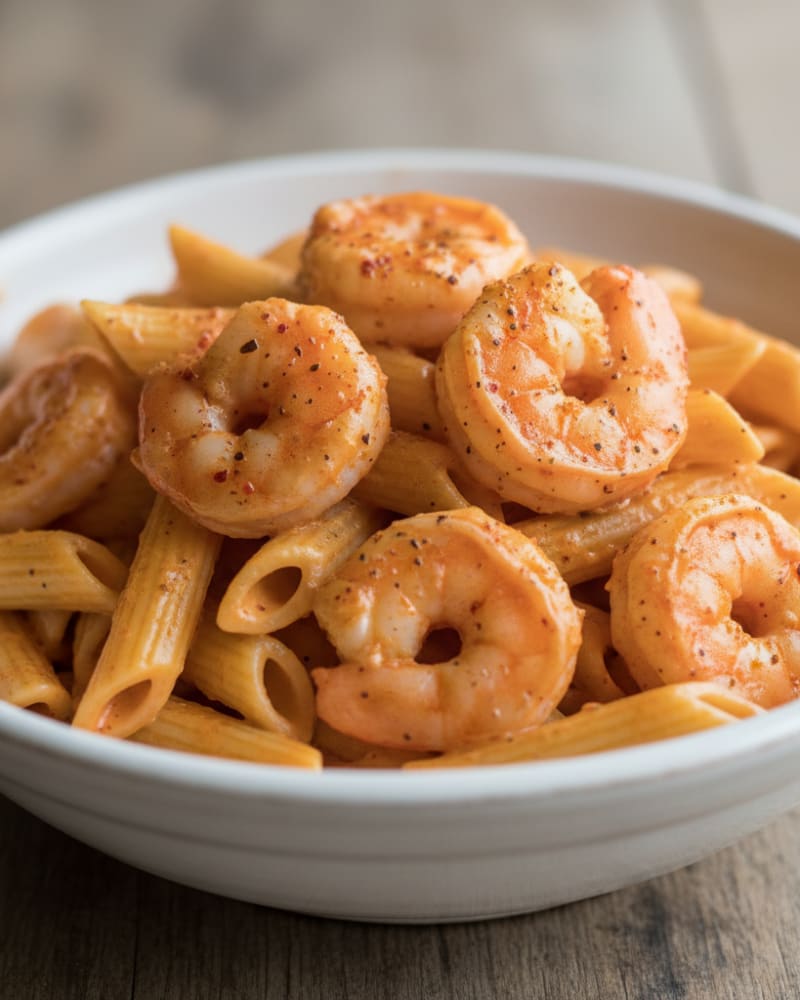
About 716 calories per serving, estimated from the ingredient list.
It is 6:45 p.m., there is a pound of shrimp in the fridge, and you want something that looks like date night at a nice place without the part where you change out of sweatpants. This creamy Cajun shrimp pasta is one pot of water and one skillet, and the longest job on the list is waiting for the penne. You swiped on it at lunch, so the cream and the Parmesan are already in the fridge, looking pleased with themselves.
The shrimp leave the party early and come back for the finish.
Creamy Cajun shrimp pasta is built around that one move. The shrimp get a hard, quick sear in garlic butter, then wait on a plate while the cream, Parmesan and the second half of the Cajun seasoning simmer into a sauce. They go back in only at the end, with the pasta, for long enough to warm through. Splitting the seasoning means the shrimp carry their own crust of spice and the sauce carries the rest, so every bite tastes seasoned instead of just the ones that caught a shrimp.
What you need
- 1 lb shrimp, peeled
- 12 oz penne pasta
- 1 cup heavy cream
- ½ cup parmesan cheese, grated
- 2 tsp cajun seasoning
- 2 tbsp butter
- 6 cloves garlic
- 2 tbsp fresh parsley, chopped
- ¼ tsp salt
- ¼ tsp black pepper
How to make it
- Peel and mince 6 cloves from the head of garlic (about 5 minutes). Chop the small bunch of parsley.
- Cook 12 oz penne pasta in boiling salted water until al dente, about 10 minutes. Reserve 1 cup pasta water then drain the pasta.
- Season 1 lb peeled shrimp with 1 tsp Cajun seasoning along with salt and black pepper.
- Melt 2 tbsp butter in a large skillet over medium heat. Add the minced garlic and cook for 1 minute until fragrant.
- Add the seasoned shrimp to the skillet and cook 2 minutes per side until pink and cooked through. Remove the shrimp from the pan.
- Pour 1 cup heavy cream into the skillet. Stir in 1/2 cup grated Parmesan cheese and the remaining 1 tsp Cajun seasoning. Simmer for 3 minutes.
- Return the drained pasta and shrimp to the sauce. Toss everything together, adding reserved pasta water as needed to loosen the sauce. Season with salt and black pepper.
- Sprinkle the chopped parsley over the pasta and serve right away.
Notes
Cooked leftovers keep three to four days refrigerated, per USDA FSIS. Reheat gently in a skillet over low heat with a splash of water or milk, stirring until the sauce loosens again. A microwave on full power will tighten the shrimp and break the sauce, so go slowly if that is your route.
This does not freeze well. Cream sauces tend to separate when thawed, and shrimp turn mealy. Make the amount you will eat in a few days.
Cajun seasoning blends vary a lot in salt and heat. Some are mostly salt with a little cayenne, others are mostly paprika and herbs. Taste your blend on the tip of a finger before you start, and treat the listed salt as a starting point rather than a rule.
Shrimp are done when they turn opaque and pink and curl into a loose C shape. A tight O means they went too far. If you want certainty, USDA puts the safe minimum for shellfish at 145°F.
Grate the Parmesan yourself if you can. Pre-grated cheese is coated with anticaking agents that keep it from melting smoothly into cream, and you end up with a slightly grainy sauce.
Six cloves of garlic is plenty, and it only needs a minute in the butter over medium heat. Watch it. Garlic that browns turns bitter, and in a sauce this simple there is nowhere for that to hide.
If the sauce tastes great in the skillet and then turns thick and pasty in the bowl, that is the pasta drinking it. Keep the reserved pasta water close and loosen the sauce right before serving, a little more than looks necessary.
Swaps that actually work
The Cajun seasoning is the point. It is the smoke, the heat and the color, and without it this is shrimp Alfredo. If you are out, a mix of smoked paprika, garlic powder, onion powder, dried thyme, dried oregano, cayenne and black pepper gets you most of the way there.
Frozen shrimp are completely fine, and can be fresher than the ones sitting on ice at the counter. Thaw them in the fridge or under cold running water, then pat them very dry so they sear instead of steaming.
Chicken works in place of shrimp. Cut breast or thigh into bite-size pieces, cook it until it reaches 165°F, and take it out of the pan exactly the way the method does with the shrimp.
Penne holds the sauce in its tubes, but shape is not a dealbreaker: rigatoni, fettuccine or linguine all work. Save the picky swiping for dinner, not the noodle.
Half-and-half is the swap that costs you the dish. It has less fat than heavy cream, it splits more easily when it simmers with cheese, and the sauce never thickens properly. If you are cutting back, make a smaller portion rather than a thinner sauce.
Pecorino Romano can stand in for Parmesan, but it is saltier, so hold back on the extra salt until you taste. Sliced scallions are a good stand-in for parsley at the finish.
If it goes wrong
The shrimp are rubbery. They cooked too long, either in the first sear or because they sat in the simmering sauce. Two minutes a side is right for large shrimp and too long for small ones. For the batch in front of you, toss them in at the very end and serve immediately.
The sauce split or turned grainy. It boiled too hard, or the Parmesan went into cream that was too hot. Pull the pan off the heat, add a splash of pasta water and stir steadily until it comes back together.
It is too spicy. Your Cajun blend runs hot. Add a little more Parmesan and a splash of pasta water to stretch the sauce, and serve with something cool alongside.
It tastes flat. Usually salt. Taste after the pasta goes in, because the penne absorbs seasoning, and correct it there.
What to serve with it
The default is a simple green salad with a sharp vinaigrette, because the pasta is rich and it needs something bright next to it.
The better version of the default is garlic bread, toasted hard so it has some crunch, for dragging through whatever sauce is left in the bowl.
The thing in the fridge that lifts it is a lemon. A squeeze over each bowl cuts through the cream and makes the Cajun spice taste louder.
It works as lunch the next day if you reheat it gently with a splash of water, though creamy Cajun shrimp pasta is at its best straight out of the skillet.
Why this one earns its place
Shrimp cook in minutes, cream and Parmesan make a sauce with almost no effort, and the Cajun seasoning brings enough personality that the whole thing feels deliberate. That is a rare combination on a weeknight.
It is also forgiving in the ways that matter: swap the pasta, swap the protein, use frozen shrimp, and it still works. Keep creamy Cajun shrimp pasta in your back pocket, or swipe it into the week and let the agent handle the grocery run.
For another pasta that turns a few staples into a real sauce, cacio e pepe is the minimalist version. Quick weeknight dinner ideas has more meals in this same lane. And when the question is simply what's for dinner tonight, that post is the shortcut.
More like this: all American recipes in Crave Corner.