Camarones Enchilados With Shrimp That Stay Tender in the Sauce
Jump to recipe ↓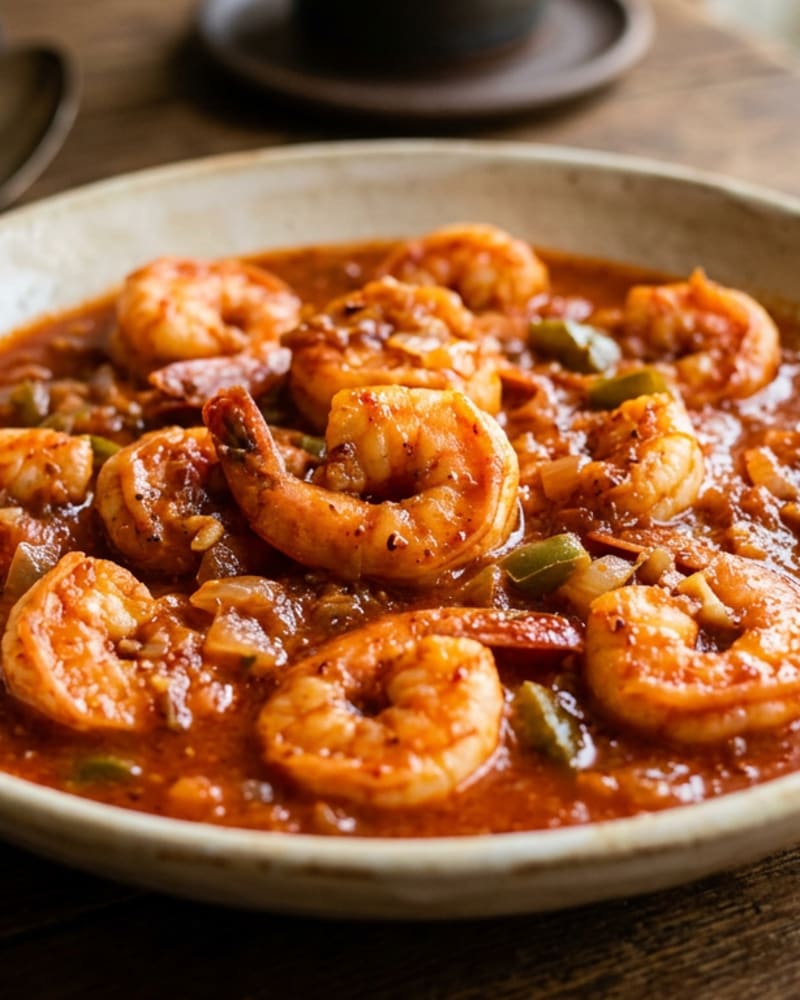
Thursday, 6:00, a bag of shrimp thawing in a bowl of cold water and a can of tomatoes on the counter. This camarones enchilados recipe has you at the table in under an hour, and most of that time is chopping while the rice quietly does its thing on the back burner. It is red, saucy and a little spicy, the kind of dinner that makes whoever is at the table linger, and we will not tell them it took you under an hour. You swiped right on it Monday, the agent put the shrimp in the cart, and tonight you only have to show up.
Cumin, oregano and a bay leaf do the slow work, and the tomatoes make it cling.
Camarones enchilados is a Cuban classic, and "enchilado" here means shrimp in a chile-spiked sauce rather than anything rolled in a tortilla. The sauce is built the Cuban way, on a soft base of onion, bell pepper and garlic, warmed with cumin, oregano and a bay leaf, then simmered with tomatoes until it clings. All of the patience goes into the sauce. The shrimp are the quick part.
What you need
- 1½ lb shrimp
- 1 yellow onion
- 1 bell pepper
- 4 garlic
- 8 oz tomato sauce
- 14 oz canned diced tomato
- 2 tbsp olive oil
- 1 tsp ground cumin
- 1 tsp oregano
- 1 bay leaf
- 1 tsp hot sauce
- 1½ cups long-grain white rice
- 1 lime
- 1 tsp salt
- ½ tsp black pepper
How to make it
- Dice the 1 yellow onion and 1 bell pepper, and mince the 4 garlic cloves (about 5-8 minutes). Pat the 1.5 lb shrimp dry and season with salt and black pepper to taste.
- Cook the 1.5 cups long-grain white rice according to package directions with water and a pinch of salt, about 18-20 minutes.
- Heat the 2 tbsp olive oil in a large skillet over medium heat. Add the diced onion and bell pepper and cook until softened, about 4-5 minutes.
- Stir in the minced garlic, 1 tsp ground cumin, 1 tsp oregano, and 1 bay leaf. Cook until fragrant, about 1 minute.
- Pour in the 8 oz tomato sauce, 14 oz canned diced tomato, and 1 tsp hot sauce. Simmer for 8-10 minutes until the sauce thickens slightly.
- Add the seasoned shrimp and cook, stirring occasionally, until pink and just cooked through, about 4-5 minutes. Discard the bay leaf.
- Squeeze the juice of the 1 lime over the skillet and taste for salt and black pepper.
- Serve the camarones enchilados over the cooked rice.
Notes
Cooked leftovers keep three to four days refrigerated, per USDA FSIS. Keep the rice and the shrimp in separate containers so the rice does not go soggy.
Reheat gently in a covered pan over low heat with a splash of water, just until warm. Shrimp that get reheated hard go rubbery fast. The sauce itself is better on day two, so if you want to cook ahead, make the sauce the night before and add the shrimp when you reheat it.
The sauce from this camarones enchilados recipe freezes well without the shrimp. Cooked shrimp can be frozen, but they come back tougher, so the better plan is to freeze sauce only and add fresh shrimp later.
Start the rice early. The recipe has you put it on right after the prep for a reason: it takes around twenty minutes, and the sauce and shrimp together take about the same. Started late, the rice holds up the whole plate while the shrimp overcook in the pan.
Pat the shrimp properly dry. Frozen shrimp in particular carry a lot of water, and wet shrimp water down the sauce you just spent ten minutes thickening.
If you want certainty about doneness, USDA sets the safe minimum for shellfish at 145°F, and the flesh should be pearly and opaque with no gray translucence left.
Discard the bay leaf before serving. It is not pleasant to bite into, and it hides easily in a red sauce.
Swaps that actually work
The shrimp are the point of a camarones enchilados recipe. Use the largest ones you can find, peeled and deveined, tails on or off as you like. Frozen raw shrimp are perfectly good, and shrimp at the seafood counter is often labeled previously frozen anyway.
Green bell pepper is the traditional choice and gives a slightly bitter, savory edge. Red or yellow peppers make a sweeter sauce. Both work; it comes down to whether you like your dinner sweet or with a little edge, and we do not judge your type.
In this camarones enchilados recipe, the hot sauce sets the heat. One teaspoon gives a gentle warmth, which is closer to how the dish is usually served in Cuban homes than a fiery version. Taste the sauce before the shrimp go in and add more if your table wants it.
No tomato sauce? Use crushed tomatoes or a couple of tablespoons of tomato paste loosened with water. The texture changes a little and the dish stays the same.
Many Cuban cooks add a splash of dry white wine with the tomatoes. It is optional here, and if you have an open bottle it adds a pleasant brightness.
Chunks of a firm white fish make a good swap for some or all of the shrimp. Cook them until they flake and reach 145°F.
Long-grain white rice is the classic partner. Brown rice works but needs much longer, so start it well before anything else.
If it goes wrong
The shrimp are rubbery. They stayed in the sauce too long. There is no way to reverse it, so pull them out now before they get worse, finish the sauce, and stir them back in at the last second.
The sauce is watery. The shrimp released water, or the tomatoes did not simmer long enough. Lift the shrimp out with a slotted spoon, simmer the sauce for a few more minutes until it thickens, then return the shrimp just to warm through.
It tastes sharp and tinny. The tomatoes need more time. Let the sauce simmer a few minutes longer before the shrimp go in; the raw edge mellows as it cooks. A small pinch of sugar also rounds it off.
It tastes flat. Almost always salt, then acid. Taste after the lime goes in and season it again. If it is still dull, a little more hot sauce often wakes it up.
What to serve with it
The default is the white rice in the recipe, with the shrimp and plenty of sauce spooned over the top.
The better version of the default is the full Cuban plate: rice, a side of black beans, and fried sweet plantains, which bring a caramelized sweetness against the tomato and spice.
The thing in the fridge that lifts it is an avocado, sliced and salted, or a simple salad of sliced tomato and onion dressed with lime and oil.
It makes a good next-day lunch, reheated gently. Crusty bread for the sauce does not hurt either.
Why this one earns its place
It is a skillet dinner with real depth, and the camarones enchilados recipe asks for nothing more technical than chopping and watching shrimp turn pink. Pantry tomatoes, an onion, a pepper and a bag of shrimp become something that tastes like it simmered all afternoon.
It also flexes with your week: sauce made ahead on Sunday, shrimp in on Wednesday. Swipe it in on a night you want something bright and saucy, and the agent handles the shrimp and the cans so the pantry is ready when you are.
If you want more dinners that land in about the same window, quick weeknight dinner ideas is the place to look. For a lighter base under the sauce, cauliflower fried rice swaps in for the white rice. And when you cannot decide at all, what's for dinner tonight gets you unstuck.
More like this: all Caribbean recipes in Crave Corner.