Beef Lo Mein With Seared Beef and No Soggy Noodles
Jump to recipe ↓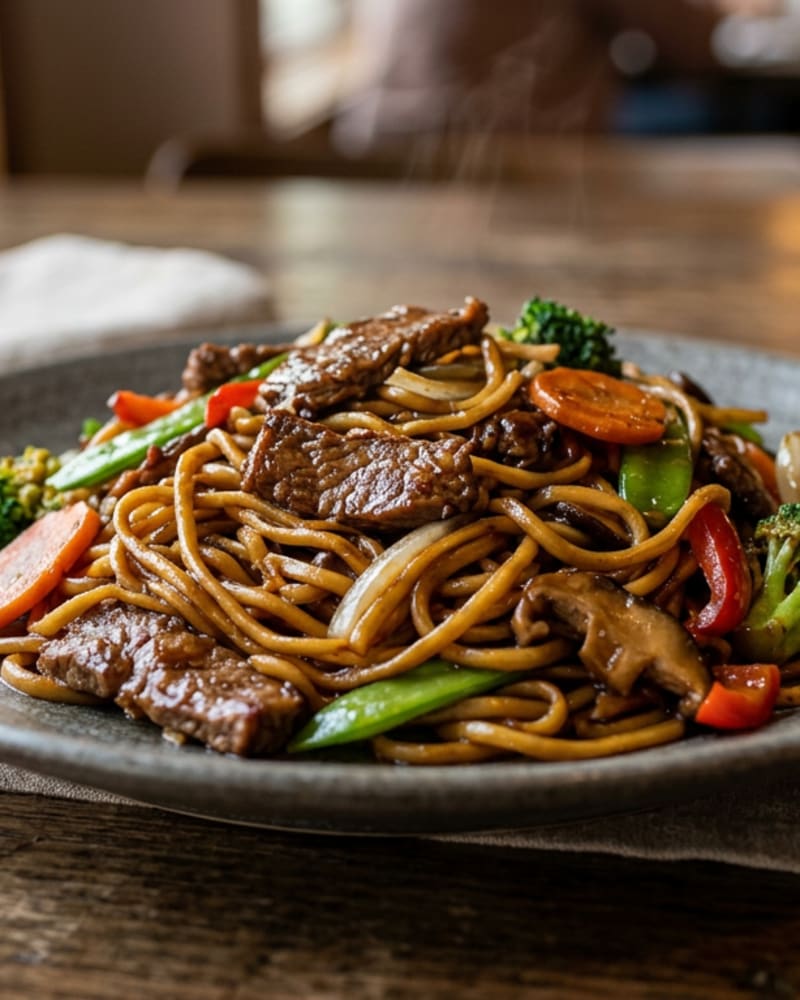
It is 7:42 on a Wednesday, the delivery app is spinning its little wheel, and you are done being kept waiting. Beef lo mein goes from cold pan to full bowls in about 15 minutes in your own kitchen, and the wok will never ask you to tip.
Takeout noodles, minus the wait and the damp cardboard box.
This is two quick jobs that meet in one pan. The noodles boil for about four minutes while the beef sears over high heat, then everything gets a splash of soy and two minutes of tossing. There is no sauce to build and no marinade to plan around, which is exactly why it suits the nights when the plan has already fallen over and you are improvising in socks.
What you need
- 8 oz lo mein noodles
- 1 lb sliced beef
- ¼ cup soy sauce
- 2 cups mixed vegetables
- 1 tbsp vegetable oil
- 1 tsp salt
- ½ tsp black pepper
How to make it
- Cook the 8 oz lo mein noodles according to package directions until just tender, about 4 minutes, then drain and set aside.
- Heat 1 tbsp vegetable oil in a wok or large skillet over high heat.
- Add the 1 lb sliced beef and sear 3 minutes until browned, stirring occasionally.
- Add 2 cups mixed vegetables and stir fry 4 minutes until heated through.
- Whisk 0.25 cups soy sauce with 2 tbsp water and pour over the mixture.
- Add the drained noodles to the wok and toss everything together 2 minutes until coated and hot.
- Season with salt and black pepper to taste and divide among bowls.
Notes
Cooked leftovers keep three to four days in the fridge, per USDA FSIS, in a covered container. Reheat in a skillet with a splash of water, which loosens noodles that have tightened up in the cold. The microwave works too, as long as you stir halfway so the middle is not still chilly.
Beef lo mein is a fridge dish, not a freezer dish. Noodles and crisp vegetables both go soft after thawing, and you will have traded a good lunch for a mediocre one.
Day two is fine but not better. The noodles keep drinking sauce overnight, so give the bowl a few drops of water or a little extra soy when you reheat it.
Taste before you season. A quarter cup of soy sauce already does a lot of the salting, so add the salt and pepper at the very end, a pinch at a time. Swipe this one into your Sunday and your agent will have the noodles, the beef and the soy in the cart before you have decided what to wear to the actual date.
Swaps that actually work
In beef lo mein, the beef is the point, and so is the heat under it. Thin slices and a hot pan get three minutes of browning; everything else on this page flexes around that.
For the noodles, lo mein noodles are the real thing, and fresh ones from the refrigerated aisle cook faster, so check the package against the four-minute mark. Spaghetti or linguine stand in well enough when the store is out. Cook them until just tender, the same as you would the proper ones.
For the beef, any cut you can slice thin against the grain works: sirloin, flank, or a package labeled stir fry beef. Freeze the steak for about 20 minutes first if it slides around under the knife. Thick chunks will not cook in three minutes and will turn chewy.
For the vegetables, the two cups can be a bag of stir fry mix or whatever is in the crisper: carrots, snap peas, bell pepper, cabbage, broccoli. Frozen vegetables are fine if you thaw them and pat them dry first, because water in the wok means steaming, not frying.
Low sodium soy sauce is a good swap if you want control over the salt, and then the finishing salt does more of the work. Tamari works the same way for a gluten-free soy sauce, though you will need gluten-free noodles too.
The swap that costs you the dish is turning the heat down. A medium pan gives you gray, boiled beef and noodles that clump. If your burner is gentle, cook the beef in two batches and add it back at the end.
If it goes wrong
The noodles are mushy. They were cooked past tender before they hit the wok. Next time, drain them at about four minutes and rinse briefly under cool water. Tonight, serve it anyway and leave the soft noodles to the person who has not complained yet.
The beef is gray and tough. The pan was crowded or not hot enough, so the meat stewed. Pull it out, get the pan truly hot, and sear it in smaller batches, then return it for the final toss.
It is watery at the bottom. The vegetables shed liquid, usually because they were wet or frozen. Keep tossing over high heat for another minute so the liquid reduces and clings, and add the noodles last.
It tastes flat. Almost always salt. Add a pinch of salt, grind in pepper, and splash a little more soy sauce around the edge of the wok so it hits the hot metal and caramelizes for a second before you toss.
What to serve with it
Beef lo mein is a whole dinner in a bowl, so the default is to serve it as is, with extra soy on the table. If you want a side, something cold and crunchy works best against all that savory glossiness: a quick cucumber salad dressed with a little vinegar, or steamed edamame with salt.
The better version of the default is a fried egg on top, runny yolk and all. It turns a weeknight bowl into something that looks like you tried, and we will not tell.
The thing in the fridge that lifts it: sliced scallions, a little chili crisp, or a squeeze of lime if you have one rolling around.
It works as lunch the next day cold or reheated. Cold lo mein has its own fan club, and a desk lunch is the right place to join it.
Why this one earns its place
Some dinners are a commitment. This one is a fling that does not ask for much: one pan, a boiling pot, and a few minutes of attention. It is the dinner you reach for when you want something that tastes like a night off and you refuse to look at a menu.
It also rewards you for the one thing you can control, the heat. Get the pan hot, slice the beef thin, and beef lo mein tastes like the place you almost ordered from.
If you are building out a week around it, these are good company: Chicken Lo Mein for the night you want the same noodles with a lighter protein, Beef and Broccoli Stir Fry for another quick seared dinner, and quick weeknight dinner ideas for the rest of the week.
More like this: all Chinese-American recipes in Crave Corner.