Asparagus Risotto That Gets Creamy Without a Crumb of Cheese
Jump to recipe ↓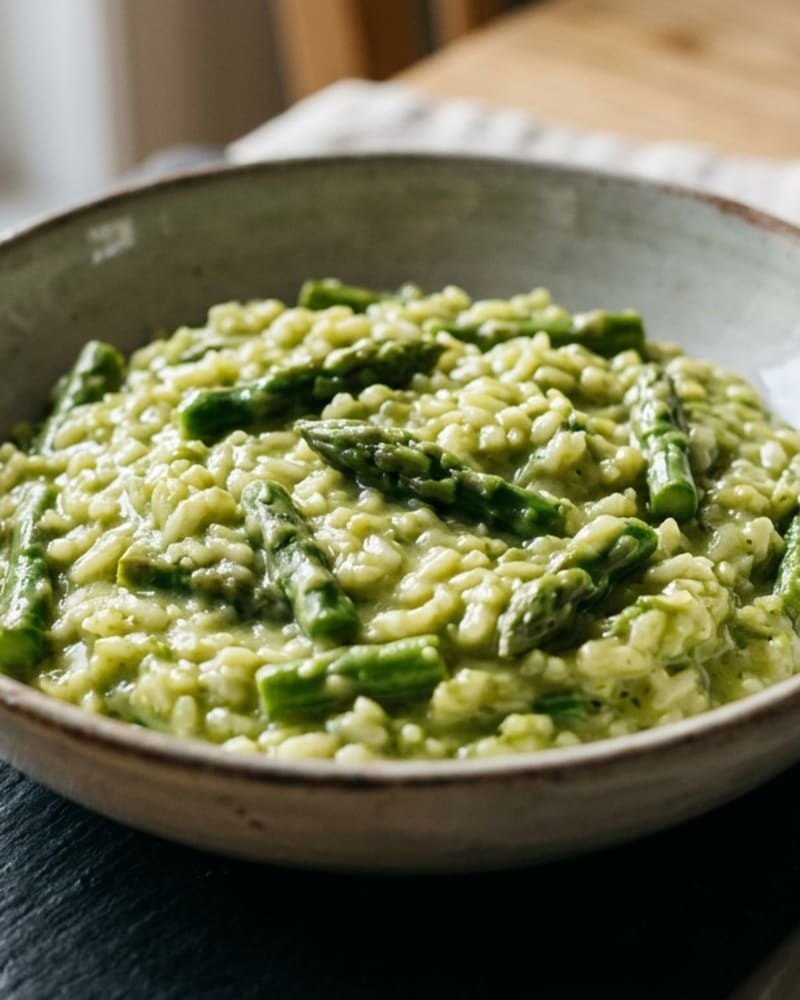
About 389 calories per serving, estimated from the ingredient list.
It is 7:15 on a Friday, someone is coming over, and you have already said the word "risotto" out loud, which makes you sound like a person who owns a good knife and has opinions about olive oil. This asparagus risotto recipe is about 25 minutes of stirring with a glass in your free hand, and looking that devoted at the stove will make them assume you are like this all the time. Let them.
Creamy comes from the rice, not from the dairy aisle.
Arborio is a short, fat grain with a lot of loose starch on the outside. Toasting it in the oil with the onion and garlic seals the outside of each grain, and every round of warm broth and stirring rubs that starch off into the liquid until it turns glossy and thick. There is no butter and no cheese in this version: the nutritional yeast at the end brings the savory, nutty note you would expect from parmesan, and the whole pan stays vegan without announcing it. The asparagus goes in partway through, so it finishes bright green and tender rather than army-colored.
What you need
- 1½ cups arborio rice
- 1 lb asparagus, trimmed
- 1 onion, diced
- 2 cloves garlic, minced
- 5 cups vegetable broth
- 3 tbsp nutritional yeast flakes
- 2 tbsp olive oil
How to make it
- Warm the 5 cups vegetable broth in a saucepan over low heat.
- Cut the 1 lb trimmed asparagus into 1-inch pieces.
- Heat 2 tbsp olive oil in a large skillet over medium heat for 2 minutes.
- Add the 1 whole diced onion and cook for 4 minutes until translucent.
- Stir in 2 cloves minced garlic and 1.5 cups arborio rice, then toast for 2 minutes.
- Add 1 cup warm broth at a time, stirring until absorbed, and repeat until most broth is used.
- After 15 minutes stir in the asparagus pieces and continue adding broth until the rice is creamy, about 25 minutes total.
- Stir in 3 tbsp nutritional yeast flakes, season with salt and black pepper, and serve.
Notes
Cooked leftovers keep three to four days refrigerated, per USDA FSIS. Risotto sets firm as it cools, so reheat it in a pan with a splash of broth or water, stirring over low heat until it loosens back into something spoonable.
This asparagus risotto recipe does not freeze well. The rice goes grainy and the asparagus turns soft and dull, so make the amount you plan to eat over a couple of days.
Day-old risotto has a second life as crispy patties. Press cold spoonfuls into rounds, coat them lightly in flour or breadcrumbs, and pan-fry them in a little olive oil until golden on both sides.
Snap or trim the woody ends before you measure the asparagus. Thick spears and thin spears both work; the 1-inch pieces in the method cook through in the time left after they go in, though pencil-thin spears can wait an extra couple of minutes if you like them with more snap.
Taste before you salt. Vegetable broth ranges from barely seasoned to very salty depending on the brand, and the nutritional yeast adds its own savory depth, so season at the end, where the method puts it.
Risotto rewards attention, which makes it a quietly useful second-date test. If they wander over and offer to take a turn stirring, keep them.
Swaps that actually work
Arborio rice is the point of this asparagus risotto recipe, and it is the one ingredient to leave alone. Carnaroli is a little more forgiving and holds its shape better if you can find it. Long-grain rice or basmati is the swap that costs you the dish: the grains do not release enough starch, and you end up with rice in broth rather than risotto.
If you are not cooking vegan, swap the nutritional yeast for a generous handful of grated parmesan and finish with a small knob of butter. It becomes a richer, more classic risotto. Keep the nutritional yeast if anyone at the table avoids dairy; it does a convincing job.
Chicken broth can stand in for vegetable broth if you do not need it vegetarian, and it gives a deeper, rounder base.
Out of season, asparagus can become frozen peas (stirred in for the last few minutes), diced zucchini, or a few big handfuls of baby spinach folded in right at the end until it wilts.
A shallot instead of the onion makes the base a little sweeter and finer. The grated zest of half a lemon stirred in with the nutritional yeast wakes the whole pan up, and it is a small upgrade that tastes like you went to cooking school for it.
If it goes wrong
The broth is gone but the rice is still chalky in the middle. The broth went in faster than the rice could absorb it, or the heat was too high and it boiled off. Keep going with hot water, half a cup at a time, stirring until each splash is absorbed, until the grains are tender with only a faint bite at the center.
It is gluey and stiff. It overcooked or sat too long before serving. Take it off the heat, add a ladle of warm broth or water, and stir hard for 30 seconds until it loosens into a slow, creamy wave. Serve it right away.
It is soupy. Too much liquid went in near the end. Keep stirring over medium heat for a couple of minutes, uncovered, and remember it thickens as it stands for a minute in the bowl.
It tastes flat. Usually salt. Season in small pinches, add another spoonful of nutritional yeast, and grind in plenty of black pepper. A squeeze of lemon lifts it if salt alone has not.
What to serve with it
The default is a simple green salad with a sharp lemon dressing, because something crisp and acidic beside a creamy bowl is exactly what you want.
The better version of the default adds crusty bread and a bottle of dry white wine, which is also the setup that turns a Tuesday into something that feels like a date.
The thing in the fridge that lifts it is a jar of roasted red peppers or a handful of toasted pine nuts or walnuts scattered over the top for crunch.
As lunch the next day it is fine reheated with a splash of broth, and better as the crispy patties from the Notes.
Why this one earns its place
It turns seven ingredients into the kind of dinner people associate with restaurants and effort, and it is vegan without tasting like a compromise. The stirring is gentle, repetitive and oddly calming, which makes it a good way to end a long day or to start an evening with someone you want to talk to.
Keep this asparagus risotto recipe for the nights when you want to cook something that feels like a gesture. Swipe it into your week and the agent will put the arborio and the nutritional yeast in the cart, so you only have to bring the charm.
If you like a short ingredient list that tastes like a long one, cacio e pepe is its Roman cousin. For planning dinners like this around two schedules, meal planning for couples. And if arborio and nutritional yeast are new to your cart, how to shop for a new recipe walks you through finding them.
More like this: all Italian recipes in Crave Corner.