You Saved 400 Recipe Reels From Instagram. Cooked Four.
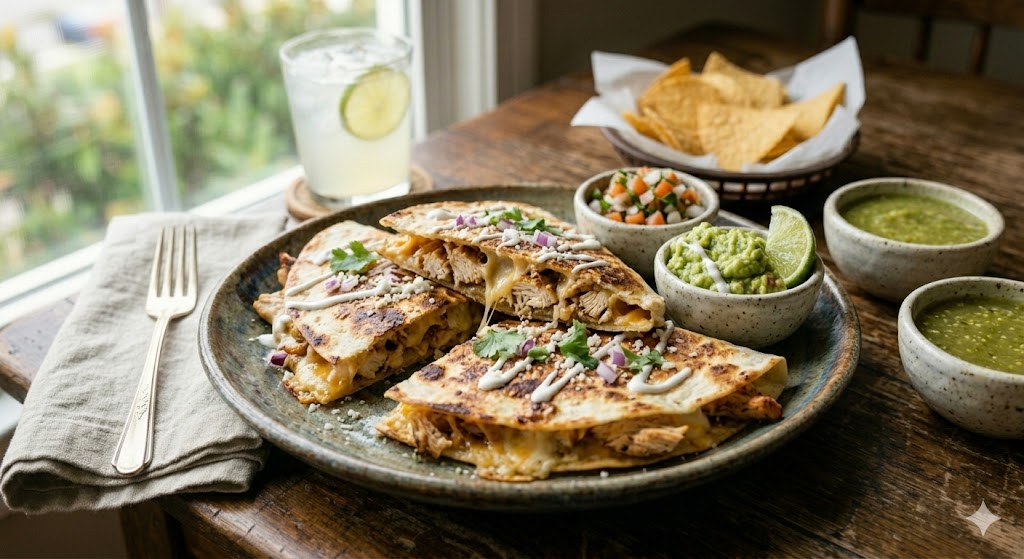
It is 11:15 at night and someone is folding a tortilla in four directions in a way that has genuinely impressed you. You tap the little bookmark. You feel briefly productive.
That reel is now in a folder with several hundred others, and you will never see it again.
Most advice about how to save recipes from Instagram is about the saving. Collections, folders, naming conventions, a spreadsheet if you are unwell. All of it treats retrieval as the problem, and retrieval is not the problem.
Why the saved folder is a graveyard
Three things happen to a saved reel, and none of them is dinner.
It loses its ingredients.
The quantities were in the caption, or spoken over a jump cut, or in a comment the creator pinned and later deleted. What survives is a fifteen-second video of a finished dish and a vibe. You cannot shop from a vibe.
It loses its context.
You saved it because it was 11:15 and you were in a particular mood. On Thursday at 6:40 you are a different person with a different fridge, and the thing that appealed to insomniac you looks like a project.
It gets buried instantly.
The folder is reverse chronological and you add to it faster than you cook. Anything more than two weeks old is functionally deleted. The archive grows and the number of things you actually make does not move.
So the saved folder is not a recipe box. It is a mood board, and there is nothing wrong with a mood board as long as you stop expecting it to feed you.
If you are going to save, save properly
There is a version of this that works, and it takes twenty extra seconds at the moment you tap.
Move it into a named collection immediately, and name the collections by occasion rather than cuisine. Weeknight fast. Feeding people. Thing to do with mince. Occasion is how you will search later, because at 6:40 you do not think I would like Thai, you think I have forty minutes and some chicken.
Then, in the same twenty seconds, write the two or three ingredients that are not already in your kitchen into a note or a shared list. That is the entire bridge between the reel and the meal, and it is the step everyone skips.
And be ruthless on the way in. If you would not cook it this month, do not save it. A folder of forty things you might genuinely make is worth more than four hundred you admired.
The save is not the commitment. The shopping is the commitment.
The creators are not the problem
Worth saying, because the easy version of this post blames food content for being shallow, and that is both unfair and wrong.
The reels are good. They are frequently better than the recipes in the cookbooks on your shelf, made by people who cook constantly and know exactly which fifteen seconds matter. The format is doing what the format is for, which is to make you want something. That is not a failure of depth. That is craft.
The mismatch is structural. A reel is optimised to create desire in the moment and the platform is optimised to immediately show you another one. Neither is optimised for you eating anything, and there is no reason they should be. Instagram is not a grocery service and was never pretending to be.
So the fix does not live inside Instagram, which is why every guide about how to save recipes from Instagram eventually runs out of things to say about folders. The fix lives in what happens in the four seconds after the tap.
The gap nobody closes
Here is the actual mechanic, stated plainly. Deciding happens on Instagram at 11:15 at night. Shopping happens in a grocery app on Saturday morning. Cooking happens on Thursday at 6:40.
Three moments, three apps, three different versions of you, and the only thing connecting them is your memory. Memory loses. It loses every single week, and then you conclude you are bad at cooking, when what actually happened is that a piece of infrastructure was missing.
This is the same leak we wrote about in the piece on what happens between recipe and checkout. The idea and the ingredients live in different places, and nothing carries one to the other.
What would actually fix it
Not better folders. A save that carries a cart with it.
That is the shape of the thing SwipeCart is built to be, so take it as intent rather than a neutral survey. You swipe through dinners, crave right and pass left, one at a time. The saving and the shopping are the same gesture: what you keep lands in a cart with every ingredient matched to a real product at Kroger or Walmart, priced as you go.
Then an agent shops it and checks out once you approve. So the thing you liked on the sofa is in the house on Thursday, which is the only version of any of this that ends with you eating it.
You are not building an archive. You are dating your dinner, and a saved reel is a number you never called.
What to do with the four hundred you already have
Do not organise them. That is a Saturday you will not get back and the folder will be six hundred by Christmas anyway.
Scroll it once, quickly, and pull out five. Not fifty. Five things you would eat this week, and buy the ingredients for two of them. That is a higher hit rate than the last two years of saving produced, and it takes about eleven minutes.
Then keep saving, because the saving is fun and it costs nothing, but stop believing the folder is a plan. It is a list of things you found attractive at midnight, which is a genuinely useful signal about your own taste and a completely useless instruction to a Thursday. If the deciding itself is the part that keeps collapsing, the reason evening is the worst time to choose explains the mechanism, and thirty answers for tonight is the short-term patch.
And stop feeling bad about the ratio. Four cooked out of four hundred saved sounds damning until you notice that nobody has ever built the thing that would make it higher. You are not undisciplined. You are using a mood board as a meal plan because there was nothing else in the way.
Four hundred saves is not a recipe collection. It is four hundred small promises to a future self who was never told about any of them.