Ropa Vieja With Shredded Flank Steak and a Sauce That Clings
Jump to recipe ↓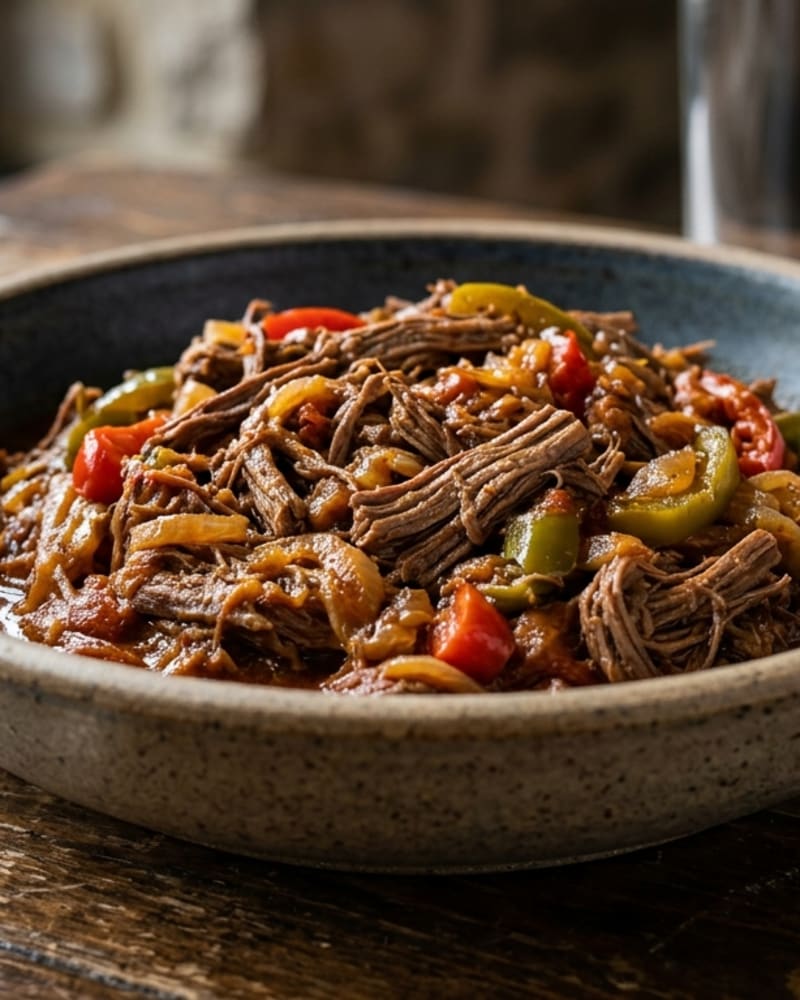
It is 1:15 on a Sunday, the pot is on, and ropa vieja will be ready about 121 minutes later, which is exactly enough time to do nothing and feel good about it. The name means "old clothes", and this is the one worn-in outfit you will want to be seen in. The apartment smells like you have your life together, and you did not leave the couch for more than a stir.
Flank steak simmered until it falls into soft strands, in a tomato sauce that clings to each one.
Ropa vieja is a long, low dish with a short list of things to do. You season the flank steak and brown it for 6 minutes per side, then cook the onion and garlic in the same pot for 4 minutes. Tomato sauce and water go in, the lid goes on, and the pot simmers for 90 minutes. Then you shred the beef with two forks right in the pot, take the lid off, and let the sauce thicken for 10 minutes. Shredding is the satisfying part: two forks, a little patience, and a pot of beef that goes from steak to strands in a minute or two. That is the whole job, and much of it is waiting.
What you need
- 2 lb flank steak
- 1 cup tomato sauce
- 1 onion
- 3 garlic clove
- 2 tbsp vegetable oil
- 1 tsp salt
- 1 tsp black pepper
How to make it
- Slice the 1 onion and mince the 3 garlic cloves for about 5 minutes.
- Season 2 lb flank steak with 1 tsp salt and 1 tsp black pepper.
- Heat 2 tbsp vegetable oil in a pot and brown the steak for 6 minutes per side.
- Add onion and garlic then cook 4 minutes.
- Stir in 1 cup tomato sauce and 2 cups water then simmer covered for 90 minutes.
- Shred the beef with two forks in the pot.
- Simmer uncovered 10 minutes to thicken and serve hot.
Notes
Cooked leftovers keep three to four days refrigerated, per USDA FSIS. Store the beef in its sauce so the strands stay moist, and reheat gently with a splash of water.
Ropa vieja tends to taste better on day two, because the shredded beef has longer to soak up the sauce. It freezes reasonably well in its sauce, in a sealed container, though the texture is a little softer after thawing.
The 90 minute simmer is the part to plan around, so start earlier than you think you need to. Swipe it into your week and the agent shops the flank steak and the tomato sauce, which leaves you free to spend the afternoon on whatever you were avoiding.
Swaps that actually work
The flank steak is the point, since its long grain is what breaks into the strands the dish is named for. Leave it alone if you can. Swipe on the flank and the agent will not ask questions; swipe on a leaner cut and it will quietly sigh in the cart.
Everything else can move. Sliced bell peppers cooked with the onion are a classic addition, and a bay leaf or a pinch of cumin can join the pot. A splash of red wine vinegar or a squeeze of lime at the end brightens the sauce. Olives and capers stirred in for the last few minutes give it a salty edge. If your tomato sauce is very plain, a spoonful of tomato paste with the onions deepens it.
The swap that costs you the dish is trading the flank for something lean and quick. Without the long simmer, the beef will not shred, and you end up with sliced steak in sauce instead.
If it goes wrong
The beef will not shred. It has not simmered long enough. Put the lid back on, keep the heat low, and check every fifteen minutes until a fork pulls the meat apart with little resistance.
The sauce is watery. The lid stayed on too long or the pot was too wide. Take the lid off, simmer for the 10 minutes in the recipe, and keep going until the sauce coats the strands.
The strands are stringy and the beef is mushy. The beef went past tender, usually because the simmer ran too hard. Pull the pot off the heat, stir the sauce through the shreds, and let it rest covered for a few minutes so the strands drink it up. Keep the simmer gentler next time.
The sauce has reduced too far and the beef looks dry. The pot ran low on liquid, or the last 10 minutes uncovered ran long. Add a splash of water, stir the shredded beef through the sauce, and cook gently for a few minutes so the strands soak it back up.
The bottom of the pot is scorching. The simmer is running too hot or the lid is loose. Turn the heat down to the gentlest bubble, add a splash of water, and make sure the lid sits tight. Stir the sauce once or twice, scraping the bottom gently.
It tastes flat. Check the salt first. After the long simmer, taste the sauce, add a pinch, and finish with a splash of vinegar or a squeeze of lime.
What to serve with it
Because the sauce is saucy and the beef is soft, something starchy underneath makes the dish. Rice is the classic partner, and warm corn tortillas or crusty bread will do the same job.
The default is white rice, which soaks up the sauce. The better version adds a side of black beans and fried sweet plantains, so the plate has something soft, something sweet and something savory.
What lifts it from the fridge: thin slices of raw onion with lime juice, a few chopped olives, or a handful of fresh cilantro. A crisp green salad on the side balances the richness.
Ropa vieja works as lunch the next day. It also suits warm tortillas or a pile of rice, and the shredded strands reheat well.
Why this one earns its place
Ropa vieja is a dish for the afternoon when you want to be home and do something worthwhile with it. The work is small and the reward is a pot of shredded beef that feeds four and keeps for days.
It is also the kind of slow Sunday you can share: put the pot on, put the music on, and let the hours do the flirting. Think of it as a long first date with your own kitchen: no rush, no small talk, and you leave with leftovers. For another shredded dish with a smoky finish, BBQ pulled pork follows the same long, slow logic. Arroz con pollo is a good partner for a Caribbean-leaning week. And meal prep for the week shows how a pot like this feeds more than one dinner.
More like this: all Caribbean recipes in Crave Corner.