Pozole Rojo With a Chile Broth Worth Straining For
Jump to recipe ↓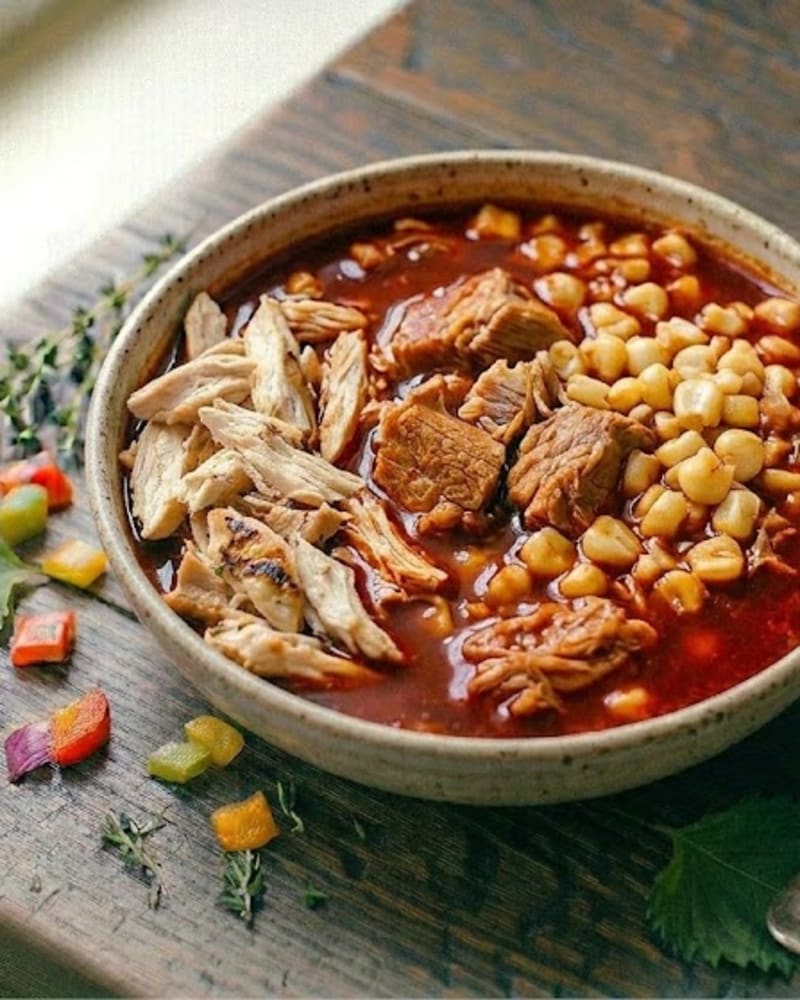
It is 5:30 on a Sunday, the windows have started to fog, and you have decided that tonight the apartment is going to smell like a place worth coming home to. This pozole rojo takes about 55 minutes, and most of that is the pot doing its job while you stand around looking like someone who has their life together.
Dried chiles, patient pork, and a broth that earns its color.
You simmer pork shoulder until it shreds, rehydrate guajillo and ancho chiles, blend them into a smooth red sauce, and stir it into the pot with hominy. It sounds like a project and it is more like a slow conversation: a little work up front, then a long, rewarding quiet. The toppings at the end are the part where each person at the table gets to decide how they like it.
What you need
- 1½ lb pork shoulder
- 29 oz hominy
- 4 dried guajillo chiles
- 4 radishes
- 2 cups cabbage
- 2 limes
- 8 cups broth
- 1 yellow onion
- 1 garlic
- 2 oz dried ancho chiles
- 1 tsp ground cumin
- 1 tbsp dried oregano
- 8 tostadas
- ¼ tsp salt
- ¼ tsp black pepper
How to make it
- Dice the 1 yellow onion and mince 3 cloves from the 1 head garlic. Slice the 4 radishes.
- Simmer the 1.5 lbs pork shoulder in 8 cups broth with the diced onion and minced garlic for 30 minutes until tender. Shred the pork with two forks and return it to the pot.
- Rehydrate the 4 dried guajillo chiles and 2 dried ancho chiles in hot water 10 minutes. Blend them with remaining garlic, 1 tsp ground cumin, and a splash of broth until smooth. Strain the sauce.
- Add the chile sauce and drained 29 oz can hominy to the pork broth. Simmer 15 minutes.
- Stir in 1 tbsp dried oregano, salt, black pepper, and juice from the 2 limes to taste.
- Ladle into six bowls. Serve with sliced radishes, 2 cups shredded cabbage, lime wedges, and the 8 tostadas on the side.
Notes
Cooked leftovers keep three to four days refrigerated, per USDA FSIS. Store the broth with the pork and hominy together, and keep the radishes, cabbage, lime, and tostadas separate so they stay crisp.
Pozole is better on day two. The broth deepens overnight and the pork keeps absorbing the chile, so make it a day ahead if you can. It also freezes well without the toppings. Cool it fully, freeze it in containers, and thaw it in the fridge before warming it gently on the stove.
Pay attention to the chiles. Rehydrate them in hot water for the full ten minutes so they soften enough to blend smoothly, and discard the stems before blending. The strained sauce should look like silk, not sand.
A small smirk for the middle of the pot: a pot of pozole is a very good test of a new relationship. If someone is willing to stand at the stove with you and argue about how much lime is correct, they are probably worth keeping. We are only reporting what we have observed in our own kitchen.
Finally, taste before you serve. A good pozole rojo should taste layered: first the warm, fruity chile, then the pork, then the lime cutting through at the end. If one of those is missing, the fix is usually already on the table, in the lime wedges or the salt shaker. The recipe finishes with salt, pepper, oregano, and lime juice added to taste, and that last adjustment is what brings the whole bowl into focus.
Swaps that actually work
Leave the chiles alone. Guajillo gives you the bright, slightly fruity red and ancho adds a deeper, raisin-like sweetness, and together they are what makes this pozole rojo rather than just a pork soup with hominy.
The rest has some room. If you do not have pork shoulder, pork butt works equally well. Chicken thighs can stand in if you prefer, though they cook faster and you should cook them until they reach 165°F. Use chicken or pork broth, whichever you have.
If the guajillo are hard to find, you can use more ancho in their place, which gives a darker, sweeter broth. Dried chiles vary in how much heat they carry, so taste the sauce before you stir it in. If it is milder than you like, a pinch of cayenne fixes that. Canned hominy works exactly as written, and it only needs to be drained. Tostadas can be swapped for tortilla chips if the store is out, and the toppings are flexible: a little thinly sliced onion, extra lime, or fresh cilantro all belong here.
If you want a pot of pozole rojo with a little more heat, add a dried chile de arbol or two to the rehydrating water, and strain it along with the rest. The swap that costs you the dish is skipping the straining. The sauce has chile skin in it, and without the sieve you get a broth with a gritty edge.
If it goes wrong
The pork is still tough. It has not simmered long enough. Pork shoulder needs the full 30 minutes in the broth, and sometimes a bit longer. Keep it at a gentle simmer, test with a fork, and give it more time until it shreds easily.
The broth is bitter. The chiles were scorched, or the seeds and stems went into the blender. Add a pinch of salt and a little more broth, simmer for a few minutes, and squeeze in a bit more lime to balance it. If it is still sharp, a small pinch of sugar rounds it off.
The broth is thin. There was too much liquid for the amount of sauce. Simmer it uncovered for a few more minutes so it reduces, and add another spoonful of blended chile if you have some set aside.
It tastes flat. Usually salt, or the lime waiting on the counter. Add salt a pinch at a time and finish with lime juice until the broth tastes bright.
What to serve with it
The default is what the recipe lists: sliced radishes, shredded cabbage, lime wedges, and tostadas on the side. Let each person dress their own bowl so the toppings stay crisp against the hot broth.
To lift it, add a spoonful of chopped onion, a pinch of dried oregano rubbed between your palms over the bowl, or a few avocado slices. A cold drink with some acid in it, like a lime soda, goes well.
It makes a good lunch the next day, especially if you reheat it slowly and add fresh toppings. The tostadas should be fresh, not stored in the soup.
Why this one earns its place
Some soups are background noise. Pozole rojo is the one that gets people to look up from their phones. It takes patience but not skill, and the result looks like you stood over a pot all day when you actually just stood over it for 55 minutes.
Swipe it into your week and the agent shops the pork shoulder, the dried chiles, and the hominy, so all you have to do is show up with a spoon.
For other big, comforting pots, try beef stew, chicken tortilla soup, or meal planning for couples when you are cooking for two and want leftovers.
More like this: all Mexican recipes in Crave Corner.