Poha With Fluffy Flattened Rice and Spices That Wake You Up
Jump to recipe ↓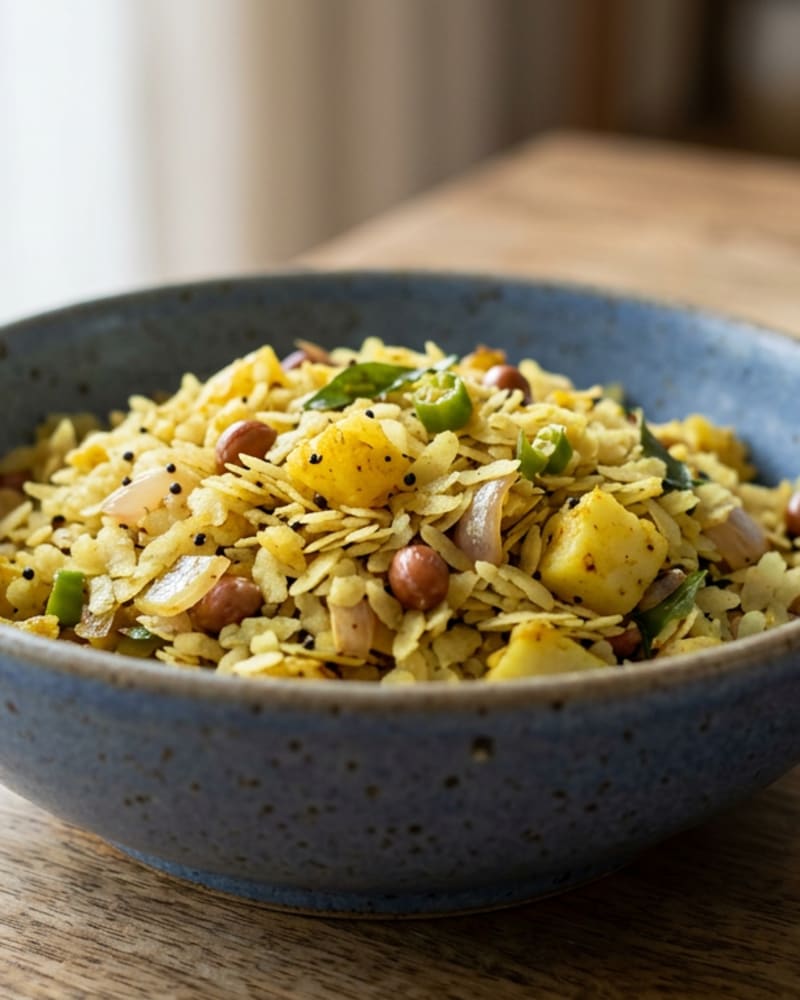
It is 7:40 on a weekday morning, the toast has already disappointed you, and there is a skillet with your name on it. This poha is 15 minutes from rinsing to the table, and it begins with mustard seeds popping in hot oil, which is the sound of a morning getting more interesting than your inbox. If someone stayed over, they will remember the breakfast.
Rinse it, drain it, and toss it gently: the rice does the rest while it steams.
Poha is flattened rice, a pale, dry flake that softens in minutes. Here the poha goes into a pan with onion, potato, mustard seeds, curry leaves and turmeric, then steams briefly with a lid on. What comes out is yellow, soft and fluffy, with a little crunch at the edges and a lot more flavor than the ingredient list suggests.
What you need
- 2 cups flattened rice
- 1 onion
- 1 potato
- 1 tsp mustard seeds
- 8 leaf curry leaves
- 2 tbsp vegetable oil
- 0.05 oz ground turmeric
- ¼ cup fresh cilantro
- ¼ tsp salt
- ¼ tsp black pepper
How to make it
- Rinse the 2 cups flattened rice under cold water for 30 seconds and drain in a colander for 5 minutes.
- Dice the 1 medium onion and 1 small potato.
- Heat the 2 tbsp vegetable oil in a large skillet over medium heat.
- Add the 1 tsp mustard seeds and 8 curry leaves and sizzle for 30 seconds until they pop.
- Stir in the diced onion and potato and cook for 5 minutes until the potatoes soften.
- Add the 1/2 tsp ground turmeric, salt, black pepper, and the drained flattened rice and toss gently for 3 minutes.
- Cover and steam on low heat for 2 minutes.
- Garnish with the 1/4 cup fresh cilantro and serve warm.
Notes
Cooked leftovers keep three to four days refrigerated, per USDA FSIS. Poha is best the day you make it, because the flattened rice keeps absorbing moisture as it sits and goes dense and a little heavy. If you are planning ahead, cook the potato and spice base and add the rice fresh.
To reheat, sprinkle a spoonful of water over it, cover the pan, and warm it over low heat for a minute or two, so it softens again without drying out. It does not freeze well, because the potato can turn grainy once it has been frozen.
The rinse is the whole technique. Put the rice in a colander and run cold water over it for 30 seconds, tossing with your hand, then leave it to drain for five minutes. The flakes take up just enough water to turn soft in the pan. If you soak the rice in a bowl, it becomes mushy and breaks apart as soon as you stir it.
Heat the oil until the mustard seeds pop when they hit it. That is a signal, not a guess: the seeds crackle and jump for about thirty seconds, and the curry leaves sputter, and the oil takes on the flavor for the rest of the dish. If the seeds do not pop, the oil is not hot enough yet.
Toss the rice gently when it goes in. The flakes are fragile, and stirring hard breaks them into small pieces. Lift and fold with a spatula, and use a light touch.
On SwipeCart, the poha card is the one that shows up when your swipe list has been all dinners and you want something for the other meal. Your agent puts the flattened rice, the curry leaves and the potato in the cart, and the morning is sorted.
Swaps that actually work
The flattened rice, the mustard seeds and the turmeric are the point. The rice is the body, the mustard seeds are the crackle, and the turmeric is the color and warmth. Take any of them out and it stops being poha, and the mustard seeds will notice before you do.
Flattened rice comes in thick and thin varieties. The thick kind is more forgiving and holds its shape, and the thin kind softens in seconds, so it needs a shorter rinse and a shorter drain.
Potato is optional, and you can leave it out if you are short on time. Peas, carrots or a handful of chopped tomato can go in with the onion. Roasted peanuts are a common addition: fry a handful in the oil before the mustard seeds, and they add crunch.
Curry leaves can be hard to find. Check an Indian grocery, where they are often sold fresh. If you cannot find them, the dish is still good without them, although it loses a layer of flavor. There is no swap for the smell.
A squeeze of lime at the end brightens everything and is a good addition, as are a pinch of sugar and a few slices of green chile. The swap that costs you the dish is soaking the rice in place of rinsing it: you lose the fluffy texture, and what you get is a bowl of sticky, broken flakes.
If it goes wrong
It is gummy and sticky. Too much attention, too soon: the rice was soaked or rinsed for too long, or it was stirred too hard. Spread it out in the pan over low heat, uncovered, and let some of the moisture cook off. Next time, rinse for thirty seconds and drain for the full five minutes.
It is dry and hard. The rice did not get enough water. Sprinkle a spoonful of water over it, cover the pan, and steam for another minute or two on low heat.
The potatoes are still firm. They were cut too large, or they did not get the full five minutes before the rice went in. Dice small next time. For now, push the rice to one side and give the potatoes a few more minutes before you fold it all together.
It tastes flat. Salt is the first thing to check. Taste a spoonful, add a pinch, and finish with a squeeze of lime and the fresh cilantro, because acid and herbs lift it.
What to serve with it
The default is a bowl on its own, with the cilantro on top, warm.
The better version comes with a cup of hot tea and a squeeze of lime. It is a light plate and the lime pushes it from pleasant to bright. A spoonful of plain yogurt on the side cools it down.
The thing in the fridge that lifts it is a handful of crunchy fried noodles or sev on top, if you have it, or a sprinkle of grated coconut. Both are quick.
It works as lunch, packed warm in a container, and it is easy to eat at a desk with a fork.
If you are making breakfast for two, this is a good one to cook in front of someone. It is quick, it smells wonderful, and it looks like you know what you are doing.
Why this one earns its place
This poha is quick, it uses a short list, and it eats like a proper meal without leaving you heavy. It also gives you a reason to learn what mustard seeds sound like in hot oil, which is a small pleasure worth having on a Tuesday.
If you are building a week of meals that includes mornings, weekly meal planning is the place to start. For another Indian dish that is easy to make on a weeknight, aloo gobi cauliflower curry is next. And chana masala weeknight is a good dinner to have in the same week.
More like this: all Indian recipes in Crave Corner.