Chana Masala for a Tuesday That Got Away From You
Jump to recipe ↓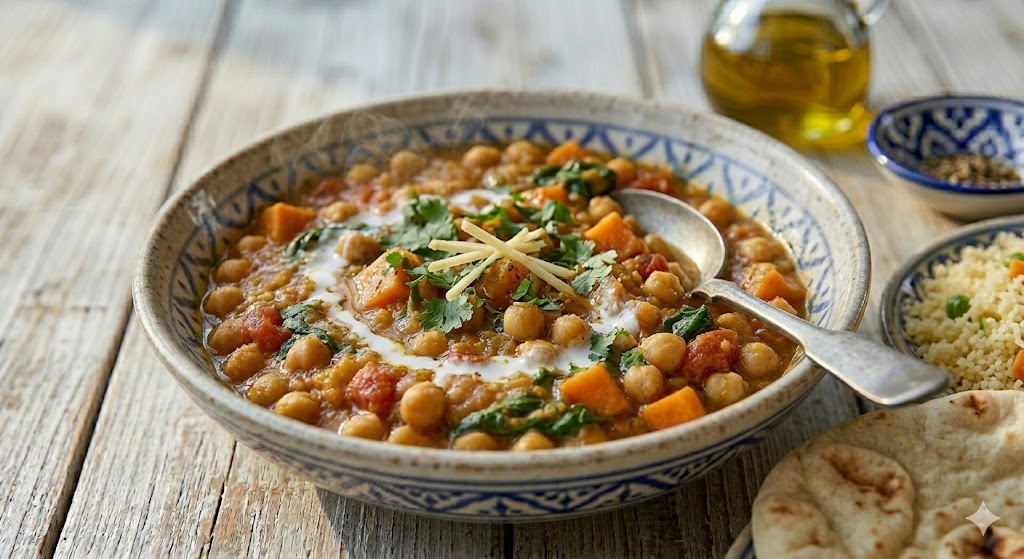
About 274 calories per serving, estimated from the ingredient list.
It is 6:40 and the plan, such as it was, has collapsed. There is no fresh anything. There are, however, two tins and a cupboard, and that turns out to be enough.
This is the dinner that costs about three dollars and tastes like you meant it.
Chana masala is the most forgiving thing in the weeknight canon. It wants cheap ingredients, it improves while you set the table, and the only step that matters is the one everybody rushes.
What you need
- 2 tbsp neutral oil or ghee
- 1 large onion, sliced thin
- 4 cloves garlic and a thumb of ginger, grated
- 2 tsp ground cumin
- 1 tsp ground coriander
- 1 tsp garam masala, plus a pinch at the end
- 1 x 400g tin chopped tomatoes
- 2 x 400g tins chickpeas, drained
- Salt, and a squeeze of lemon to finish
How to make it
- Heat the oil in a wide pan over a medium-high flame. Add the onion with a good pinch of salt and leave it alone for six or seven minutes, until the edges go properly brown. Stirring constantly is how you get pale onions and a sad curry.
- Add the garlic and ginger and cook for one minute, until it smells like something. Add the cumin, coriander and garam masala and stir for thirty seconds, no longer, or the spices turn bitter.
- Tip in the tomatoes and scrape the bottom of the pan. Simmer for five minutes, until the sauce darkens and pulls away from the sides.
- Add the chickpeas and half a tin of water. Simmer for ten minutes, pressing a few chickpeas against the side of the pan to thicken it.
- Taste, salt properly, finish with lemon and the last pinch of garam masala. Serve with rice, or with bread, or standing at the counter.
Notes
Keeps three to four days in the fridge and genuinely improves on day two, once the spices settle.
It freezes well, so make the double batch while the pan is already dirty. Label it, because a frozen curry looks like every other frozen curry.
If it tastes flat, it is almost always salt, not spice. Add salt before you add more garam masala.
Swaps that actually work
Chickpeas are the point, so leave those alone. Almost everything else will move.
No fresh onion? A tablespoon of onion granules stirred in with the spices gets you most of the way, and nobody at the table will run a forensic investigation. No fresh garlic or ginger is the same story, and the jarred paste is fine here because it is going into a long simmer rather than a raw dressing.
Tinned tomatoes are the one swap worth spending on. The cheap tins are watery and sour, and in a sauce this short there is nowhere for that to hide. If your cupboard only has passata, use about 300ml and add a splash more water.
For the spices, if you have curry powder and not much else, use two teaspoons of it in place of the cumin and coriander and keep the garam masala for the end. It is a different dish, and it is still a good one.
To make it richer, stir in a couple of tablespoons of yoghurt or coconut milk off the heat. To make it a bigger meal, add a handful of spinach in the last two minutes, or a diced potato at the tomato stage with an extra ten minutes of simmering.
If it goes wrong
Four things go wrong with this, and all four are fixable in the pan.
It tastes raw or slightly bitter. The spices caught. Thirty seconds in hot oil is the window, and past that the ground cumin turns acrid. Add a spoonful of yoghurt and a little more salt to round it off, and next time have the tomatoes open and ready before the spices go in.
It is watery. You added too much water, or the tomatoes were thin. Take the lid off and simmer harder for three or four minutes, and crush more chickpeas against the side of the pan. The starch from the chickpeas is your thickener, which is why draining them but not rinsing them away entirely matters.
It is flat. Nearly always salt. Add it in small amounts and taste between each one. If it is properly salted and still dull, it wants acid rather than more spice, so give it the lemon and see where you are.
The onion never browned. The pan was not hot enough, or it was too crowded, or you kept stirring it. Use a wide pan, get it properly hot before the onion goes in, and then genuinely leave it alone. That single step is most of the flavour.
What to serve with it
Rice is the default and basmati is worth the extra minute. Flatbread turns it into something you eat with your hands, which is a better Tuesday.
If there is yoghurt in the fridge, a spoonful on top does more for the dish than any additional spice would. Sliced red onion and a squeeze of lemon on the side gives it the sharp edge the simmer takes away.
It also makes a genuinely good lunch the next day, cold or barely warmed, which is not true of most curries.
Why this one earns its place
Every household needs two or three dinners that require nothing from the fridge. Not because you plan to eat them constantly, but because the evenings that go sideways are the expensive ones, and a cupboard dinner is the difference between eating and ordering.
This is the cheapest of those, and it is also the one that improves the most with a bit of attention. The gap between a rushed chana masala and a good one is about six minutes of not touching an onion.
If your whole week keeps collapsing rather than just tonight, the honest list of quick weeknight dinners sorts dinner by how much energy you have left. If the real problem is the produce you keep buying and binning, that has its own post. And if you would rather not decide any of this at 6:40, the reason evening is the worst time to choose explains what is actually going on.
More like this: all Indian recipes in Crave Corner.