Pernil With Skin That Shatters and Meat That Shreds Itself
Jump to recipe ↓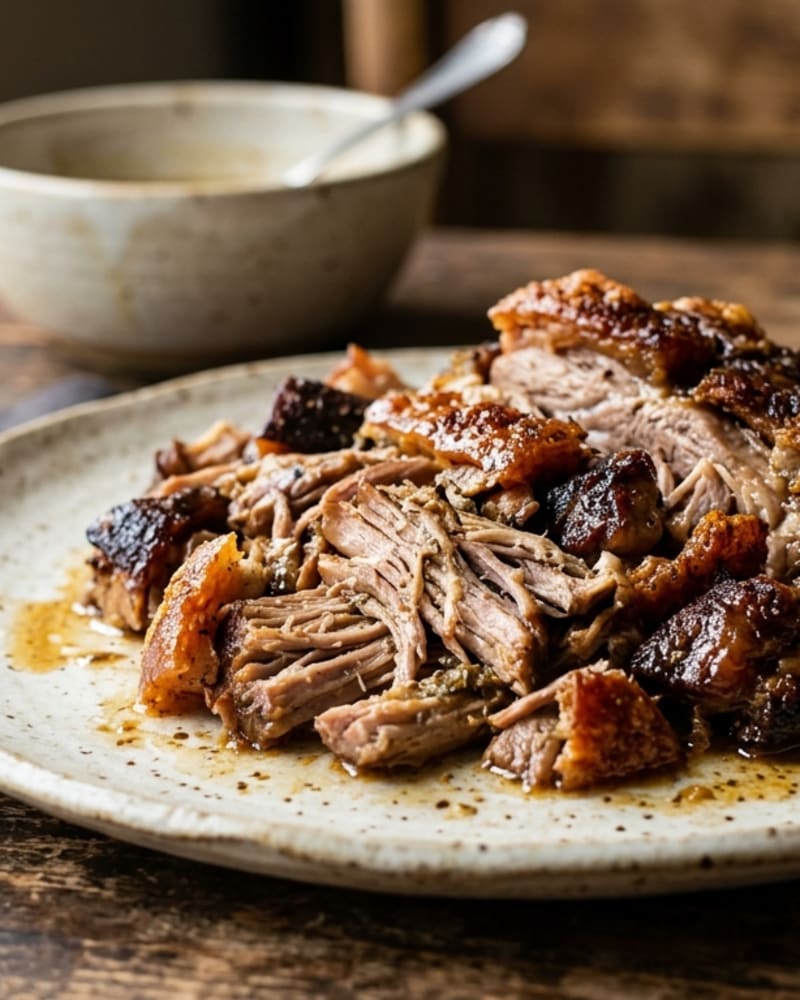
It is 10:15 on a Friday night, the kitchen is quiet, and you are rubbing a pork shoulder with ten cloves of garlic and a lot of confidence before bed. Pernil is the dish you put in early and get rewarded for later, the way a slow flirtation pays off: nothing happens for hours, and then everything does. Rub it, cover it, and let the fridge do the first half of the work.
You are buying skin that crackles and meat that falls apart, and both are earned by waiting.
The recipe is a 4 lb pork shoulder, a paste of ten cloves of garlic, olive oil, orange and lime juice, oregano, cumin and paprika, and a roasting pan with onion rings underneath. Marinate it at least two hours, or overnight if you can plan that far, then roast it covered, then uncovered. Rice goes alongside and soaks up the juices, and it feeds eight, which is the point.
What you need
- 4 lb pork shoulder
- 10 garlic
- ¼ cups olive oil
- ½ cups orange juice
- 3 tbsp lime juice
- 2 tbsp oregano
- 1 tbsp ground cumin
- 1 tsp paprika
- 1 yellow onion
- 2 cups long-grain white rice
- 2 tsp salt
- 1 tsp black pepper
How to make it
- Peel and mince 10 garlic cloves, slice 1 yellow onion into thick rings, and pat 4 lb pork shoulder dry, then score the fat cap in a crosshatch with a sharp knife (about 8 minutes).
- Stir together the minced garlic, 0.25 cup olive oil, 0.5 cup orange juice, 3 tbsp lime juice, 2 tbsp oregano, 1 tbsp ground cumin, 1 tsp paprika, salt to taste, and black pepper to taste into a loose paste.
- Rub the paste all over the pork and into the scored fat, scatter the onion rings in a roasting pan, set the pork fat-side up on top, cover, and refrigerate at least 2 hours or overnight.
- Preheat the oven to 325 F, roast the covered pork for 3 hours, then uncover and roast 45 to 60 minutes more until the skin is deeply crisp and the meat shreds easily (about 190 F inside).
- Rest the pernil for 15 minutes, then shred or slice, spooning pan juices over the meat.
- Meanwhile, cook 2 cups long-grain white rice with 4 cups water and a pinch of salt according to package directions (about 18 minutes) and serve the pork over the rice.
Notes
Cooked leftovers keep three to four days refrigerated, per USDA FSIS. Store the shredded pork with a spoonful of the pan juices, so it does not dry out, and keep any crisp skin separate, because it softens in a closed container.
Pernil is one of the dishes that does well on day two. The meat is already seasoned all the way through, and the juices settle into it in the fridge. Reheat it in a covered skillet with a splash of water, and flash the skin pieces in a hot pan or under the broiler to bring the crunch back.
It freezes well shredded, with some of the pan juices spooned over it. Thaw it overnight in the fridge before reheating. The crisp skin does not hold up to freezing, so eat that part first.
The method says to roast until the meat shreds easily, about 190 F inside. That is far past the USDA safe minimum for whole cuts of pork, which is 145 F with a three-minute rest, and it is deliberate: shoulder is tough until the collagen breaks down, and that only happens well beyond the minimum. Cooked to 145 F, it would be safe but it would not pull apart.
Pat the shoulder dry before you score it. A wet surface steams under the lid and then has to dry out before it can crisp, so a few extra paper towels at the start save you time and skin at the end. Score the fat in a crosshatch with a sharp knife, and press the paste down into the cuts.
Rest the pernil for 15 minutes before you shred it. The juices need that time to settle back into the meat, and the pan juices you spoon over the top are half of what makes the plate.
On SwipeCart, a pork shoulder card is the swipe that says you are in for the long game. Your agent puts the pork, the citrus and the garlic in the cart, and your only job is to remember the marinade before bed.
Swaps that actually work
The garlic, the citrus and the pork shoulder are the point of pernil. This is a garlic dish with pork in it, and the shoulder, with its fat cap and its collagen, is what turns into something soft and crisp after a long roast. A leaner cut can dry out.
Orange juice and lime juice are standing in for sour orange, which many cooks use in pernil. If you have sour orange, use it for both, in the same total amount. The mix in the recipe gets you close.
The shoulder can be bone-in or boneless. Bone-in is more forgiving and a little more flavorful; boneless is easier to carve. Check a boneless one a little earlier, because it can finish ahead of the time given.
Oregano and cumin can move with what is in your cupboard, but go easy on any swap. Adobo seasoning is a common stand-in, though it is salty, so taste the paste and cut the salt back. Whatever you do, do not skip the marinating time. It is the swap that costs you the dish: the flavor stays on the surface and the middle tastes like plain roast pork.
Long-grain white rice is what the recipe uses, and any plain rice works under the pernil. Beans or a tray of roasted plantains can join the rice at the table.
If it goes wrong
The skin is pale and chewy. The pork was wet when it went in, or it did not get enough time uncovered. Slide the pan under a hot broiler for a few minutes at the end, watching it closely, because skin goes from golden to burnt quickly.
The meat is dry. It was cooked well past shredding, or the pan juices stayed in the pan. Shred it, then spoon the juices over the top and let it sit for a few minutes so it soaks them up.
It will not shred. It needs more time. Cover it again and roast it until a fork twists out of the meat with no resistance. Shoulder is done when it gives up, not when the clock says so.
It tastes bland in the middle. The paste did not reach far enough in. Next time, push it deep into the scores and leave it overnight. For now, salt the shredded meat and toss it in the pan juices.
What to serve with it
The default is rice, as written, with the pan juices spooned over the top.
The better version is rice, black beans and a sharp cabbage slaw. The pork is rich, soft and a little sweet from the orange, and it needs something with crunch and acid beside it.
The thing in the fridge that lifts it is a pickled red onion or a squeeze of lime over the plate. Both cut through the fat.
It works as lunch the next day, as a sandwich on crusty bread with some of the juices for dipping.
Why this one earns its place
Pernil is what you make when you want to cook for people and be around them, not stuck at the stove. Most of the time is hands-off, the house smells like a decision you made correctly, and when it comes out, you carry it to the table and the room looks at you differently, the way people do when you have been quietly good at something. It is a long recipe that asks for very little of your actual evening.
If a roast like this is making you think about the week ahead, meal prep for the week is how to use the leftovers. For another pork dish that shreds and rewards patience, pork carnitas is next. And bbq pulled pork is the one to make when you want the same texture with a different sauce.
More like this: all Caribbean recipes in Crave Corner.