Pasta Primavera With Bright Vegetables and a Garlic Olive Oil Gloss
Jump to recipe ↓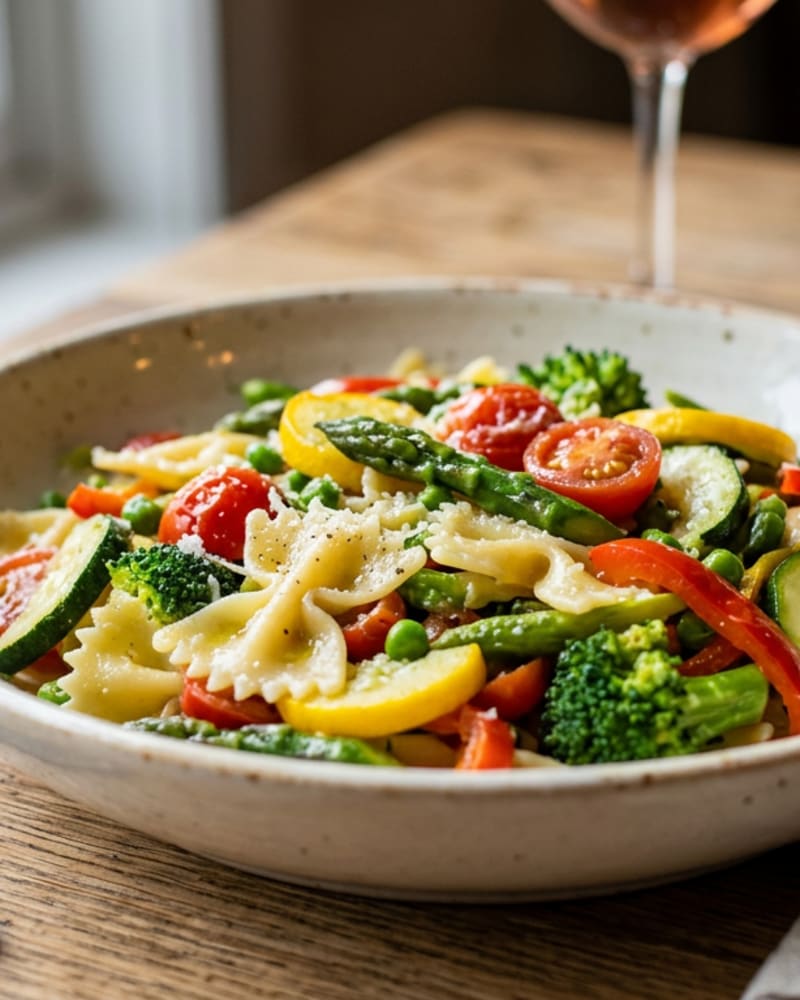
7:15 on a Friday, someone is coming over at eight, and you told them you would handle dinner. This pasta primavera recipe is 20 minutes, one pot of pasta, one big pan and a steamer, and it looks as though spring did the shopping while you only did the tossing. Pour something cold, and let them assume it was a plan.
Green, orange and glossy, and it takes less time than the wine takes to breathe.
You cook the pasta, then steam broccoli and carrots until they turn vivid. Garlic goes into olive oil for a minute, the vegetables and peas join it, and the drained pasta goes in last. A good toss to coat, salt and black pepper to taste, and it goes to the table hot. There is nothing to reduce, no sauce to watch and no window where dinner can slip away from you.
What you need
- 12 oz pasta
- 2 cups broccoli
- 2 carrots
- 1 cup peas
- 3 cloves garlic
- 3 tbsp olive oil
How to make it
- Slice the 2 carrots into thin rounds and mince the 3 garlic cloves.
- Cook the 12 oz pasta in salted water until al dente, then drain and set aside.
- Steam the 2 cups broccoli and sliced carrots for 4 minutes until bright and tender.
- Heat the 3 tbsp olive oil in a large pan over medium heat and saute the minced garlic for 1 minute.
- Add the steamed broccoli and carrots along with the 1 cup peas to the pan and toss for 3 minutes.
- Combine the drained pasta with the vegetables in the pan and toss to coat evenly.
- Season with salt and black pepper to taste and serve hot.
Notes
Cooked leftovers keep three to four days refrigerated, per USDA FSIS. Pasta drinks oil as it sits, so loosen it when you reheat it with a splash of water and a drizzle of olive oil.
Day two of this pasta primavera recipe is good cold, in the way pasta salad is good cold. The garlic mellows and the vegetables hold their color, and you can eat it straight from the container at your desk without anyone asking questions.
It does not freeze especially well, since broccoli and peas go soft after thawing. Plan on the fridge for this one.
The method has you drain the pasta and set it aside while the vegetables cook, so it will cool a little. When it meets the hot pan, it warms up again. If it has stuck together, a splash of hot water from the kettle loosens it before the toss.
Keep a mug of the pasta cooking water before you drain it. A few spoonfuls tossed through at the end help the olive oil cling to the pasta and turn it glossy rather than greasy. It is a small step that makes dinner look like you meant it.
Date night is the right place for this dish. It is quick, it is colorful, and it leaves you with enough time to light a candle and clear the table before the doorbell goes.
Swaps that actually work
The vegetables are the point of any pasta primavera recipe. Leave the broccoli, the carrots and the peas as they are, and keep the pieces small enough to sit comfortably on a fork alongside the pasta.
Asparagus, zucchini or halved cherry tomatoes can go in the pan for the last few minutes. If you have them, cut them small, and the plate gets more colorful.
Frozen peas and frozen broccoli both work, and are a good reason to make this on a night when the fresh produce has run out. Add them straight to the pan rather than the steamer, and give them an extra minute or two.
Any pasta shape holds the vegetables. Bow ties and penne trap peas well, and long pasta like linguine works if you toss it thoroughly. Cook it by the package directions until al dente.
Parmesan is not in the ingredients, but a little grated over the top at the table is a classic finish and suits the dish. Lemon zest and a squeeze of juice at the end add the brightness that a plain olive oil sauce can miss.
The swap that costs you the dish is turning up the heat on the garlic. Garlic that goes brown tastes bitter, and the entire pan picks it up. One minute over medium heat is enough.
If it goes wrong
The vegetables are gray and soft. They steamed too long. Pull them the moment they turn bright, at four minutes. If they have already gone dull, give them the shortest toss you can in the pan and let the garlic oil and a squeeze of lemon carry the plate. Gray broccoli is the dinner guest who arrived looking tired and expects you to say nothing, so say nothing, and pour the wine.
The pasta is dry. There is not enough oil, or it sat too long before it met the pan. Add a splash of the reserved cooking water and a little extra olive oil, toss until the pasta looks glossy, and taste again.
The garlic tastes bitter. It browned. Start again with fresh garlic in a clean pan if you can, and keep the heat at medium for a minute only, stopping as soon as it smells sweet.
It tastes flat. Salt, most likely. The pasta water was probably underseasoned, so add a pinch to the finished bowl, toss, and taste again. Black pepper comes after the salt, not before it.
What to serve with it
The default for a pasta primavera recipe is the bowl on its own, with a glass of something cold or a slice of crusty bread. It is a complete dinner for a weeknight.
A better version of the default is a protein on the side. Grilled chicken or shrimp slides in easily, and the vegetables in the bowl make a good partner for either.
The thing in the fridge that lifts it is a lemon. A squeeze over the top at the table gives the oil a clean, bright finish and makes the greens taste more alive.
It works as lunch the next day, hot or cold, as the notes above say. Loosen it with a little water and oil if you plan to reheat it.
Why this one earns its place
A pasta primavera recipe that makes you look put together without costing you the evening is a keeper. This one asks for a handful of vegetables, a pot and a pan, and it comes back with a bowl that looks like you planned the whole week.
Swipe it into your week and the agent can shop the broccoli, carrots, peas and pasta, leaving you the fun part: the toss.
If you are still choosing, asparagus risotto is the slower, more romantic cousin, caprese pasta salad is the cold version of the same idea, and meal planning for couples is the one to read when dinner for two keeps turning into an argument.
More like this: all Italian recipes in Crave Corner.