Miso Soup With Rice, a Quiet Breakfast for Two in 23 Minutes
Jump to recipe ↓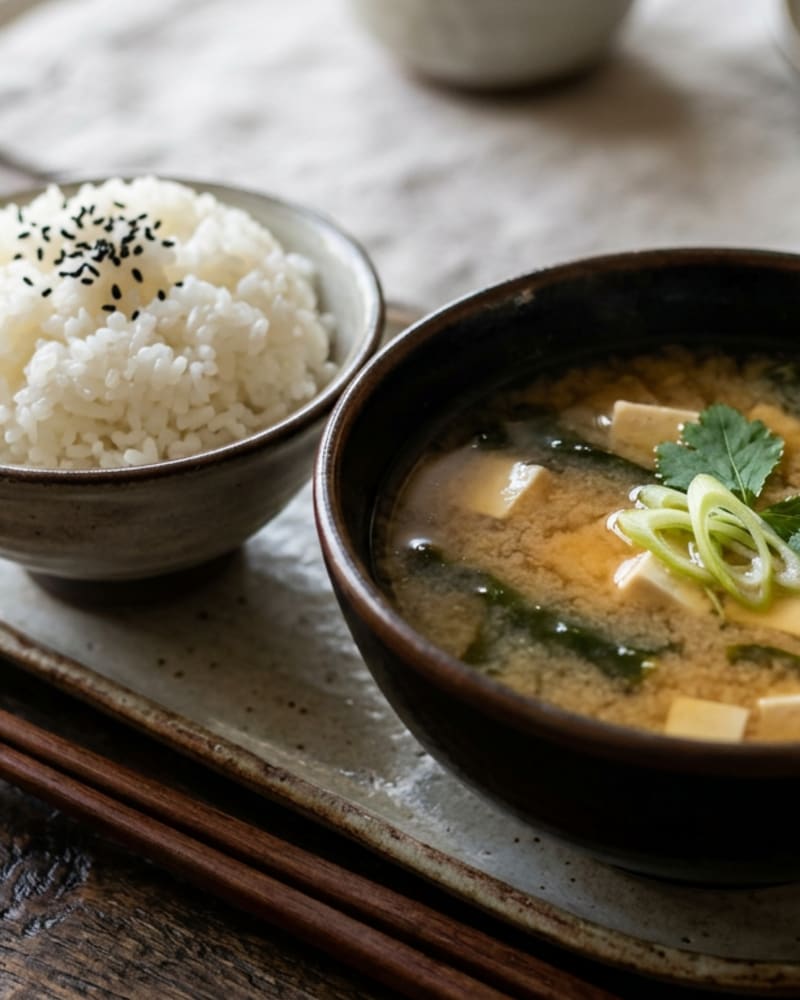
It is 6:50 on a Monday morning, the kettle is thinking about it, and you would like to start the week looking like a person who has their life together. This miso soup with rice takes 23 minutes and two small pots, and the steam alone makes the kitchen feel calmer. It is the breakfast of someone who is composed, or at least wants to be photographed that way.
A bowl of warm miso, a bowl of rice, and not a thing to apologize for.
Miso soup with rice is a Japanese-style breakfast that feels like a slow start rather than a rushed one. The soup is quick, built from white miso paste, silken tofu, dried wakame and sliced scallions, and the rice is the thing you start first, because it takes the longest. It serves two, so it is a soft, easy breakfast to share. If a loud morning is not what you want, swipe this one.
What you need
- 3 tbsp white miso paste
- 7 oz silken tofu
- 1 tbsp dried wakame
- 1 cup short grain rice
- 1 microwavable short grain rice pouch
- 2 scallions
How to make it
- Rinse 1 cup short grain rice. Cook in a rice cooker or saucepan with 1.5 cups water. Bring to a boil, cover, reduce heat, and simmer 15 minutes.
- Bring 3 cups water to a gentle simmer. Add 1 tbsp dried wakame and cook 1 minute.
- Cut the 7 oz silken tofu into 1/2-inch cubes and gently lower into the simmering water. Cook 2 minutes until heated through.
- Place 3 tbsp white miso paste in a ladle, submerge halfway in the soup, and stir to dissolve gradually. Remove from heat.
- Ladle miso soup into bowls and garnish with the 2 sliced scallions. Serve alongside the cooked rice.
Notes
Cooked leftovers keep three to four days refrigerated, per USDA FSIS. Keep the rice and the soup in separate containers. The rice hardens in the fridge, so sprinkle it with a little water and cover it before reheating, and warm the soup gently rather than boiling it.
Miso soup with rice is better the day you make it, because the tofu is softest and the miso is at its freshest. Reheated, it still comforts. It just loses some of its silkiness, so you might add a few fresh scallions to bring it back to life.
Start the rice first. It needs about 15 minutes at a simmer with the lid on, and the soup takes only a few minutes after that. Rinse the rice before it goes into the pot, because rinsing washes off loose surface starch and the grains cook up cleaner and less sticky. Once the pot is covered, resist lifting the lid, since the steam inside is doing the cooking.
Lower the tofu into the water gently, with a spoon rather than your fingers. Silken tofu is delicate, and cubes about half an inch across hold their shape better than smaller pieces, which collapse into the broth. It only needs two minutes to heat through, and rough handling will break it up.
Use the ladle trick the method describes. Place the miso paste in a ladle, lower it halfway into the soup, and stir with a spoon or chopsticks until the paste loosens and disappears into the broth. It dissolves evenly this way, with no lumps floating on top.
Here is the SwipeCart angle: this is the breakfast you make when you have more patience than appetite. Nothing in it is trying to impress anyone, and that restraint is its own kind of charm. Put the two bowls side by side and you have a table that looks intentional with almost no effort.
Swaps that actually work
The miso and the tofu are the point, so leave them alone. White miso is mild and slightly sweet, which is what makes this gentle enough for early morning. Darker miso is saltier and stronger, so use less of it and taste as you go.
Silken tofu can be replaced with soft or firm tofu. Firm tofu holds its shape better and gives the soup a little chew, though you lose the silky texture. If you have no tofu at all, a few spoonfuls of cooked rice or a soft-boiled egg dropped in at the end make it into a meal.
Dried wakame can be replaced with other seaweed, such as torn nori, though it dissolves faster and gives a different flavor. Wakame is worth keeping for the way it softens and opens up in hot water.
The recipe uses plain water, which gives a clean, simple soup. If you have dashi on hand, you can use it in place of some of the water for a deeper flavor, though you will want to taste the soup before you add more salt, since miso already carries plenty.
Scallions can become chives or the green tops of a leek, finely sliced. A pinch of black sesame seeds over the rice adds a quiet crunch, and it is optional.
The swap that costs you the dish is replacing short grain rice with a long grain one. Short grain rice is soft and slightly sticky, and that is the texture that goes with a spoonful of soup. Long grain rice is drier and more separate, and it changes the feel of the whole meal.
If it goes wrong
The soup tastes salty or harsh. There is too much miso for the amount of water, or the miso is a darker type than white. Add a splash of hot water and stir, and next time start with a smaller amount of paste and add more to taste.
The soup tastes flat. Boiling the miso is the likely cause, since it loses its fragrance at a hard boil. Warm the soup gently without bubbling, and stir in a small spoonful of fresh miso to bring the savor back.
The tofu fell apart. It was stirred too roughly, or it was cut too small. Skim out the large fragments, and if you want to rescue it, serve the soup with a spoon so it is easy to eat. Next time lower the tofu gently and keep the stirring slow.
The rice is mushy or hard. Mushy rice had too much water or too much time, while hard rice needs a little more steam. For hard rice, add a spoonful of water, cover the pot and cook a few minutes more on the lowest heat. Mushy rice is still good with soup, because soup is forgiving.
What to serve with it
The default is the pairing in the recipe: a bowl of soup next to a bowl of rice. You alternate spoonfuls, and the plain rice is a good partner to the savory broth.
The better version adds a soft-boiled egg or a few slices of pickled vegetables on the side, and a sprinkle of sesame seeds on the rice. Something crisp and sharp, such as a pickle, gives the soft meal a bright note.
As lunch the next day, the soup is a gentle, light option when you want something warm. Pair it with fresh rice or leftover rice warmed with a splash of water, and the mood of the meal comes back.
Why this one earns its place
Some meals are a loud first date and some are the person who stays for breakfast. This miso soup with rice is the second kind: warm, quiet and happy to see you before you have said a word. It is built to make an ordinary morning feel taken care of. It fills a bowl, warms your hands and asks very little.
Swipe it into your week for the morning you want to start slowly, and let the agent shop the miso, the tofu, the wakame and the rice so the cupboard is ready when you are.
For more gentle, savory meals, try Gimbap or Chicken Over Rice, and Meal Planning for Couples is a good read for a breakfast that serves two.
More like this: all Asian recipes in Crave Corner.