Masala Dosa With a Crisp Edge and a Spiced Potato Secret Inside
Jump to recipe ↓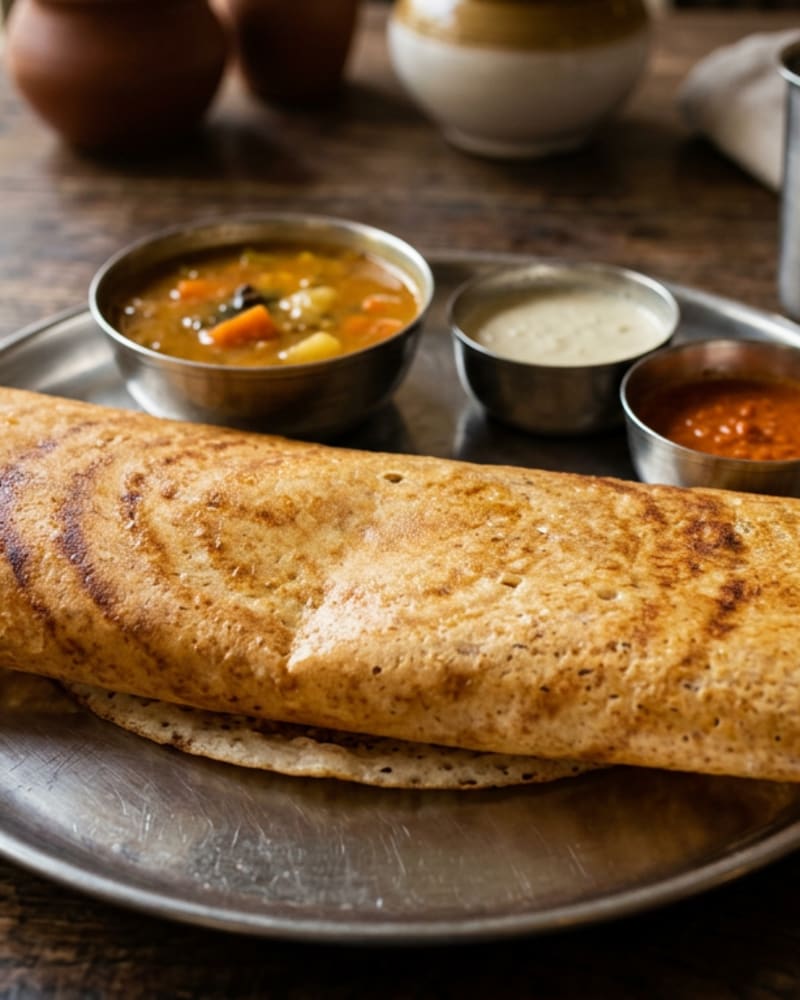
It is 8:20 on a Saturday morning, the skillet is hot, and you are about to pour batter in a circle and feel briefly like a professional. This masala dosa recipe uses ready-made dosa batter, a pan of spiced potato and a bowl of sambar, and every dosa takes about 3 minutes. It is breakfast that looks like you were up earlier than you were.
Crisp outside, soft potato inside, and the first one is allowed to be ugly.
The filling comes first: potatoes boil for 12 minutes, get mashed with turmeric and salt, then go into a skillet with sizzling mustard seeds and onion. After that, you pour, spread, cook, fill and fold. You will make 8 dosas, and the first is a practice round that you get to eat yourself.
What you need
- 4 cups dosa batter
- 3 potatoes
- 1 onion
- 1 tsp mustard seeds
- 1½ fl oz cooking oil
- 0.1 oz ground turmeric
- 16 oz 2 tbsp sambar
- ¼ tsp salt
- ¼ tsp black pepper
How to make it
- Boil 3 whole potatoes for 12 minutes until tender then mash them with 1 tsp ground turmeric and salt.
- Dice 1 whole onion into small pieces.
- Heat 3 tbsp cooking oil in a skillet and add 1 tsp mustard seeds along with the diced onion.
- Cook the onion mixture for 4 minutes until the seeds pop and the onion softens.
- Stir the mashed potatoes into the onion mixture and set the filling aside.
- Heat a nonstick skillet and lightly grease it with a little of the remaining oil.
- Pour 1/2 cup dosa batter into the pan, spread thin, and cook 3 minutes until edges crisp.
- Add potato filling to half the dosa, fold over, and repeat to make 8 dosas total. Serve with 2 cups sambar.
Notes
The batter is the base. The recipe calls for 4 cups of dosa batter, and you use half a cup per dosa, which makes 8. Stir it before you pour so it is smooth and pourable.
The pan needs to be hot but not smoking. Heat a nonstick skillet, grease it lightly with a little of the cooking oil, and pour the batter in the center. Use the back of a ladle or spoon to spread it outward in a circle, thin, in a few quick spirals. Cook for about 3 minutes, until the edges crisp and lift.
The filling takes longer than the dosas, so make it first and set it aside. It holds happily while you work through the batter.
Cooked leftovers keep three to four days refrigerated, per USDA FSIS. The filling reheats well in a pan. The dosas themselves are best fresh, because they lose their crispness as they sit.
Masala dosa is a two-part dish that you can split across the day. Swipe right on it and the potatoes, onion and batter share one list, so the only thing left to chase on Saturday is the first decent dosa. The potato filling is the part to make first, and it holds well while you work through the batter. If you are cooking for people who arrive at different times, keep the filling warm in the skillet over low heat and cook the dosas to order.
Grease the pan lightly between dosas, not heavily. Treat the oil like a first-date compliment: a little goes a long way, and too much makes the surface slick and hard to spread. A thin film is enough to give the edges color. On SwipeCart the oil and the sambar ride along on the same swipe, so nobody has to stand in the aisle deciding how much commitment a jar of sambar deserves. Wipe the pan with a folded paper towel dipped in oil, and do it every dosa or two.
When the dosa is ready, spoon some filling over half of it, then fold the other half over. You are making 8, so a rhythm helps: pour, spread, cook, fill, fold, plate, repeat. Masala dosa is a good dish for a team of two, one on the pan, one on the plates.
Swaps that actually work
The point of this dish is the crisp dosa and the spiced potato, so leave those alone. Everything else can move.
Batter: store-bought dosa batter is what the recipe uses. Many Indian grocery stores stock it, and if you make your own, use the same amount.
Potatoes: any waxy or all-purpose potato mashes well. Boil them whole for the 12 minutes the recipe gives, until a knife slides in.
Mustard seeds: they are what make the onion filling taste like a south Indian kitchen. If you have none, the filling is still a spiced potato, but it will not be quite this one.
Sambar: the recipe lists 2 cups, and it can come from a jar or a freezer container. If you do not have any, a bowl of coconut chutney or even plain yogurt gives the dosa something to dip into.
Oil: cooking oil works, and a little ghee on the pan adds flavor if you have it.
What costs you the dish: a pan that is not hot enough. A cool pan makes a pale, soft dosa, which is the best argument for patience.
If it goes wrong
The dosa sticks to the pan. The pan was not hot enough, or it was not greased. Let it heat longer, wipe it with a little oil, and expect the first one to be a sacrifice.
It tears when you spread it. The batter was too thick, or you spread it too hard. Stir in a spoon of water to loosen it, and use a gentle circular motion.
It is pale and soft instead of crisp. The heat was too low, or the batter was spread too thick. Turn the heat up a bit, and spread thinner next time.
The filling is bland. Usually salt. Taste the mashed potato before it goes in the pan and add a pinch. The mustard seeds and turmeric will do the rest.
If your batter has been in the fridge, let it sit out for a little while before you pour, and stir it well. Very cold batter may be harder to spread thin, so if the first dosa fights you, give the batter a few more minutes on the counter.
What to serve with it
The sambar is the right partner. Serve 2 cups of it in small bowls so people can dip as they go.
The better version adds a spoon of coconut chutney on the side. For a bigger breakfast, a cup of hot tea or coffee is a good match.
As lunch the next day, the leftover potato filling can go into a roti or sandwich. The dosas are best fresh, but the filling keeps.
Why this one earns its place
Some breakfasts you eat standing up. Masala dosa you sit down for. It is a project that is more of a ritual than a chore, and the payoff is a plate that looks like something from a menu. It is the one to swipe into the weekend, when you have time to enjoy the process.
If you like these flavors, try the aloo paratha, the aloo gobi cauliflower curry, or the chana masala weeknight.
More like this: all Indian recipes in Crave Corner.