Mapo Tofu With a Numbing Kick and Rice That Keeps Up
Jump to recipe ↓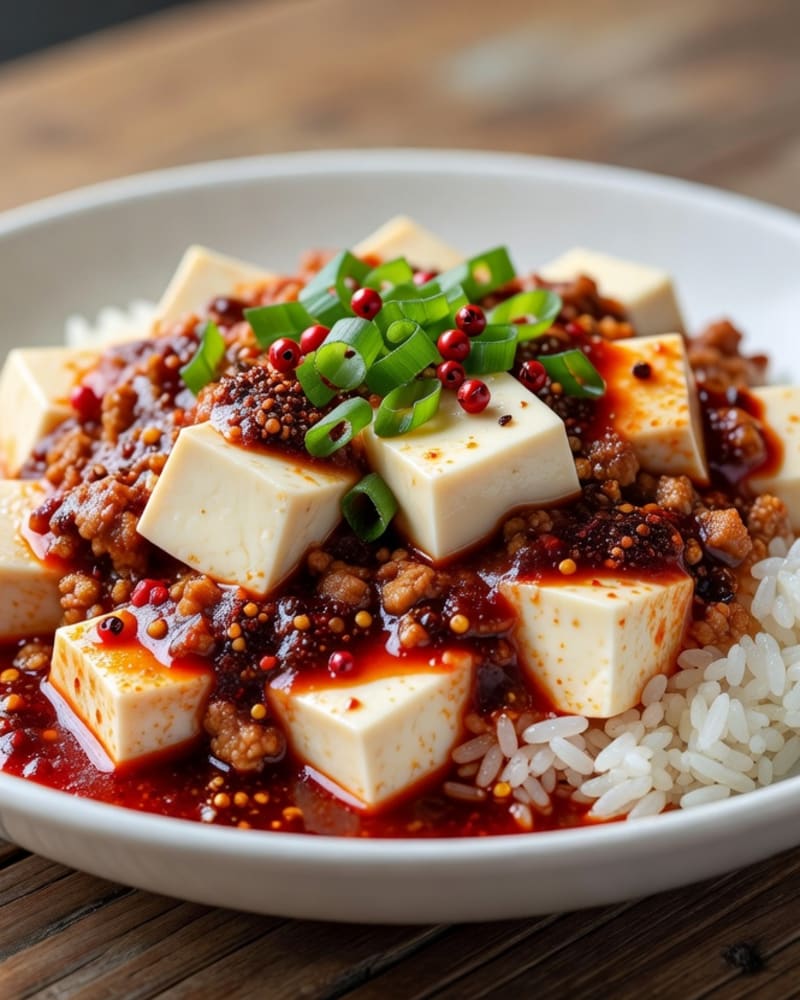
It is 6:30 on a Thursday, the day has been long, and you want something that wakes you up a little. This mapo tofu recipe takes 25 minutes, one wok and one bowl of rice, and it has a kick that feels like a dare. Soft tofu in a spicy sauce is, as it turns out, a surprisingly good way to flirt with danger on a weeknight.
Silky tofu, spicy sauce, and a tingle that sneaks up on you.
Ground pork browns, doubanjiang goes in with garlic and ginger, broth and soy sauce go in, and the tofu simmers gently in the red sauce until it thickens. The Sichuan peppercorns come at the end, and that is where the numbing part lives. Serve it over rice, because the rice is the one thing that can keep up.
What you need
- 14 oz soft tofu, cubed
- ½ lb ground pork
- 2 tbsp doubanjiang
- 1 tbsp soy sauce
- 1 tsp sichuan peppercorns
- 2 cups cooked rice
- 4 cloves minced garlic
- 1 oz grated ginger
- 1 cup chicken broth
- 2 tbsp cornstarch
- 3 stalks sliced green onions
- 1 fl oz cooking oil
- ¼ tsp salt
How to make it
- Mince 4 cloves garlic and grate the 1 inch piece of fresh ginger, then cut the 14 oz block of soft tofu into 1 inch cubes.
- Heat 2 tbsp cooking oil in a wok over medium-high heat, add 0.5 lbs ground pork, and cook while breaking it into small pieces until browned, about 5 minutes.
- Stir in 2 tbsp doubanjiang along with the minced garlic and grated ginger and cook for 1 minute until fragrant.
- Pour in 1 cup chicken broth and 1 tbsp soy sauce, then gently slide in the tofu cubes and simmer for 5 minutes.
- Mix 2 tbsp cornstarch with 2 tbsp water to form a slurry, stir it into the wok, and cook until the sauce thickens, about 1 minute.
- Sprinkle with 1 tsp Sichuan peppercorns and the 3 stalks of sliced green onions, then serve over the 2 cups cooked rice seasoned with salt and black pepper to taste.
Notes
Doubanjiang is a fermented chili and broad bean paste, and it is the backbone of the sauce. Two tablespoons, fried with the garlic and ginger for a minute until fragrant, builds the base. Do not rush that minute, because it is where the paste turns from raw and sharp to deep and savory.
The Sichuan peppercorns are added at the end, sprinkled over the top along with the sliced green onions. They are not a heat like chili. They produce a tingling, almost buzzing feel on the tongue, which is called numbing, and it is the other half of the dish. If you are new to it, start with the full teaspoon the recipe lists and see how you feel. You can always sprinkle more.
Soft tofu is delicate. Cut it into 1-inch cubes and slide it into the sauce rather than dropping it, then let it simmer for 5 minutes without much stirring. If it breaks a little, the dish will still taste right.
The cornstarch slurry goes in last. Mix 2 tablespoons of cornstarch with 2 tablespoons of water, stir it in, and cook for about a minute until the sauce thickens enough to cling to the tofu and the rice.
Cooked leftovers keep three to four days refrigerated, per USDA FSIS. The sauce thickens in the fridge, so add a splash of water or broth when you reheat. Ground pork should reach 160°F, the USDA safe minimum, so cook it until it is browned all the way through.
Mapo tofu moves fast once the wok is hot, so set everything near the stove before you start. The garlic, the ginger, the doubanjiang, the broth with the soy sauce, the tofu, the slurry and the garnish should each be within arm's reach. The cooking takes under 20 minutes, and there is no time to hunt for the cornstarch mid-simmer.
Give the pork its full 5 minutes. You are looking for small, browned pieces rather than a gray clump, and breaking it up as it cooks is how you get there. Those browned bits flavor the sauce, and they are why the doubanjiang tastes rounder than it does straight from the jar.
Swaps that actually work
The point of this dish is the doubanjiang. Leave it alone, because nothing in the pantry does what it does.
Pork: ground beef, ground chicken or turkey works in the same pan. Poultry needs to reach 165°F. A meatless version swaps in chopped mushrooms, browned until their liquid cooks off.
Tofu: soft tofu is what the recipe calls for and it gives the silky texture. Firm tofu holds its shape better if you worry about breaking it, though it is less tender.
Broth: chicken broth is in the recipe. Vegetable broth works the same way and takes the pork out of the equation if you want that.
Sichuan peppercorns: they are the signature numbing note. If you cannot find them, the dish will still be a spicy, savory pork and tofu dish, but it will not be quite this one.
Green onions: the recipe uses them as a garnish, so a handful of chopped chives will work just as well.
If it goes wrong
The sauce is too salty. Doubanjiang and soy sauce both carry salt. Taste before you add any finishing salt, and if it is too much, add a splash of water or unsalted broth and let it simmer for a minute.
The sauce is thin. The slurry did not have enough time or the heat was too low. Let it bubble for another minute, and if it is still loose, mix another teaspoon of cornstarch with a little water and stir it in.
The tofu fell apart. It was stirred too hard or dropped in from too high. Next time slide it in and stir with the back of a spoon. For now, it will still taste right, and the soft bits just thicken the sauce.
It is too hot. Doubanjiang brands differ in heat. Serve it over extra rice, and next time, use a little less paste.
It tastes flat. Almost always salt, though sometimes the sauce was not cooked down. Taste and adjust, and make sure the doubanjiang had its full minute in the oil.
A word on the numbing part of mapo tofu. Sichuan peppercorns leave a buzzing sensation on the lips and tongue that some people love at first taste and others need a few bites to get used to. A cold drink on the table helps, and so does the next spoonful of rice.
What to serve with it
The recipe serves it over 2 cups of cooked rice, and plain steamed rice is the right default. It soaks up the sauce and cools the heat.
For a better version of the default, add a simple side of blanched greens with a drizzle of soy sauce, or a cucumber salad with vinegar. A cold, crisp side offers contrast.
As lunch the next day, it reheats well in a pan with a splash of water, and the flavors deepen a bit overnight.
Why this one earns its place
Mapo tofu is not a comfortable dinner, and that is the point. Some dinners are comfortable. This one is a little exciting. It takes 25 minutes, and the result tastes like you took a risk and it paid off. It is the dish for a night when you want to feel something, and you have rice.
If you want to keep the evening going, try the hoisin garlic noodles, the kung pao tofu, or read the quick weeknight dinner ideas guide for more fast, bold dinners.
More like this: all Chinese recipes in Crave Corner.