Malai Kofta With Dumplings That Hold Together in the Cream Sauce
Jump to recipe ↓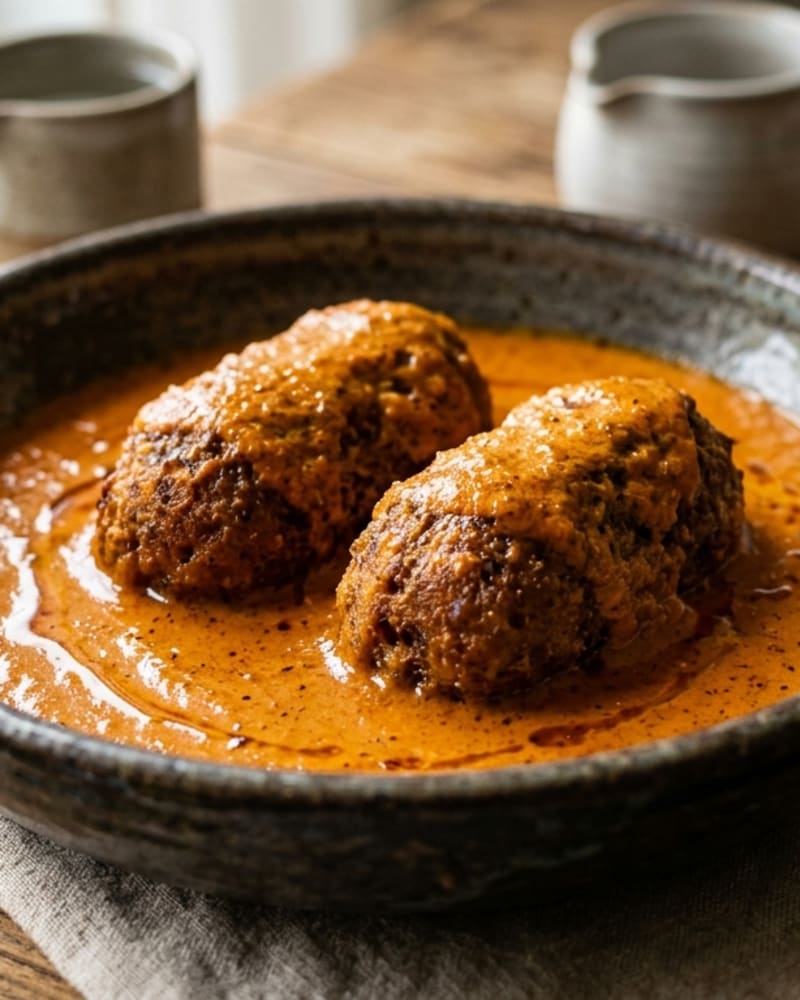
It is 7:05 on a Friday, you promised someone a proper dinner, and the takeout app is still open in the other tab. This malai kofta recipe is 33 minutes and gives you soft paneer and potato dumplings in a silky orange sauce, with naan for scooping. Close the tab. Whoever is on the couch is about to be very impressed, and you can let them think it took all day.
The dumplings are the work. The sauce is from a jar, and we will not tell.
Boil and mash the potatoes, grate in the paneer with flour and garam masala, and roll 12 balls. Fry them until golden, warm a jar of Indian simmer sauce in the same skillet, stir in the cream, and nestle the kofta in for a few minutes so they take on some of the sauce.
The payoff in this malai kofta recipe is the first cut with a fork: a thin golden shell, a soft paneer-and-potato center, and sauce that clings to both. Tear a corner of naan, drag it through, and see whether the person across from you says anything at all.
What you need
- 8 oz paneer
- 2 potato
- 16 oz jarred indian simmer sauce
- ¼ cup heavy cream
- 3 tbsp all-purpose flour
- 1 tsp garam masala
- 3 tbsp vegetable oil
- 4 naan
- 1 tsp salt
- ½ tsp black pepper
How to make it
- Peel and cut 2 potatoes into chunks. Boil in salted water until fork-tender, about 12 to 15 minutes. Drain well and mash until smooth. Let cool slightly.
- Grate 8 oz paneer into the mashed potatoes. Add 3 tbsp all-purpose flour, 1 tsp garam masala, salt, and black pepper. Mix until a soft dough forms, then shape into 12 equal balls.
- Heat 3 tbsp vegetable oil in a large nonstick skillet over medium heat. Fry the kofta balls in batches, turning gently, until golden on all sides, about 6 to 8 minutes total. Transfer to a paper towel-lined plate.
- Pour 16 oz jarred Indian simmer sauce into the same skillet (wipe out excess oil if needed) and warm over medium heat for 3 to 4 minutes. Stir in ¼ cup heavy cream.
- Nestle the fried kofta into the sauce and simmer gently for 3 to 4 minutes so they soak up some sauce without falling apart.
- Warm 4 pieces of naan in a dry skillet or oven for 1 to 2 minutes until soft.
- Serve the malai kofta with the warm naan for scooping.
Notes
Cooked leftovers keep three to four days refrigerated, per USDA FSIS. The kofta keep soaking up sauce as they sit, so reheat gently over low heat and do not boil them hard.
If you are cooking ahead, fry the kofta and keep them apart from the sauce. Bring them together for the last 3 to 4 minutes of simmering, which is also when they are at their best.
Shape the balls the same size, so they all finish together. Twelve is the number from the method, and it is enough for four people alongside the naan.
Fry in batches, turning gently, and rest them on a paper towel-lined plate. Crowding the skillet drops the oil temperature and the kofta start to stick.
On SwipeCart this is a swipe right with a low chance of ghosting: paneer, sauce, naan, done. Paneer, sauce and naan all land in your cart in one go.
A calm way to cook this malai kofta recipe is to have everything ready before the oil goes on: the sauce jar open, the plate lined with paper towel, the kofta shaped. Frying is quick, and it goes better when you are not hunting for a spoon.
Grate the paneer on the large holes of a box grater. It gives you a soft, crumbly texture that mixes easily into the mash. Mix only until a soft dough forms, because overworking it can make the dumplings dense.
Swaps that actually work
The kofta are the point. Paneer is the dumpling's whole personality, so find it.
Any jarred Indian simmer sauce will do the job, but a tomato-based, creamy style suits this dish best. Read the label, because heat levels vary from jar to jar, and you may want to add the cream to temper a spicier one. Half-and-half works instead of heavy cream, though it makes a thinner sauce.
Extra-firm tofu, grated, can stand in for paneer, but for a dairy-free version swap the cream too (full-fat coconut milk is the obvious candidate) and check the naan label, since some naan is made with milk or yogurt. Tofu holds its shape but loses the milky softness.
Rice can replace the naan, though you will miss the scooping.
The swap that costs you the dish is skipping the flour. Without it the dumplings fall apart in the pan, which is a very public way to end it.
The cream is a quarter cup, stirred into the warmed sauce. Add it slowly and watch the color go from brick to a paler orange. Stop when the sauce looks the way you like it, and taste before you decide it needs more.
Wipe out the skillet if the oil has darkened before the sauce goes in, as the method says. Browned oil left behind can taste bitter in a cream sauce, and a quick pass with a paper towel takes seconds.
If it goes wrong
The kofta fell apart in the oil. The mixture was too wet or too soft. Stir in a little more flour, a spoonful at a time, until a soft dough holds together, and fry one test ball before the rest.
They are dark outside and pasty inside. The oil was too hot. The method calls for medium heat. Lower the burner and give them the 6 to 8 minutes in total they need.
The sauce tastes flat. Taste before you add salt, because jarred sauces arrive seasoned. If it still needs it, a pinch of salt, a pinch of garam masala, or a little more cream will round it out.
The kofta went soft in the sauce. They simmered too long. Serve now, and next time stick to the 3 to 4 minutes in the method, at a gentle simmer.
What to serve with it
Warm naan is the default, and it is part of the recipe. Heat it in a dry skillet or the oven for 1 to 2 minutes, until soft.
The better version adds basmati rice for the sauce the naan cannot carry, and a quick cucumber and onion salad with lemon.
A handful of chopped cilantro on top lifts it if you have some. It reheats well for lunch the next day.
Serve it for a date night straight from the skillet with the naan stacked beside it and two forks, because the dumplings are better shared. If you want to impress someone with minimal fuss, this malai kofta recipe is a strong candidate: the dish looks restaurant-made, and the work is mostly mashing.
Why this one earns its place
Restaurant name on the menu, jar in the cupboard. It is dinner for two that looks like effort, or dinner for four that looks like you meant it. Swipe it into your week and the shopping list follows.
For more Indian dinners in the same register, try Baingan Bharta or Chana Masala, and for turning cravings into a plan, see the swipe meal planner.
More like this: all Indian recipes in Crave Corner.