Lamb Kleftiko, Slow-Roasted Lamb Shoulder With Lemon, Garlic and Oregano
Jump to recipe ↓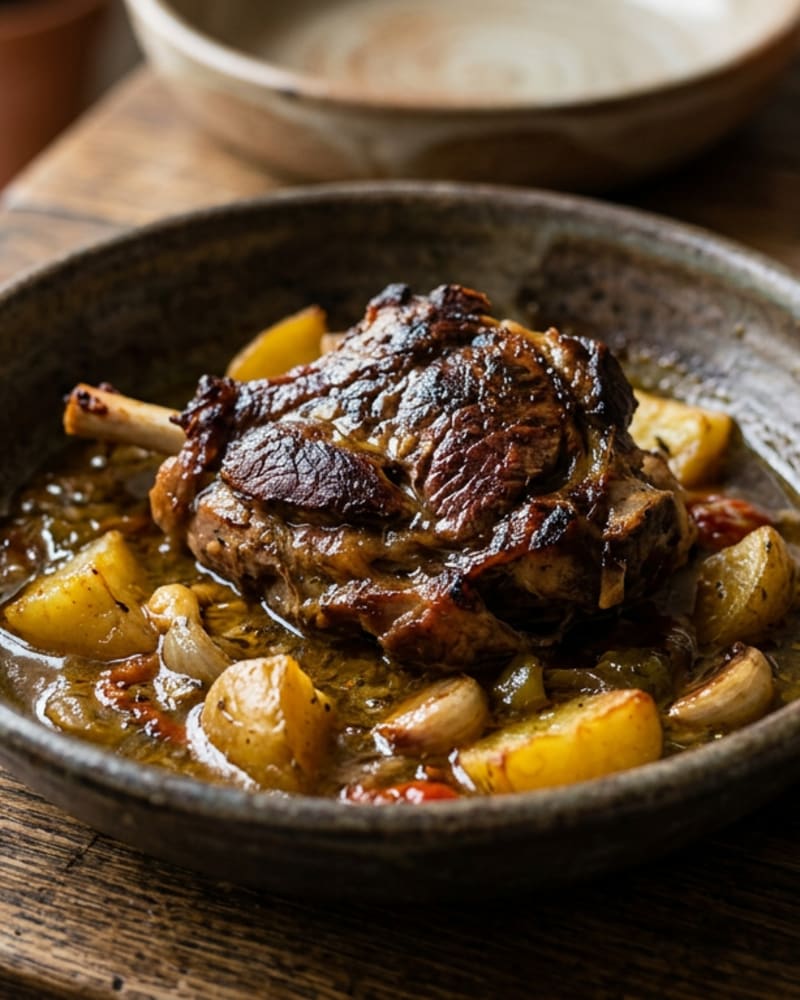
It is 2:15 on a Sunday afternoon, the lamb is rubbed, the foil is crimped, and you are not going to think about dinner again until the house starts to smell like lemon and garlic. Lamb kleftiko takes about 215 minutes on the clock and five minutes of actual effort, which makes it the best slow burn in the cookbook. You commit early, and it pays you back at the table.
Tender enough to fall apart, with five minutes of effort behind it.
The method is a short, patient one. Rub a 2 lb lamb shoulder with lemon juice, olive oil, garlic and oregano, nestle it on potato chunks in a roasting pan, and cover it tightly with foil. Three hours at 325 degrees turns the shoulder fork tender. Pull the foil, give it 20 more minutes to color the top, and let the meat rest 10 minutes before you slice.
What you need
- 2 lb lamb shoulder
- 4 potatoes
- 3 tbsp olive oil
- 2 lemons
- 4 garlic cloves
- 2 tsp dried oregano
- 1 tsp salt
- 1 tsp black pepper
How to make it
- Prep the lamb shoulder and potatoes by cutting potatoes into chunks about 5 minutes.
- Rub 2 lb lamb shoulder with juice from 2 lemons, 3 tbsp olive oil, 4 minced garlic cloves, 2 tsp dried oregano, salt and black pepper.
- Place lamb and potatoes in a roasting pan and cover tightly with foil.
- Bake at 325 degrees for 3 hours until lamb is fork tender.
- Remove foil and roast 20 minutes more to brown the top.
- Rest the meat 10 minutes before slicing and serving with the potatoes.
Notes
Cooked leftovers keep three to four days refrigerated, per USDA FSIS. Store the lamb and potatoes together with a spoonful of the pan juices, which keep everything moist.
Reheat covered in a low oven with a splash of water or broth, until hot all the way through. Lamb kleftiko is also happy as a day-two dish: the meat is already soft, and the lemon and oregano often taste more settled after a night in the fridge. It can be frozen in portions with some of its juices, though the potatoes will not be as firm after thawing.
The long cook does most of the work, so the main decision is the pan. Pick one that fits the shoulder and potatoes snugly, so the lemon juice and oil pool around the meat instead of spreading thin across a big tray. Crimp the foil firmly around the edges, and the oven handles the rest while you do something else.
Whole cuts of lamb are safe at 145 F with a three-minute rest, per USDA, and this cut goes far beyond that into fork tender territory. Fork tender is the target here, and it comes from time, not from a thermometer reading. If the meat resists a fork at the three-hour mark, give it another 20 to 30 minutes.
Check the pan once near the end of the three hours, and tilt it to see how much liquid has collected around the lamb. Spoon some of it over the meat before the foil comes off, so the top browns with lemon and garlic on it.
Swaps that actually work
The lamb shoulder and the three-hour covered roast are the point of lamb kleftiko. A leaner cut will turn out dry in this much time, so leave the shoulder alone.
Bone-in or boneless shoulder both work, and bone-in may give you a richer pan juice. Cut the potatoes into chunks of similar size so they finish together, and use a waxy or all-purpose potato that holds its shape. Dried oregano is what the recipe uses, and you can add fresh thyme or a bay leaf if you have it. If you are short on lemons, use the juice of one lemon and add a splash of white wine or water to keep the pan wet.
The swap that costs you the dish is skipping the foil. Without the tight cover, the lamb roasts instead of braising, and the long cook ends with a dry, tough surface instead of a soft one. The foil is the whole trick, and it is the one move worth being fussy about.
SwipeCart move: swipe this for a weekend when you want a dinner with some anticipation built in. Like most good things, it is better when you do not rush it, and the agent handles the lamb and the lemons while you handle the couch.
If it goes wrong
The lamb is tough. It did not get enough time, or the foil was loose. Cover it again, tightly this time, and return it to the oven for another 20 to 30 minutes until a fork slides in without resistance.
The potatoes are mushy. The chunks were cut too small or the pan was very wet. Next time, cut them larger. For tonight, lift them out with a slotted spoon, so they keep their shape on the plate.
The top is pale. The last 20 minutes uncovered did not brown it. Raise the oven temperature for the final stretch or put the pan under the broiler for a few minutes, watching closely so the lemon and garlic do not scorch.
It tastes flat. Almost always salt. A full teaspoon of salt has to season two pounds of lamb and the potatoes, so sprinkle a little more over the sliced meat and finish with a squeeze of fresh lemon.
What to serve with it
The default is exactly what the recipe plates: sliced lamb over the roasted potatoes, with the pan juices spooned over the top. It is a one-dish dinner that looks like a feast, and the pan juices work as the sauce, so there is nothing else to make.
To go further, serve a crisp Greek salad of tomato, cucumber and onion, or a pile of lemony green beans. A bowl of tzatziki or plain yogurt with garlic on the side gives you a cool contrast to the rich, tender meat. Warm pita or crusty bread helps mop up the juices.
On the next day, leftover meat is excellent in a warm pita or on top of a salad, and the potatoes crisp up if you reheat them in a skillet.
Why this one earns its place
A lot of impressive dinners ask for nonstop attention. This one asks for five minutes up front, then three hours of patience that the oven handles. It is a dinner for a night when you want to be a little extravagant, and you can walk away while it works.
If you want a dish that makes the house smell like a promise, swipe lamb kleftiko into your week and let the agent shop it. The slow burn is the best part.
More slow-cooked comfort: Beef Stifado, Beef Pot Roast, and AI Grocery Shopping App.
More like this: all Greek recipes in Crave Corner.