Juk, Silky Korean Rice Porridge for Mornings That Need Gentleness
Jump to recipe ↓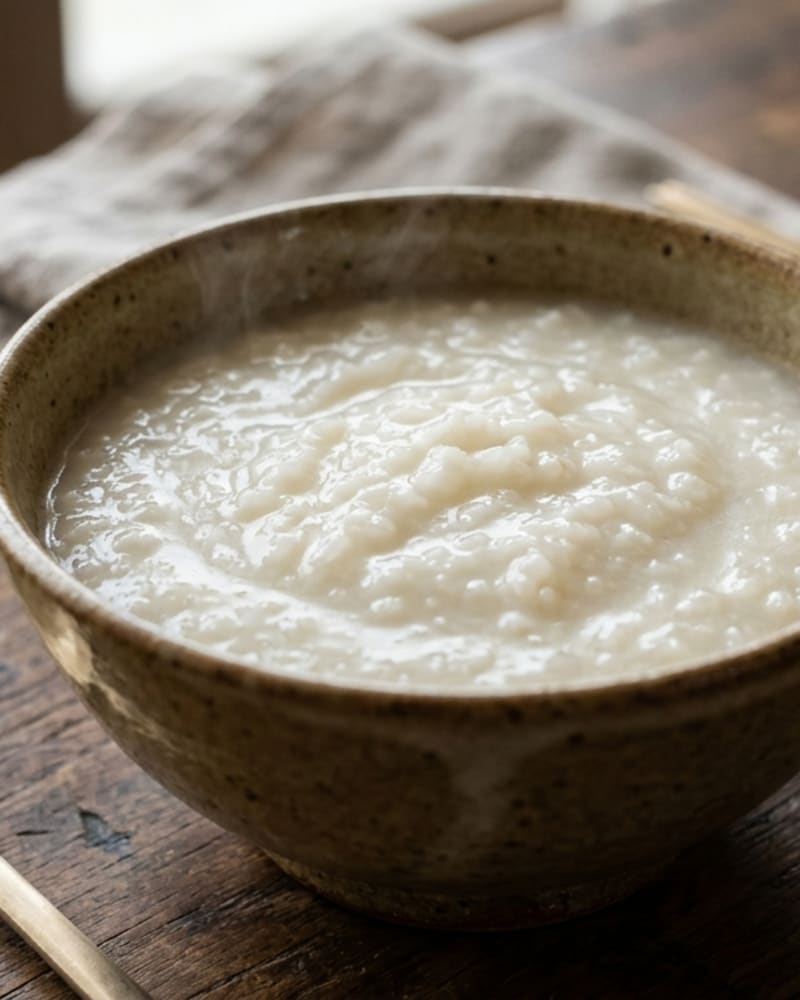
It is 7:15 on a gray Saturday, the kind of morning that calls for being taken care of, and the only one available to do it is you. This juk recipe turns one cup of rice and six cups of chicken broth into silky porridge in thirty-seven minutes, with four ingredients and about as much drama as a warm blanket. It is the breakfast you make for yourself, or for someone you are trying to impress by being kind.
Rice, broth, low heat, and a spoon you stir now and then.
Juk is Korean rice porridge, made by simmering short-grain rice in plenty of liquid until the grains soften and loosen into something creamy. Here the liquid is chicken broth, so the porridge tastes savory from the first spoonful, and the salt and black pepper at the end do the rest.
It is gentle food. It is what you eat when you are tired, a little under the weather or just not interested in a loud breakfast. It is also an excellent canvas, and a bowl with a few toppings becomes a small event.
What you need
- 1 cup short-grain rice
- 6 cups chicken broth
- ¼ tsp salt
- ½ tsp black pepper
How to make it
- Rinse 1 cup short-grain rice until the water runs clear, about 2 minutes.
- Combine the rinsed rice and 6 cups chicken broth in a pot and bring to a boil over high heat, about 5 minutes.
- Reduce heat to low and simmer for 25 minutes, stirring every 5 minutes.
- Season with salt and black pepper to taste.
- Ladle into bowls and serve hot.
Notes
Cooked leftovers keep three to four days refrigerated, per USDA FSIS. A juk recipe like this one keeps well for a few mornings. Juk thickens a great deal in the fridge, so it sets almost like a pudding. Loosen it with a splash of water or broth when you reheat, stirring over low heat.
It freezes acceptably in small portions, and the texture comes back with a little added liquid.
The method is short. Rinse the cup of rice until the water runs clear, about two minutes. Put the rice and six cups of broth in a pot and bring it to a boil over high heat, about five minutes. Turn the heat to low and simmer for twenty-five minutes, stirring every five minutes. Season with salt and pepper to taste and ladle it into bowls while hot.
Stirring matters more than it looks. Rice on the bottom of the pot catches and sticks, and regular stirring loosens it and helps the grains break down. Use a wooden spoon and scrape the bottom as you go.
Season at the end rather than the beginning. The chicken broth may be salted already, and the porridge reduces slightly, so the salt will be more noticeable when you taste at the end. Start with the quarter teaspoon, stir, taste, and add more if it needs it.
The consistency is up to you, and it changes as the pot sits, so judge it while it is still on the heat. If it is thicker than you like, stir in a splash of hot water or broth until it loosens. If it is too thin, simmer it a few minutes longer, uncovered, stirring.
Swaps that actually work
The short-grain rice is the point of any juk recipe. It releases the starch that makes the porridge creamy, so leave it alone. Long-grain rice will give you a thinner, more separate result.
Chicken broth can be swapped for vegetable broth or water, with a bit more salt for water. Bone broth gives a richer body. If you use a low-sodium broth, taste more carefully at the end.
The recipe as written is plain, so toppings are where you make it your own. Sliced scallion, a few drops of toasted sesame oil, a splash of soy sauce, toasted sesame seeds, shredded cooked chicken, a soft egg or a spoon of kimchi all work. None of these are in the ingredient list, so treat them as extras.
Leftover cooked rice can become juk in a hurry. Add the cooked rice to simmering broth and give it about fifteen minutes, which is faster, though the texture will be a little less silky.
The swap that costs you the dish is high heat. Boiling the porridge hard makes it stick and scorch, so keep it low after the first boil.
SwipeCart angle: it is the dish you swipe right on when the date is with yourself, a quiet one, with a blanket and nowhere to be. The agent only has to pick up rice and broth.
If it goes wrong
The porridge is too thin. It has not simmered long enough or the rice was not the right kind. Keep simmering over low heat and stir until it thickens. Patience is the whole seduction here, and a pot that is rushed will not give you anything.
The porridge is too thick or gluey. It cooked past where you wanted it or it sat. Stir in hot water or broth, a splash at a time, until it loosens.
The bottom is scorched. The heat was too high or it was not stirred, which is what happens when you wander off to answer a text. Porridge notices when it is ignored. Do not scrape the scorched layer into the pot. Move the good porridge to a clean pot and leave the burnt layer behind.
It tastes flat. Salt is the first thing to try. Add it a pinch at a time and taste, and finish with black pepper or a drop of sesame oil if you have it.
What to serve with it
The default is a bowl by itself, hot, with a spoon. It is the whole breakfast.
The better version of the default is a small spread of toppings on the side: scallions, sesame seeds, a soft egg, a few pieces of kimchi. Each spoonful becomes slightly different.
The thing in the fridge that lifts it is a little soy sauce and sesame oil, which turn a plain bowl into something with a bit of depth.
This juk recipe works as lunch the next day. Heat it with a splash of water and stir until smooth.
Why this one earns its place
This juk recipe costs almost nothing, needs very little attention, and does a lot for a slow morning or a tired person. It is a dish you can make for someone who is not feeling well, and it will not ask them to chew much.
If you like simple comfort food, chicken noodle soup is the neighboring bowl and chai spiced oatmeal is the sweet breakfast alternative. Meal planning and food waste is where a pot of rice and broth earns its keep.
More like this: all Korean recipes in Crave Corner.