Japanese Gyudon Beef Bowl for Two With a Soft Egg on Top
Jump to recipe ↓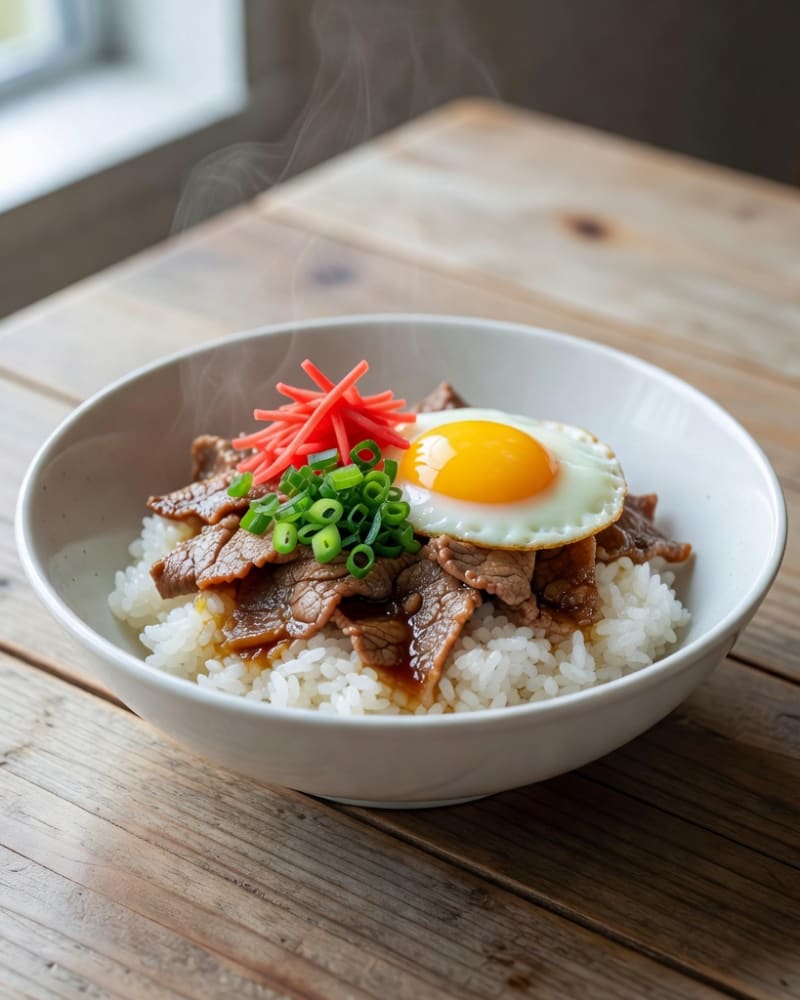
It is 8:20 on a Friday, someone at the table has just said "I could eat anything," and you both know that means nothing. This gyudon beef bowl recipe is for exactly that moment: twenty-eight minutes, a skillet and a small pot for the rice, two bowls, and an egg that does the flirting. You ask what they want, and then you hand them this.
Sweet soy, soft onion, thin beef, and a yolk that runs.
Gyudon is a beef-and-onion bowl simmered in a sweet soy broth built from dashi, soy sauce, mirin, sugar and sake. It sits over rice, it takes on the sauce, and it feels like a dinner that came from somewhere with a counter and a hanging noodle curtain, not from your kitchen at a quarter past eight.
It is a dish for two on purpose. The recipe feeds two, the broth fits one skillet, and the conversation across the table is the side dish.
What you need
- 10 oz thinly sliced beef
- 1 cup rice
- 2 microwavable rice pouch
- 1 onion, thinly sliced
- 3 tbsp soy sauce
- 2 tbsp mirin
- 2 eggs
- 1 tbsp sugar
- 1 fl oz sake
- 8 fl oz dashi
- 2 tbsp pickled ginger
- 1 tsp salt
How to make it
- Slice the 1 large onion thinly.
- Combine 1 cup dashi, 3 tbsp soy sauce, 2 tbsp mirin, 1 tbsp sugar, and 2 tbsp sake in a skillet and bring to a simmer.
- Add the sliced onion to the broth and cook for 5 minutes until translucent.
- Lay the 10 oz thinly sliced beef over the onions in a single layer and cook gently for 3 minutes without stirring much.
- Crack the 2 eggs into the skillet, cover, and cook for 2 minutes until the whites set but yolks remain soft.
- Cook the 1 cup rice in 2 cups water with a pinch of salt for 18 minutes until tender.
- Divide the rice into bowls and spoon the beef, onions, and egg on top along with some broth.
- Garnish each bowl with 2 tbsp pickled ginger.
Notes
Cooked leftovers keep three to four days refrigerated, per USDA FSIS. This gyudon beef bowl recipe holds up for a second night if you keep the parts separate. Store the beef and onion in their broth, and keep the rice separate so it does not go soggy. The egg is best eaten the night you make it, since a soft yolk is the point and it will not be soft tomorrow.
It does not freeze especially well. Thin beef and a soft egg are better fresh.
The order matters for two reasons. The beef goes over the onion, never under it, so it simmers gently in the broth instead of sitting on the hot pan. And the rice is the slowest part at 18 minutes, so keep a pot of it going in the background and plan to serve the beef and egg straight from the skillet while it is still hot. A microwavable rice pouch is a fast stand-in if you need dinner sooner.
If you prefer your yolks cooked through, give the covered pan another minute or so. Thin slices of beef cook very quickly, so spoon them out as soon as they lose their raw pink to keep them tender.
A splash of extra mirin at the very end gives the broth a glossier finish, if you like it a little sweeter. Finish each bowl with a little pickled ginger. The sharpness cuts the sweetness of the broth, and the red looks great against the egg. SwipeCart can put the beef, the dashi and the mirin in one cart, so the only thing you negotiate tonight is who gets the last of the yolk.
Swaps that actually work
The beef in sweet soy broth is the point of this gyudon beef bowl recipe. Leave the balance of soy, mirin, sugar and sake alone until you have made it once as written.
Thinly sliced beef is sold in many grocery stores, often labeled for hot pot or shabu-shabu. If you only have a steak, freeze it for about twenty minutes and slice it thin with a sharp knife.
Sake can be replaced with a little more mirin or a splash of water. The flavor will be a touch sweeter and less layered, but still recognizable.
If you cannot find dashi, a pinch of instant dashi granules in hot water is the usual shortcut. Chicken broth works in a pinch, though the broth will taste less like gyudon and more like beef stew, so add the soy gently.
Short-grain or sushi rice is better than long grain here because it holds the sauce.
The swap that costs you the dish is skipping the onion. The simmered onion is what makes the broth sweet and soft, and the beef would taste thin without it.
This is a bowl you swipe right on when the two of you have been circling the same three options for ten minutes. It ends the argument, and neither of you has to admit who gave in.
If it goes wrong
The beef is tough and gray. It cooked too long or the broth boiled hard. Next time keep the broth at a gentle simmer, lay the beef in one layer, and take it off at three minutes.
The sauce is too salty. The soy ran ahead of the dashi, which happens when you pour with your heart instead of a spoon. Stir in a splash of water or more dashi and spoon extra rice into the bowl.
The sauce is too sweet or thin. It has not reduced enough, or the sugar needs balance. Simmer it uncovered for a minute or two, and let the pickled ginger do its job at the end.
The egg whites are still runny. The pan was not covered or the heat was too low. Cover it and give it thirty seconds, then check again.
What to serve with it
The default is a bowl of rice and nothing else. This is a one-bowl dinner with the beef, onion and egg already on top.
The better version of the default is a cold cucumber salad with a little salt and rice vinegar on the side. It resets your mouth between bites.
The thing in the fridge that lifts it is sliced scallions, which also look good, or a few drops of sesame oil if you have it.
This gyudon beef bowl recipe works as lunch the next day without the egg. Warm the beef and onion in their broth, put it over fresh rice, and top with a fried egg if you want one.
Why this one earns its place
A gyudon beef bowl recipe for two that looks like you planned a date, in twenty-eight minutes with a skillet and a small pot for the rice, is hard to argue with. It is also an easy one to swipe into a week where the plan has more takeout than you would like.
If you are building the week around dinners for two, meal planning for couples is the one to read. Korean beef bulgogi bowls are the neighboring bowl worth knowing, and swipe meal planner is how the two of you stop circling the same three options.
More like this: all Asian recipes in Crave Corner.