Goi Cuon, Fresh Shrimp Rolls With a Peanut Hoisin Dip, Hardly Any Stove
Jump to recipe ↓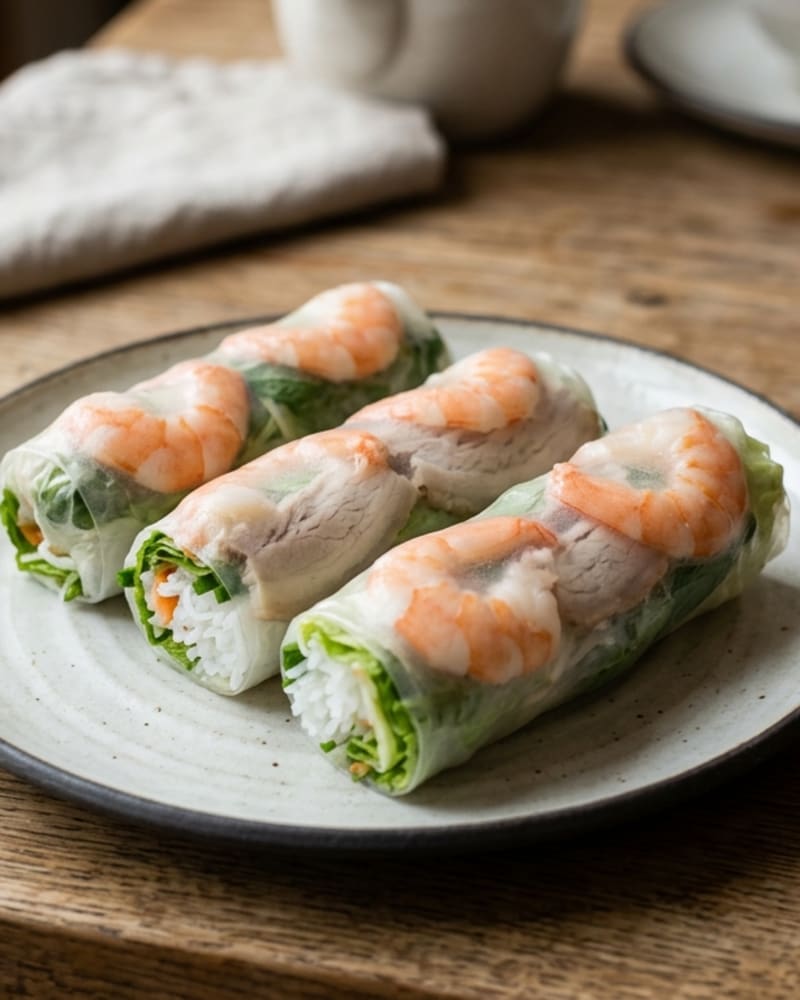
It is 12:10 on a Saturday, the fridge is full of things that need using, and you are about to roll dinner like a very small, very edible burrito. Goi cuon takes about 17 minutes of prep, and nothing here is cooked in a pan, only a pot of water for the shrimp and the noodles. It is cool, bright and a little bit flirty: you dip, you roll, you tuck, and someone is bound to ask how you made it look so easy.
Rice paper, shrimp, herbs and crunch, with a peanut hoisin sauce on the side.
You prep the carrot, cucumber, lettuce, mint and cilantro, boil the shrimp for 2 to 3 minutes, and cook the rice noodles. A dip in warm water softens each wrapper for 5 to 8 seconds, and then you layer and roll. The sauce is hoisin and peanut butter whisked with warm water.
What you need
- 12 rice paper wrappers
- 1 lb shrimp
- 4 oz rice noodles
- 1 butter lettuce
- ½ cup fresh mint
- ½ cup fresh cilantro
- 1 carrot
- 1 cucumber
- ½ cup hoisin sauce
- 3 tbsp peanut butter
- ½ tsp salt
How to make it
- Peel and julienne 1 carrot and 1 cucumber, separate butter lettuce leaves, and pick 0.5 cup mint and 0.5 cup cilantro. This prep takes about 8 minutes.
- Bring a pot of salted water to a boil and cook 1 lb shrimp for 2 to 3 minutes until pink and opaque. Drain, cool, and slice each shrimp in half lengthwise.
- Cook 4 oz rice noodles according to package directions, then drain and rinse under cold water.
- In a small bowl, whisk 0.5 cup hoisin sauce with 3 tbsp peanut butter and 2 tbsp warm water until smooth for dipping.
- Fill a shallow dish with warm water. Dip 1 rice paper wrapper for 5 to 8 seconds until pliable, then lay it on a clean board.
- Layer a lettuce leaf, a small handful of noodles, carrot, cucumber, mint, cilantro, and 2 to 3 shrimp halves near the bottom third of the wrapper. Fold in the sides and roll tightly.
- Repeat with the remaining 11 wrappers and fillings. Serve the rolls with the hoisin peanut sauce on the side.
Notes
Do all the chopping before you touch the wrappers. Once a rice paper is wet, you have a short window, so have the carrot, cucumber, lettuce, herbs, noodles and shrimp laid out and within reach.
The shrimp cook in boiling salted water for 2 to 3 minutes, until pink and opaque. The USDA safe minimum for shellfish is 145°F. Drain them, let them cool, and slice each one in half lengthwise so they lie flat in the roll.
Rinse the cooked rice noodles under cold water so they stop cooking and do not clump. Drain them well, because wet noodles make soggy rolls.
Dip each wrapper in warm water for 5 to 8 seconds, until it is pliable, not floppy. It keeps softening on the board, so do not leave it in longer. Place the filling near the bottom third, fold in the sides, and roll tightly.
Cooked leftovers keep three to four days refrigerated, per USDA FSIS, but goi cuon is best eaten the day you make it. If you must store them, wrap each roll in a damp paper towel and then plastic, and eat them within a day or two for the best texture. Keep the sauce separate in a covered container.
Swaps that actually work
For goi cuon, leave the rice paper and the fresh herbs alone. The wrappers are the structure, and mint and cilantro are what make the roll taste like itself instead of a salad in a sleeve.
Shrimp is the protein here. Cooked, shredded chicken or sliced tofu can take its place, though the roll will taste different. If you use tofu, press it first so it is not wet.
Rice noodles can be thin vermicelli, and the cooking time follows the package. Butter lettuce can be swapped for green leaf lettuce, or for thinly sliced cabbage. Carrot and cucumber can be matched with strips of bell pepper or sprouts if you have them.
The sauce can be adjusted to taste. A little more warm water thins it out, and a splash of lime juice or a pinch of chili flakes adds a bright or spicy note. Taste it before you serve.
What costs you the dish: overfilling. A roll that is too full tears when you close it, so keep the filling modest and tuck firmly.
Cutting the shrimp in half lengthwise is not fussy for its own sake. The flat side faces out through the wrapper, which is what gives the rolls their tidy look, and thinner pieces roll more easily. If you want a prettier roll, lay two or three halves down first, then stack the greens on top, and roll the pretty side out.
The dip keeps well in a small jar in the fridge, and it is good on cold noodles or raw vegetables if you have any left.
If it goes wrong
Rice paper is a little temperamental the first time, and that is normal. These problems have quick fixes, and your second roll will be better than your first.
The wrapper tears when you roll. It was too wet, too dry, or the roll was overfilled. Use less filling, dip the wrapper a touch less, and roll with firm, gentle pressure. If one tears, wrap it in a second wrapper and call it reinforced.
The wrappers are stiff or crack. They did not soak long enough. Dip for the full 5 to 8 seconds, and give the wrapper a moment on the board to finish softening.
The rolls stick together. They sat touching, which is cute for people and bad for rice paper. Place them on a lightly oiled plate, or on a damp towel, with space between each one, and cover them with a damp cloth until serving.
The sauce is too thick or too sweet. Whisk in a little more warm water until it flows, and add a squeeze of lime if it needs balance.
What to serve with it
Set out the dip in small bowls so each person has their own, and put the rolls on a platter with a damp cloth over the top until you are ready to eat. Cut each roll in half on the diagonal if you want them to look like they came from somewhere with a menu.
The default is a plate of rolls with the peanut hoisin sauce. They make a light lunch or a starter for something heartier.
The better version: pair them with a bowl of noodle soup or a simple rice dish, so the cool rolls have something warm next to them.
The thing in the fridge that lifts it: extra herbs on the side, a squeeze of lime, or a spoon of chili sauce stirred into the dip.
Wrapped in a damp towel, the rolls hold for a next day lunch, though the wrappers firm up and the herbs wilt a little, so the day you roll them is when they are at their best.
Why this one earns its place
Rolling goi cuon is a good activity for two people with a cutting board and a bit of time. Each person builds their own, picks their favorite fillings, and gets to feel like a bit of a show-off. There is no pan to scrub and the only stove job is a pot of water, so it makes for an easy date night in.
Swipe it into your week and let the agent find the rice paper and herbs, since those are the items you do not want to discover missing at noon. If you want more Vietnamese flavors, try Bun Thit Nuong, Nem Nuong, or see how a swipe-based meal planner works.
More like this: all Vietnamese recipes in Crave Corner.