Galbitang, the Clear Beef Rib Soup for a Bad Week
Jump to recipe ↓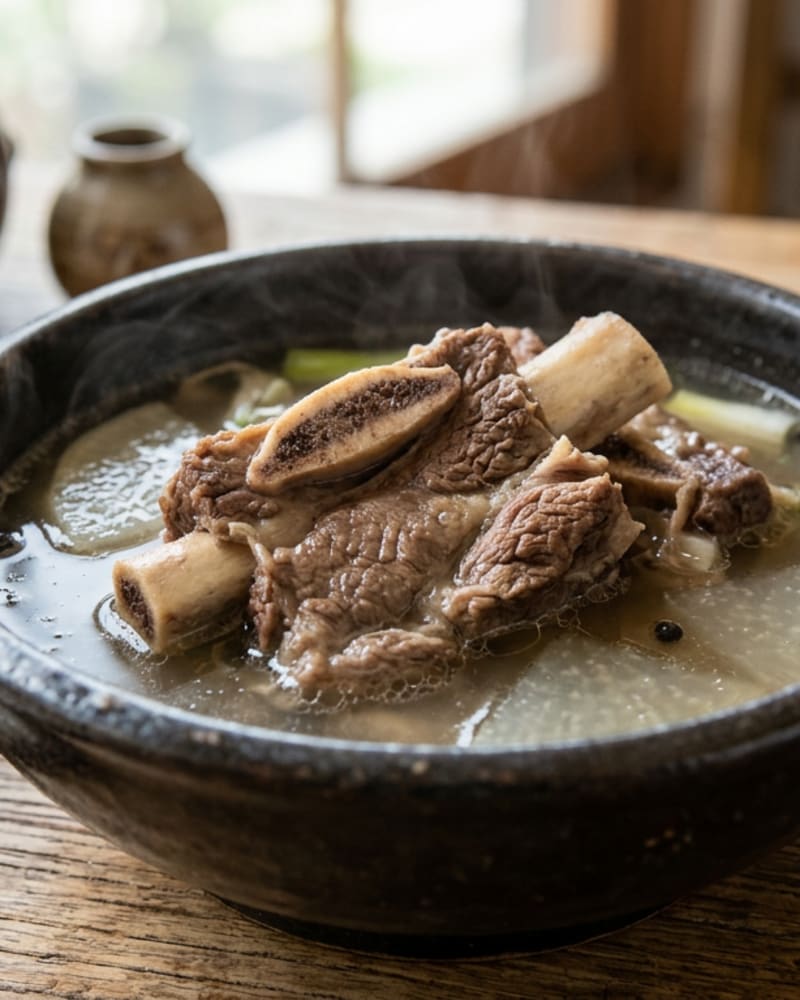
It is 4:30 on a gray Saturday, you have a cold coming on and a bad week behind you, and what you want is soup that asks nothing and gives everything. Galbitang takes a little under two hours, nearly all of it a pot on low heat, and it is the closest thing in the kitchen to being tucked in. Comfort food for the days when the group chat has been unkind.
Clear, quiet beef rib broth with a very short ingredient list.
You blanch the short ribs, simmer them with whole garlic cloves for 90 minutes, then add sliced radish for 20 more minutes. Salt and black pepper, a skim of fat, and a scatter of green onion finish the bowl. There is nowhere for a mediocre ingredient to hide, which is also why a good pot of galbitang feels like a small act of confidence.
What you need
- 2 lb beef short ribs
- 1 radish
- 8 garlic cloves
- 3 stalks green onion
- 1 tsp salt
- ½ tsp black pepper
How to make it
- Blanch the 2 lbs beef short ribs in boiling water for 5 minutes and drain.
- Simmer the ribs with the 8 whole garlic cloves in fresh water for 90 minutes.
- Slice the whole radish and add it to the pot then cook 20 more minutes.
- Season the broth with salt and black pepper to taste.
- Skim fat from the surface of the broth.
- Chop the 3 stalks green onion and top the soup with it before serving.
Notes
Blanching the 2 pounds of short ribs for 5 minutes and draining them is what keeps the broth clear and clean tasting. Rinse off any scum from the ribs before they go back into fresh water, and do not skip this step.
After that, the pot does its work. Keep the heat low enough that the surface barely moves. A hard boil clouds the broth and toughens the meat, while a gentle simmer pulls the flavor out of the bones and leaves the soup tasting calm and deep.
Cooked leftovers keep three to four days refrigerated, per USDA FSIS. Chill the pot and the fat will set on top, which makes skimming easy. Galbitang reheats well and is often better on the second day, when the broth has had a night to settle.
The radish is added after the long simmer and cooks for 20 more minutes. It should be soft and a little translucent, not mushy, and it drinks up the broth as it cooks.
Short ribs are a whole cut, and the USDA minimum is 145°F with a 3-minute rest. Here you are simmering far beyond that for tenderness, so the test is a fork: the meat should pull easily from the bone.
Swaps that actually work
Leave the short ribs and the garlic alone. The ribs give the soup its backbone, and eight whole garlic cloves turn mellow and sweet in the long simmer, which is a very different thing from raw garlic. Galbitang is the kind of date that never raises its voice.
Radish is the traditional vegetable. If you cannot find it, a daikon or a mild white turnip will do the same job in the same time. Cut it into thick slices so it holds its shape.
Green onion can be scallion, or the green tops of leeks if you have them, sliced thin and added at the end for a fresh bite.
If you want a little more body, a handful of glass noodles, cooked separately and placed in the bowl, makes the soup feel more like a full meal. Keep them out of the pot, or they will swell and soak up the broth.
What costs you the dish: seasoning too early. Salt the broth at the end, to taste, once the radish is in and the broth has had time to concentrate.
If you want to give the broth a little more savor, you can season it at the end with a spoon of soy sauce in place of some of the salt, but taste first, because the soup is meant to be clean and mild. The point of galbitang is restraint: a short list, a long simmer and a bowl that tastes like the beef. Serve galbitang in the deepest bowl you own.
If your pot is wide, the water will evaporate faster, so check the level now and then and top up with hot water, not cold, so the simmer does not stall.
If it goes wrong
The broth is cloudy. The pot boiled hard, or the ribs were not blanched well. Skim the surface with a ladle, turn the heat down to the barest simmer, and let it settle for 15 minutes before you serve. Strain through a fine sieve if you want it crystal clear.
The soup is greasy. Short ribs are rich. Skim the fat with a ladle or a spoon as it rises, or chill the broth and lift the set fat off the top before reheating.
It tastes weak or thin. The simmer was too short or the pot was too full of water. Pull out the ribs, boil the broth down for 10 to 15 minutes to concentrate it, then return the ribs to warm through and taste again for salt.
The meat is tough. The pot did not simmer long enough, or the heat was too high. Keep going on a gentle simmer, and check again in 20 minutes. The meat is ready when it gives under a fork.
What to serve with it
Galbitang is a soup meal, so serve it in deep bowls with the rib, a few slices of radish and plenty of broth in each. Set out a small bowl of salt at the table, because the pot is seasoned lightly and each person can adjust.
The default is a bowl of steamed rice on the side, and a spoonful of rice in the broth is standard. Kimchi or a quick cabbage pickle gives the clean broth a sharp contrast.
The better version: a dish of coarse salt and black pepper on the table so each person seasons their own bowl, plus a spoon of soy sauce mixed with sliced green onion for dipping the beef.
The thing in the fridge that lifts it: thinly sliced scallion on top, or a dash of toasted sesame oil if you have it.
It makes an excellent lunch the next day. Warm it slowly, and the beef will be even more tender.
Why this one earns its place
Dinner does not have to impress every night, and that is the quiet appeal of galbitang. It is a good fit for a night when you are not up for a date with a complicated recipe, only a pot you can keep an eye on while you recover. You put in time and almost no effort, and you end up with something that feels like care.
Swipe it into a cold week, and let the agent gather the ribs and the radish while you stay on the couch. If you want a few siblings, try Beef Pho, Beef Short Ribs, or see how a long-simmer soup fits into meal prep for the week.
More like this: all Korean recipes in Crave Corner.