Galbi Jjim, Soy-Braised Short Ribs That Let Go of the Bone
Jump to recipe ↓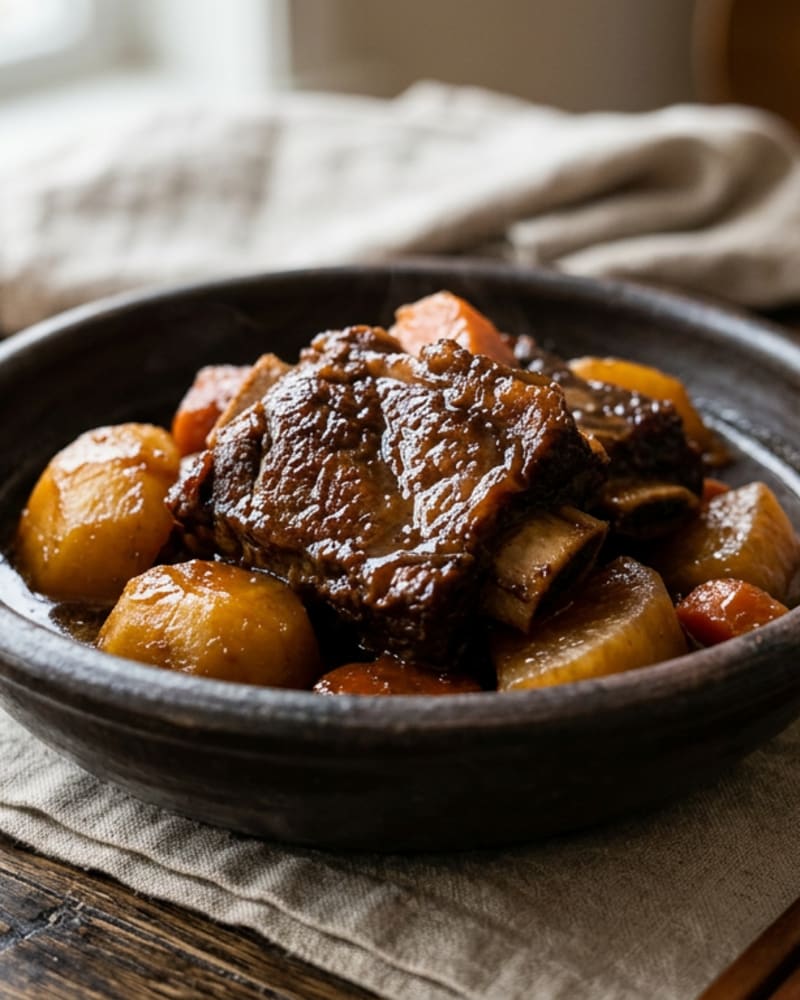
It is Sunday, 3:15 in the afternoon, and you have just decided that dinner is going to be an event. Galbi jjim takes about an hour and 45 minutes, most of which is a pot doing the work while you do something else. It is slow, sweet, soy-dark and a little bit showy, the kind of dish that makes people ask whether you have been seeing someone who cooks.
Short ribs braised until the meat lets go of the bone on its own.
You start with a quick boil to clear the ribs, then simmer them in soy sauce, brown sugar and garlic. Carrots, potatoes and onion join the party partway through, and a last splash of sesame oil goes in near the end. The sauce turns glossy, the vegetables go soft and sweet, and the whole pot smells like you tried a lot harder than you did, and we will not tell.
What you need
- 2 lb beef short ribs
- ½ cup soy sauce
- ¼ cup brown sugar
- 6 garlic cloves
- 1 onion
- 2 carrots
- 2 potatoes
- 4 stalks scallions
- 2 tbsp sesame oil
- 2 cups white rice
- 1 tsp salt
- 1 tsp black pepper
How to make it
- Place the 2 lbs beef short ribs in a large pot, cover with cold water, bring to a boil for 5 minutes then drain and rinse the ribs.
- Return the ribs to the pot with 4 cups fresh water, 0.5 cups soy sauce, 0.25 cups brown sugar and the 6 minced garlic cloves.
- Simmer covered for 40 minutes.
- Add the sliced onion, 2 whole carrots and 2 whole potatoes to the pot and continue simmering 30 minutes until the vegetables are tender.
- Stir in 2 tbsp sesame oil and cook uncovered for 10 more minutes to thicken the sauce slightly.
- Chop the 4 stalks scallions and sprinkle them over the top just before serving.
- Cook the rice according to package directions, about 20 minutes. Keep warm.
- Scoop the cooked white rice into bowls and ladle the braised ribs and vegetables on top.
Notes
The first step in galbi jjim, boiling the 2 pounds of short ribs for 5 minutes and rinsing them, is what keeps the final sauce clean and dark instead of cloudy. Do not skip it, and rinse the ribs properly under the tap so the pot stays tidy.
After the ribs go back in with the water, soy sauce, brown sugar and minced garlic, the lid stays on for 40 minutes. Then the onion, carrots and potatoes join them for 30 more minutes, and the sesame oil goes in for a final 10 minutes uncovered to thicken the sauce slightly. Do not rush that last uncovered stretch, because it is where the sauce goes from thin to glossy.
Cooked leftovers keep three to four days refrigerated, per USDA FSIS. Galbi jjim often tastes better on day two, when the sauce has had time to settle into the meat, and it reheats gently in a covered pot with a splash of water. Chill it, skim any fat that sets on top, and reheat low and slow.
Beef short ribs are a whole cut, so the USDA safe minimum is 145°F with a 3-minute rest. For braising you are cooking far past that into tenderness, so judge doneness by feel: a fork should slide in with no resistance and the meat should move away from the bone.
Swaps that actually work
Leave the short ribs alone. They are the point, and the bones give the broth body that boneless beef will not match.
The vegetables are flexible. Swap the potatoes for sweet potato if you want more sweetness, or add daikon if you have it, since it takes on the sauce well. Keep the pieces large so they do not dissolve in the pot.
If you are out of brown sugar, white sugar with a touch of molasses or honey will get you close. Taste before you commit, since the sweetness is meant to be balanced against the soy.
No sesame oil in the cupboard? You can leave it out and the dish still works, though you lose a toasty finish. Scallions are the fresh counterweight, so do not skip them if you can help it, because the richness needs something sharp on top. Think of the scallions as the one person at the table who tells the pot the truth.
What costs you the dish: swapping lean stew meat for ribs. The braise needs the fat and the bone, and the result is a different dish entirely.
A heavy lidded pot, such as a Dutch oven, is the best tool for this braise because it holds a steady low heat and a tight seal. If your pot is lighter, keep the heat lower and check the liquid level a little more often, topping up with a splash of hot water if the sauce is running low before the vegetables are tender.
If it goes wrong
The meat is tough after the full time. The simmer was too hot or the lid did not seal, so the liquid boiled hard instead of whispering. Turn the heat down to a gentle bubble, put the lid on and give it another 20 to 30 minutes, checking with a fork.
The sauce is thin and watery. It is playing hard to get. It did not reduce enough. Take the lid off, turn the heat up to a steady simmer and cook it down, stirring now and then, until it coats a spoon.
The sauce is too salty. The soy reduced further than you expected. Add a splash of hot water, a small amount of sugar, and a few extra chunks of potato, which will soak up some of the salt.
It tastes flat. If the soy and sugar are balanced but the pot still tastes dull, a pinch of black pepper and the scallions on top will wake it up. A little more garlic, grated and stirred in at the end, helps too.
What to serve with it
The pot makes a generous amount of sauce, so serve it in wide bowls rather than on flat plates. The ribs are tender enough that a spoon is as useful as a fork.
Rice is the default, and the method has you cook 2 cups of white rice alongside, which is the right call. Spoon the ribs and vegetables over the bowls with plenty of sauce.
The better version: a few simple banchan on the side, such as quick pickled cucumber or a spinach salad, to cut through the richness. Kimchi works the same way.
The thing in the fridge that lifts it: sliced scallion in a pile, a pinch of sesame seeds if you have them, and a fresh crack of pepper.
It makes a very good lunch the next day. Reheat gently with a splash of water, and bring a little extra rice.
Why this one earns its place
Some nights call for a dish that does not need your attention, only your intentions. Galbi jjim is the one for a dinner you want to feel important, or for a Sunday when the week ahead looks like a stack of bills and bad emails. It asks for patience, not skill, and it pays you back in sauce.
Swipe it into the week and let the agent shop for the short ribs and the rest, so the only thing left to do is watch the pot. If you want more beef in the same register, try Beef Galbi, Beef Short Ribs, or plan around it with weekly meal planning.
More like this: all Korean recipes in Crave Corner.