French Toast Casserole You Assemble Tonight and Bake Tomorrow
Jump to recipe ↓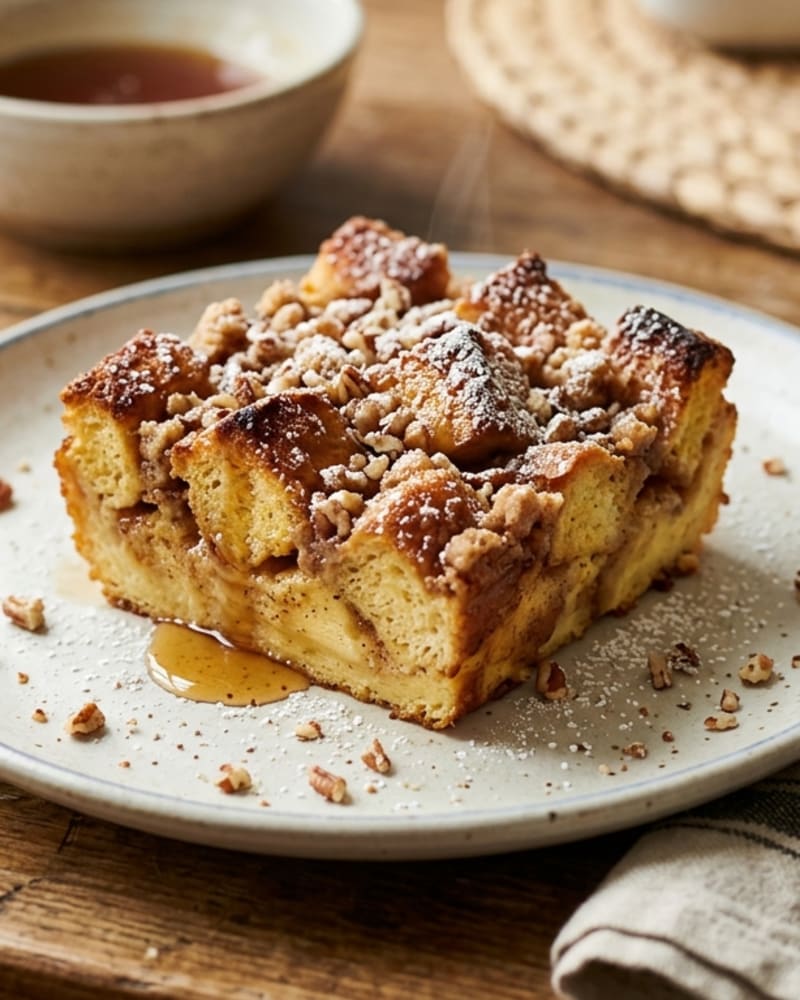
It is 9:40 at night, the dishes are done, and tomorrow-you deserves a good morning. This french toast casserole recipe takes five minutes tonight, a long sleep in the fridge, and a 35-minute bake in the morning. Tonight you do the work; tomorrow you take the credit in your pajamas.
Assemble tonight, bake tomorrow, and look like the thoughtful one.
Sixteen slices of bread go in a sprayed 9x13 pan, cut into 1-inch cubes. Six eggs, 2 cups of milk, a teaspoon of cinnamon and a little salt get whisked together and poured over the top, then you press the bread down gently so it soaks. Cover it and refrigerate for at least 2 hours or overnight. In the morning the oven goes to 350°F, the pan goes in for 35 minutes, and you carry out something golden, custardy and a little bit show-offy.
What you need
- 16 slices bread, cubed into 1-inch pieces
- 6 large eggs
- 2 cups milk
- 1 tsp cinnamon
- 1 oz cooking spray
- ¼ tsp salt
How to make it
- Cube the 1 loaf bread into 1-inch pieces, about 5 minutes.
- Spray a 9x13 baking pan with cooking spray.
- Place the cubed bread in the prepared pan.
- Whisk the 6 large eggs, 2 cups milk, 1 tsp cinnamon, and salt in a bowl.
- Pour the mixture over the bread and press down gently to soak.
- Cover and refrigerate for at least 2 hours or overnight.
- Preheat oven to 350°F.
- Bake for 35 minutes until set and golden.
Notes
Cooked leftovers keep three to four days refrigerated, per USDA FSIS. Cut the casserole into squares, store them in a lidded container, and reheat in the oven or the toaster oven until warmed through.
This french toast casserole recipe improves slightly on day two, in the sense that the squares firm up and hold together better when you cut and reheat them. A microwave works in a pinch, but the edges stay softer.
This recipe was not tested frozen. If you want to try it, wrap individual squares tightly, freeze them, and thaw overnight in the fridge, then treat the result as an experiment.
The overnight rest is the step that does the work. Cover the pan so the top does not dry out in the fridge. Two hours is the minimum, and overnight gives you a more evenly soaked result.
The custard here is eggs, milk, cinnamon and a little salt, with nothing sweet in the bowl. That keeps the casserole from tasting like dessert and puts you in control at the table. If you like it sweeter, whisk in a spoonful of sugar and a splash of vanilla, which are your call, not part of the method.
Here is the SwipeCart angle: swipe this one on a Sunday night and your Monday morning is already handled. The agent can have the bread, eggs and milk in the cart before you have decided what to watch.
Swaps that actually work
The bread is the point of a french toast casserole recipe, and it is the one place to be picky. Use a sturdy loaf with some body, such as challah, brioche or a country white. Cut into 1-inch cubes, it absorbs custard without collapsing. Very soft sandwich bread turns to mush, so if that is all you have, leave the cubes out on the counter for an hour to dry slightly before they go in the pan.
The milk can be whatever you have. Whole milk gives the richest custard, and a lower-fat milk makes a lighter one. Half-and-half pushes it further toward dessert.
The cinnamon is the only spice in the method. Nutmeg is a friendly addition if you want one, but a pinch goes a long way.
The cooking spray can become a thin smear of butter in the pan, which also gives the bottom a golden edge.
For serving, maple syrup, powdered sugar, chopped nuts or fresh fruit are all natural fits. These are serving suggestions, not part of the ingredient list.
The swap that costs you the dish is rushing the rest. Bake it straight away and the middle is wet and the edges are dry. Give the bread time to drink.
If it goes wrong
The middle is wet or eggy. It did not bake long enough, or the bread was too fresh and too dense to absorb the custard. Return the pan to the oven for another 5 to 10 minutes, until the center is set and no liquid pools when you press it.
The top is dark but the middle is raw. The oven runs hot, or the pan sat too close to the element. Tent the top loosely with foil and keep baking until the center sets.
It is dry. It baked too long, or the custard did not reach the top layer of cubes. Press the bread down firmly after pouring next time, and serve it with plenty of syrup tonight.
It is flat. Most often salt and sweetness, since the custard is lightly seasoned. A pinch of salt in the pan and a generous pour of syrup on the plate bring it into focus.
What to serve with it
The default is warm maple syrup and a pot of coffee. That is what a casserole like this wants from a morning.
The better version of the default adds something fresh and tart: berries, sliced strawberries or a spoonful of yogurt on the side. The casserole is rich and soft, and the fruit gives it contrast.
The thing in the fridge that lifts it is bacon or sausage, if you have some, which brings salt and chew to a sweet plate. A dusting of powdered sugar makes it look like you went out for brunch.
It also makes a fine afternoon snack, cold or reheated, with no further effort.
Why this one earns its place
You will have a morning when you have people to feed, or just one person you want to feed well, and you do not want to be standing at the stove. This french toast casserole recipe moves the effort to the night before and leaves the oven to do the morning shift.
It also serves six, so a single pan covers a table of guests or a few days of breakfasts for a household. That makes it a good weekend project.
If you want a different kind of baked breakfast comfort, the cinnamon roll bake is a close cousin. For a hand-held, dippable version of the same flavors, try the crispy French toast sticks. And if you like the idea of doing tomorrow's work tonight, meal prep for the week takes it further.
More like this: all American recipes in Crave Corner.