Dakgangjeong With a Freezer-Aisle Crunch and a Sticky Gochujang Glaze
Jump to recipe ↓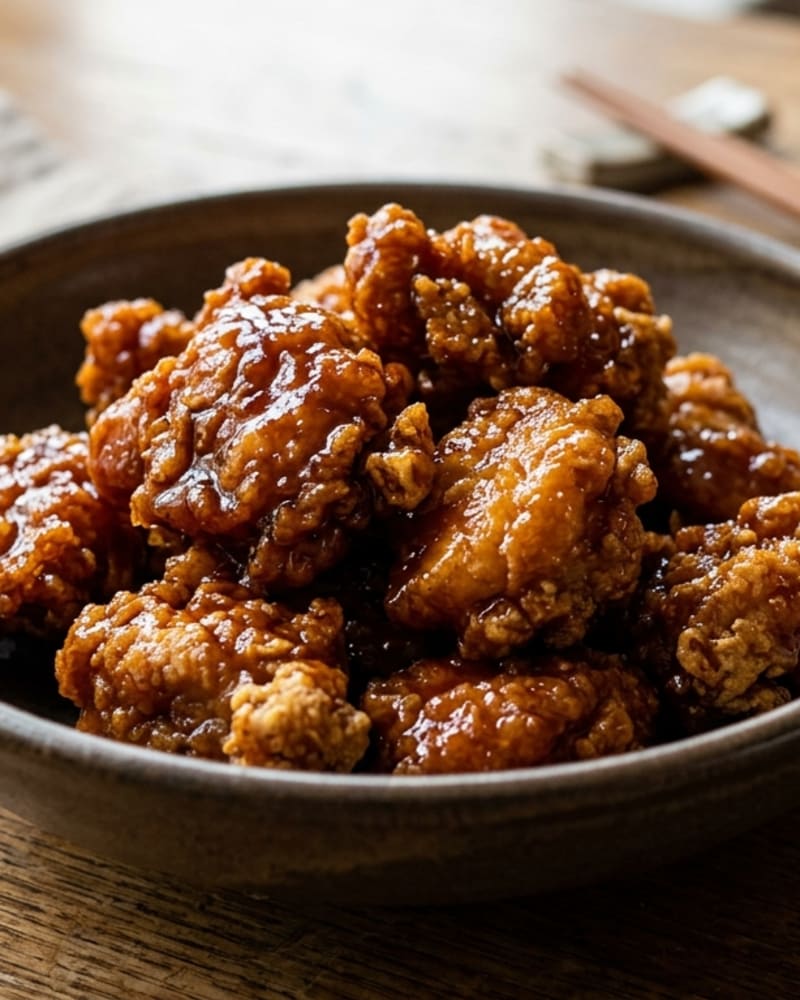
It is 8:15 on a Saturday, you have people over, and no one has eaten. This dakgangjeong recipe is the one that looks like you cooked all day: crispy chicken in a sticky, sweet and spicy glaze that clings to every piece. It starts in the freezer aisle, and we won't tell anyone, because the glaze is where the personality lives.
The crunch comes from the oven, the swagger comes from the sauce.
You preheat the oven according to the package, usually 400 F, and arrange the frozen breaded chicken on a baking sheet. It bakes until deep golden and crisp, typically 18 to 25 minutes, flipping once halfway. While it bakes, you mince 3 cloves of garlic, slice the green onions, and whisk the sauce in a large skillet: gochujang, honey, soy sauce, rice vinegar, garlic, sesame oil and a pinch of salt and pepper.
The sauce simmers for 2 to 3 minutes until glossy. The chicken is cut into bite-size chunks, goes into the skillet hot, and gets tossed for about a minute. Sesame seeds and green onions go on top, and the rice pouches heat up while you toss.
The shortcut here is the frozen breaded chicken, and the dakgangjeong recipe is built around that choice. Traditional versions fry the chicken twice for extra crunch, and this one uses the oven and the freezer aisle instead. The glaze is where it earns its name, so spend your attention there.
What you need
- 24 oz frozen breaded chicken breasts
- 3 tbsp gochujang
- 3 tbsp honey
- 2 tbsp soy sauce
- 1 tbsp rice vinegar
- 3 garlic
- 1 tsp sesame oil
- 1 tbsp sesame seeds
- 2 green onion
- 2 microwavable short-grain rice pouch
- ¼ tsp salt
- ¼ tsp black pepper
How to make it
- Preheat the oven according to the package on 24 oz frozen breaded chicken breasts (usually 400 F). Mince 3 garlic cloves and thinly slice 2 green onions while the oven heats (about 3 minutes).
- Arrange the frozen breaded chicken on a baking sheet and bake until deep golden and crisp, typically 18 to 25 minutes, flipping once halfway. Cut into bite-size chunks once cool enough to handle.
- While the chicken bakes, whisk together 3 tbsp gochujang, 3 tbsp honey, 2 tbsp soy sauce, 1 tbsp rice vinegar, the minced garlic, 1 tsp sesame oil, and a pinch each of salt and black pepper in a large skillet.
- Set the skillet over medium heat and simmer the sauce for 2 to 3 minutes, stirring, until it turns glossy and slightly thickened.
- Add the hot crispy chicken pieces to the skillet and toss quickly until every piece is coated in the sticky glaze, about 1 minute. Sprinkle with 1 tbsp sesame seeds and the sliced green onions.
- Heat 2 microwavable short-grain rice pouches according to package directions, about 90 seconds each. Serve the glazed chicken over the warm rice.
Notes
Cooked leftovers keep three to four days refrigerated, per USDA FSIS. The crunch will not survive the fridge, because sauce softens the coating. Reheat leftovers on a baking sheet in the oven to bring some of it back, rather than in the microwave.
This is a dish to eat fresh. Glazed breaded chicken does not freeze well after it has been sauced. If you want to plan ahead, keep the sauce in a jar in the fridge and bake a fresh batch of chicken when you want it.
Follow the package for the chicken. If you check it, breaded chicken should reach 165°F, the USDA safe minimum for poultry.
The gochujang and honey set the balance between heat and sweetness. Taste the sauce before the chicken goes in, and add a little more vinegar if it is too sweet.
If you want to make the dakgangjeong recipe a little spicier, add a pinch of chili flakes to the sauce while it simmers. If you want it sweeter, add a small spoonful more honey, tasting as you go, because the gochujang is already doing some of the sweet work.
Swaps that actually work
The gochujang, honey and soy glaze is the point. Leave those three alone, because that balance of heat, sweet and salt is what makes this dish.
The frozen breaded chicken is a shortcut, and any brand with a crisp coating works. If you want to make it from scratch, you can fry your own chicken pieces, but then you are cooking a different, longer recipe. Breaded chicken tenders or nuggets can stand in for the breasts if you cook them to package directions.
Rice vinegar can be swapped for a splash of another mild vinegar. Sesame oil is a small amount, but it brings a roasted note, so keep it if you can. If you do not have the sesame seeds, skip them and the dish stays good.
Swapping the glaze for a plain bottled sauce is like swiping right on a photo and discovering the person does not match: it looks right, but it is missing the personality.
If it goes wrong
The chicken is soggy. It sat in the sauce too long, or the chicken was not crisp before it went in. Bake the chicken until it is deep golden and toss it for only about a minute.
The glaze is too thin. It did not simmer long enough. Return it to the heat for another minute or two, stirring, until it turns glossy and slightly thickened.
The glaze is too thick or burns. Gochujang and honey can catch on the pan. Lower the heat, add a splash of water and stir constantly.
It is too sweet. Add a little more rice vinegar or soy sauce, a small splash at a time, until the balance returns.
It is too spicy. Serve it over plenty of rice and add a cool side such as cucumber.
A bowl of rice and a pile of glazed chicken is also a good way to feed a crowd, since the chicken gets cut into bite-size chunks and goes a long way. Set it in the middle of the table and let people take what they want.
What to serve with it
Rice is the default, and the recipe includes two microwavable short-grain pouches for it. The better version is rice with a few sesame seeds and green onion on top to match the chicken.
A cold crunchy side lifts the plate: sliced cucumber, pickled radish or a plain lettuce salad. A little kimchi next to it works well too.
It works as lunch the next day, though the crunch will be gone. Reheating in the oven helps.
The sauce in this dakgangjeong recipe takes about 5 minutes and the baking is hands-off, so there is plenty of time to set the table or pour a drink. It is a dish that looks like a project and behaves like a shortcut.
Why this one earns its place
This dish is for the nights you want people to think you tried harder than you did. It is a freezer-aisle shortcut with a sauce that takes about 5 minutes and tastes like a restaurant decision.
When you swipe it into your week, the agent shops the chicken, the gochujang, the honey and the rice pouches, so the only thing between you and dinner is the baking sheet.
If you like crispy and sticky, try Korean Fried Chicken, General Tso Chicken, or let the swipe meal planner pick your next one.
More like this: all Korean recipes in Crave Corner.