Congee With Soft-Boiled Egg and a Yolk That Runs Into Every Spoonful
Jump to recipe ↓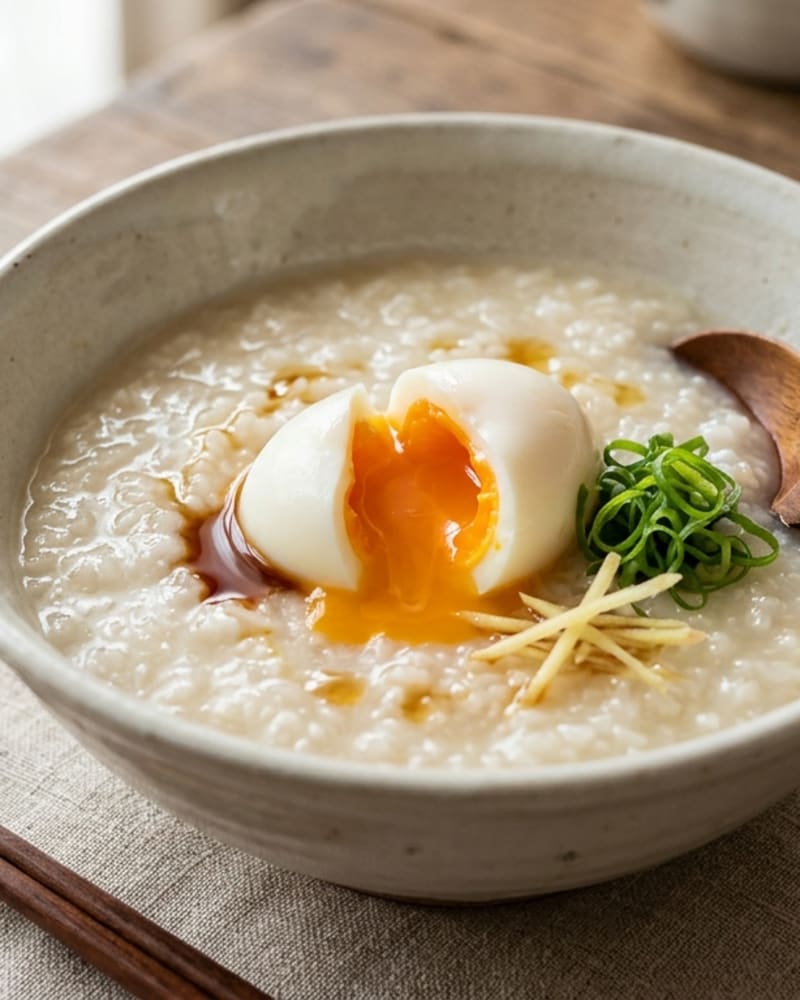
It is 6:50 on a gray morning, the kitchen is cold, and you need something that asks nothing of you but a wooden spoon. This congee recipe is jasmine rice cooked down in chicken broth until it turns into porridge, finished with sesame oil, scallions and a soft-boiled egg. It is the breakfast for the morning after, whatever the night before was, and no one has to explain it. About 52 minutes, nearly all of it simmering.
Rice, broth and time, and the egg is the garnish that steals the show.
A cup of jasmine rice and six cups of chicken broth go into a pot, and the rice slowly breaks apart into something creamy. You stir it every few minutes, you boil the eggs while it works, and you put it all in a bowl when the grains have given up. It is gentle food that does not need a hangover or a cold to justify it.
What you need
- 1 cup jasmine rice
- 6 cups chicken broth
- 4 eggs
- 3 stalks scallions, sliced
- 2 tsp sesame oil
- 0.1 oz white pepper
- ¼ tsp salt
How to make it
- Rinse 1 cup jasmine rice under cold water. Combine the rice and 6 cups chicken broth in a large pot.
- Bring to a boil over high heat, then reduce to a gentle simmer. Cook uncovered for 30-35 minutes, stirring every 5 minutes until the rice breaks down into a creamy porridge.
- While the congee simmers, bring a small pot of water to a boil. Gently lower 4 eggs in and cook exactly 6.5 minutes. Transfer to ice water for 2 minutes, then peel.
- Stir 2 tsp sesame oil, 1/2 tsp white pepper, and salt to taste into the congee.
- Ladle congee into bowls. Halve the soft-boiled eggs and place on top. Garnish with the 3 sliced scallions.
Notes
Cooked leftovers keep three to four days refrigerated, per USDA FSIS. Congee thickens into something closer to a paste as it cools, so loosen it with a splash of broth or water when you reheat it, and warm it gently, stirring as you go.
It reheats well, and a bowl on day two is a good reason to have made a big pot. Cook the eggs fresh each time. A soft-boiled egg is best the morning it is made, and the cooking is only a few minutes.
Freezing is an option for plain congee, in portions, and the porridge will be looser when it thaws. Stir it hard over low heat and add broth until it is the texture you want.
The method asks for a gentle simmer, uncovered, for 30 to 35 minutes. Uncovered matters because it lets the liquid reduce as the rice breaks down, and the stirring matters because this is a pot that sticks. Drag the spoon across the bottom and you will feel whether it is catching.
The egg gets exactly 6.5 minutes in boiling water and two minutes in ice water. The timer is the recipe here, so use it. Lower the eggs in gently with a spoon, set the clock, and have the ice water ready before the time runs out. The ice stops the cooking, and a cold egg peels more cleanly.
White pepper and sesame oil go in at the end, off the heat or close to it. They are fragrant, and long cooking dulls them. White pepper brings a quiet, floral heat that black pepper does not.
If you are making this for someone, do it on a morning after they have had a hard week. A warm bowl with an egg on top says you noticed, and it takes less explaining than a speech.
On SwipeCart this is a swipe-right breakfast for the version of you who wants comfort and is not ready to talk about it. The agent shops the rice and the broth, and you just stir.
Swaps that actually work
The egg is the point. Jammy, with a yolk that runs into the rice, and it turns plain porridge into a meal. If you skip it, add something else with richness, such as a drizzle of extra sesame oil or a spoonful of chili crisp.
Chicken broth is the base and carries most of the flavor. Vegetable broth works and tastes lighter. Water works if you add salt and a little extra sesame oil, and the porridge will taste thinner.
Jasmine rice is the one the recipe uses, and it breaks down into a fragrant porridge. Other long-grain white rice works. Short-grain rice gives a thicker, stickier congee.
Scallions can be swapped for chives. Fresh ginger cut into thin strips is a good add if you have it, and a few drops of soy sauce at the table help too.
The swap that costs you the dish is stopping early. If the rice has not broken down, this congee recipe has not finished: you have rice in broth. Keep it simmering until the grains fall apart and the whole pot looks creamy.
If it goes wrong
It is too thick. The liquid cooked down. Stir in hot broth or water a splash at a time until it loosens, and keep stirring over low heat.
It is too thin or watery. The congee needs more time. Keep simmering uncovered, stirring every five minutes, until the rice breaks down and the liquid thickens.
It stuck and scorched on the bottom. The heat was too high or you stopped stirring. Do not scrape the burnt layer into the pot, pour the good congee into a clean pot and carry on.
It tastes flat. Usually salt. Add a pinch, taste, then add sesame oil and white pepper, since the broth you used may be more or less salty than the one the recipe assumed.
The egg is hard in the middle. The timing slipped or the ice bath was late. Set the timer to 6.5 minutes the moment the eggs go in and move them straight to ice water.
What to serve with it
The default for a congee recipe like this is the bowl as written: congee, a halved egg and scallions. It is a full breakfast.
The better version of the default has a few extras at the table, such as a spoonful of chili crisp, a few drops of soy sauce, or some crunchy toppings. The thing in the fridge that lifts it is leftover roast chicken, shredded and stirred into the bowl.
As lunch it is excellent the next day. Reheat it gently, adding a splash of broth, and boil a fresh egg while it warms.
Why this one earns its place
This congee recipe is the one you reach for after a bad day or a long week. The ingredient list is short, and the pot mostly looks after itself once it is going.
It rewards patience, and it reads as care without any speeches. Swipe it into your week and let the agent shop the cart.
Want to keep going? Try chicken noodle soup, the chickpea omelet, or read about weekly meal planning.
More like this: all Asian recipes in Crave Corner.