Chicken Fatteh With Pita That Stays Crunchy Under the Sauce
Jump to recipe ↓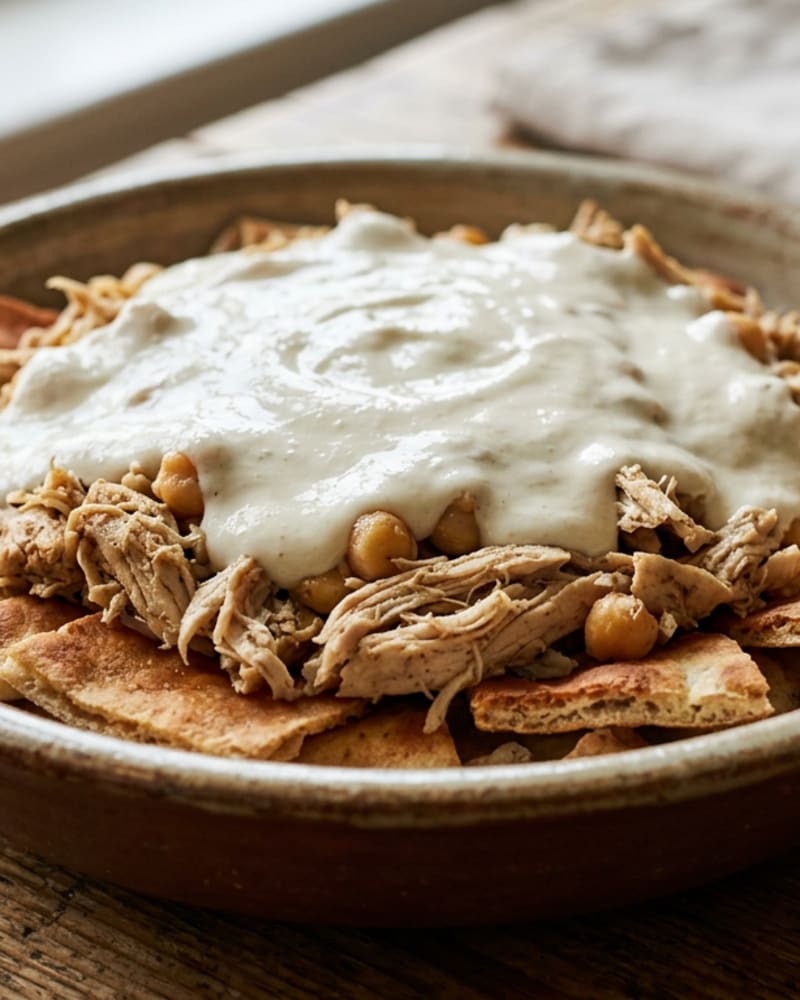
It is 6:40 on a Wednesday, the rotisserie chicken is looking tired, and the fridge light is the only thing flirting with you. This chicken fatteh recipe takes 21 minutes and ends with a platter that looks like you planned the evening. We will not tell anyone you did not.
Crisp on the bottom, cool and garlicky on top, and no one at the table asks what happened to the plan.
Fatteh, in its many regional versions, layers crunchy bread under chickpeas and meat and then covers the lot in seasoned yogurt. This one uses torn pita, shredded chicken and a tahini yogurt sauce that pours like cream. The texture does the talking: crisp, creamy, warm, cold, and all of it in a single forkful. It is a weeknight dinner that feels a little dressed up without asking much of you.
What you need
- 3 cups rotisserie chicken
- 3 pita bread
- 1½ cups greek yogurt
- 3 tbsp tahini
- 2 garlic cloves
- 15 oz chickpeas
- ¼ cup pine nuts
- 2 tbsp olive oil
- 2 tbsp lemon juice
- ¼ cup fresh parsley
- 1 tsp salt
- ½ tsp black pepper
How to make it
- Shred 3 cups rotisserie chicken, mince 2 garlic cloves, drain and rinse 15 oz chickpeas, and chop 1/4 cup fresh parsley, about 8 minutes.
- Preheat the oven to 400 F. Tear 3 pita breads into bite-size pieces, toss with 2 tbsp olive oil, and bake 8 to 10 minutes until golden and crisp.
- In a bowl, whisk 1.5 cups greek yogurt, 3 tbsp tahini, the minced garlic, 2 tbsp lemon juice, salt to taste, and black pepper to taste until smooth. Thin with a splash of water if needed.
- Toast 1/4 cup pine nuts in a dry skillet over medium heat for 2 to 3 minutes until golden. Warm the shredded chicken and chickpeas briefly if desired.
- On a large platter, scatter the crispy pita pieces. Top with chickpeas and the shredded chicken.
- Pour the yogurt tahini sauce generously over everything. Sprinkle with toasted pine nuts and chopped parsley. Serve immediately so the pita stays crunchy.
Notes
Cooked leftovers keep three to four days refrigerated, per USDA FSIS. Store them in parts rather than assembled: the chicken and chickpeas in one container, the sauce in another, and the baked pita in a bag away from anything wet. Once the sauce has met the pita, you have a softer, stew-like dish, which some people enjoy but which is no longer the one you set out to make.
Yogurt sauces can turn grainy after freezing, so we would keep the sauce out of the freezer. The chicken and chickpeas can be frozen on their own if you ever want a head start, though the pita is quick enough that there is little reason to freeze it.
Day two works as lunch if you keep the parts separate. The sauce firms up in the fridge, so loosen it with a spoonful of water and a stir before it goes back on the platter. A few minutes in a hot oven tends to wake the pita up again.
Put the platter in the middle of the table and let people reach, because this chicken fatteh recipe is built for sharing. A plated dinner keeps the table at a polite distance, while a shared platter has elbows touching and forks crossing, and it suits a dish that is built from layers anyway. Four servings is a generous platter with the three pitas, and it stretches a little if the table is also full of salad.
The chickpeas matter more than they look like they should. They add a soft, nutty middle layer between the shards and the shreds, and they make the platter filling enough that no one goes looking for a second dinner. Rinsing them well removes the canning liquid and keeps the sauce tasting like yogurt rather than tin.
Swaps that actually work
The pita and the yogurt tahini sauce are the point. Everything else in this chicken fatteh recipe can move around them, but the crisp-against-cool contrast is what makes this fatteh and not a chicken salad with ambitions.
Leftover roast chicken, poached breast or any cooked chicken stands in for the rotisserie without a fuss. If you are cooking chicken from raw for this, it needs to reach 165°F per USDA, so do that before it goes anywhere near the platter.
Pine nuts can give way to slivered almonds or pumpkin seeds, toasted the same way in a dry skillet. Parsley can share the stage with fresh mint, which gets along well with garlic and yogurt. If you have no chickpeas, white beans will do the same soft job.
Two cloves of raw garlic make the sauce bite back. If anyone is sitting close to you later, the dish and the person should have a conversation about it first. Use one clove if you are negotiating, and add the second when you know the other party is also eating it.
Greek yogurt is thick enough to carry the tahini, so plain full-fat or low-fat both work. The swap that costs you the dish is sweetened or vanilla yogurt. That is not a substitution, that is a breakup, and the garlic will not stay for it.
If it goes wrong
The pita is soggy. Either the pieces were not baked until fully crisp, or the sauce went on too early. Slide them back into the same 400°F oven for a few minutes, let them cool on the platter, and pour the sauce only when you are ready to eat.
The sauce is stiff or clumpy. Tahini and yogurt can thicken as you whisk them together. Add water a spoonful at a time and keep whisking until the sauce moves like heavy cream, and stop before it turns thin enough to run off the chicken.
It tastes flat. Usually this means not enough salt, and the lemon comes second. Taste the sauce on its own before it touches anything, because a flat fatteh is a first date with no spark, and it is far easier to add salt to a bowl than to a finished platter. Add a pinch, stir, taste again, and let the lemon finish the job.
The pine nuts burned. Nuts in a dry skillet can go from golden to bitter in seconds. Keep them moving, tip them onto a plate the moment they color, and if they turn dark brown, start over with a fresh handful because bitterness cannot be rescued.
What to serve with it
The default is a simple cucumber and tomato salad, dressed with a little of the same lemon juice and olive oil you already have out. It is cool and crisp, and it asks nothing of your oven.
For a better version of the default, add a plate of pickled turnips or cucumbers if the fridge has any, along with a bowl of olives. The sharpness cuts through the creamy sauce and keeps the second helping as interesting as the first.
A pinch of sumac or a little chili over the top lifts the platter if you have either in the cupboard. A squeeze of extra lemon at the table does the same job for free. Hot tea afterward is a nice, unhurried finish.
Why this one earns its place
Some dinners are the reliable one you marry and some are the fling that makes the week feel less gray. This chicken fatteh recipe manages to be both: it is fast, it uses what a rotisserie chicken leaves behind, and it still feels like an occasion when the platter lands. Swipe it into your week and let the agent shop the pita, tahini and pine nuts, so the only thing left to decide is whether to share.
If you liked this chicken fatteh recipe, keep going with the falafel wrap, the beef shawarma and our guide to what's for dinner tonight.
More like this: all Middle Eastern recipes in Crave Corner.