Baked Ratatouille That Layers Up Instead of Turning to Mush
Jump to recipe ↓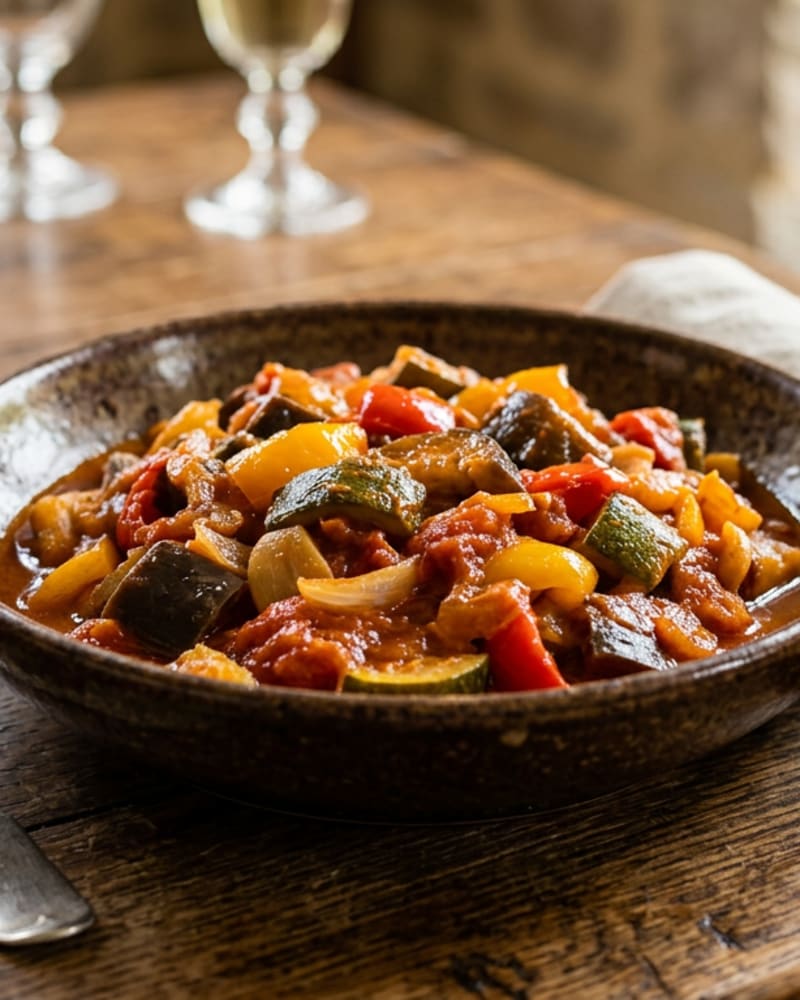
It is 6:30 on a Thursday, there is a zucchini the size of a forearm in the crisper, and you would like dinner to look like you tried harder than you did. This baked ratatouille is the answer, and we will not tell anyone how little it took.
Thin slices, overlapping rows, one sauce underneath, and a long, quiet bake.
You spread marinara across a baking dish, fan sliced zucchini, eggplant, and tomatoes over it in overlapping rows, drizzle on olive oil, and let the oven take it from there. Forty-five minutes at 375°F and the vegetables soften into each other while the sauce below turns jammy. The slicing takes about ten minutes, and it is the only part that asks anything of you.
What you need
- 2 zucchini, thin rounds
- 1 eggplant, thin rounds
- 4 tomatoes, thin rounds
- 2 tbsp olive oil
- 1½ cups marinara sauce
- ½ tsp salt
- ¼ tsp black pepper
How to make it
- Slice the 2 zucchini, 1 eggplant, and 4 tomatoes into thin rounds, about 10 minutes.
- Spread 1.5 cups marinara sauce in a thin layer in a baking dish.
- Arrange the vegetable slices in overlapping rows in the dish.
- Drizzle 2 tbsp olive oil over the top and season with salt and black pepper.
- Bake at 375F for 45 minutes until vegetables are tender.
- Rest 10 minutes before serving.
Notes
Cooked leftovers keep three to four days refrigerated, per USDA FSIS. Keep it covered in the dish or move it to a container, and reheat gently in a low oven or a skillet.
Baked ratatouille is better on day two, when the flavors have had a night to settle into each other. It freezes reasonably well, though the vegetables soften further after thawing, so it works better as a spoon-over-pasta or toast topper than a neat layered dish.
Think of this as a baked take on ratatouille rather than the classic stovetop stew, where each vegetable is cooked separately first. Baking everything together in one dish is the shortcut, and the marinara stands in for the slow-cooked tomato base. Salting is optional but useful. If you have time, salt the eggplant slices lightly and let them sit on paper towels for fifteen minutes, then pat them dry. It draws out some moisture and makes a less watery dish, though the recipe works without it.
Ratatouille has a reputation for being a fussy, French, wine-glass sort of dish, and this version quietly ignores that and uses jarred marinara. It is the culinary version of showing up to a nice dinner in a good jacket and a very comfortable pair of shoes.
Taste the marinara from the jar before you commit, because a sauce that is too sweet or too sharp will carry the whole dish with it. The rest at the end matters. The method gives it ten minutes out of the oven before serving, and that pause lets the juices thicken so the rows hold their shape on the spoon.
Swaps that actually work
Leave the vegetables alone. Zucchini, eggplant, and tomato are the dish, and the overlap of the three is what makes it look like ratatouille rather than a casserole.
The rest has room. Any marinara works, and a simple one without added sugar lets the vegetables shine. If you want more flavor, a handful of fresh basil, a pinch of dried thyme, or a minced garlic clove in the sauce all help. A sprinkle of grated Parmesan on top for the last few minutes of baking adds a savory edge, though it is no longer plant-based.
Overlap the slices like fallen dominoes, alternating zucchini, eggplant, and tomato, so each row shows a little of every color. It is the part that makes the dish look intentional, and it also helps the vegetables cook evenly because each slice leans on the next. Yellow squash can stand in for some of the zucchini, and bell pepper slices are a good addition if you have one. Roma tomatoes are firmer and slice more cleanly than beefsteak, but either works.
A mandoline makes the slicing quick and even if you own one, but a sharp knife and a minute of patience does the job. Whichever you use, keep the rounds about the width of a pencil so that baked ratatouille cooks through in the time the method gives. The swap that costs you the dish is skipping the thin slicing. Thick vegetables stay firm in the center, and the dish loses the tender, melting texture it depends on.
If it goes wrong
It is watery. The tomatoes and eggplant release a lot of liquid. Spoon off the excess from the dish, then return it to the oven uncovered for ten minutes to thicken. Next time, salt and pat the eggplant dry first.
The vegetables are still firm. The slices were too thick or the oven ran cool. Cover the dish with foil and bake another ten to fifteen minutes, testing with a fork.
The top is dry or browned too much. It lost moisture in the oven. Cover loosely with foil for the rest of the bake, and drizzle a little more olive oil over the top.
It tastes flat. Usually salt, and a little acid. Season the finished dish to taste, and add a splash of red wine vinegar or a squeeze of lemon to wake up the tomato.
What to serve with it
The default is a spoonful on its own, warm, with a little of the sauce from the bottom of the dish. It is a full plant-based dinner if you are hungry enough.
To make it better, serve it over polenta, rice, or pasta, or with crusty bread to mop up the sauce. A soft fried egg on top turns it into something heartier. A spoonful of goat cheese or ricotta on the side adds creaminess.
It is a good lunch the next day, warm or at room temperature. Tuck it into a sandwich with some cheese, or spoon it over toast.
Why this one earns its place
Some dinners are loud about the effort they took. Baked ratatouille is quiet about it. It is vegetables, sauce, and oven, and it looks like something you would order in a candlelit room and then feel a little smug about.
Swipe it into your week and the agent shops the zucchini, the eggplant, the tomatoes, and the marinara, so your only job is to hold the knife.
For more cozy, vegetable-forward dinners, try chickpea tagine, creamy tomato basil soup, or meal planning for food waste for a way to use up what is already in the crisper.
More like this: all French recipes in Crave Corner.