Raising Cane's-Style Chicken Fingers With a Crust That Stays Crisp
Jump to recipe ↓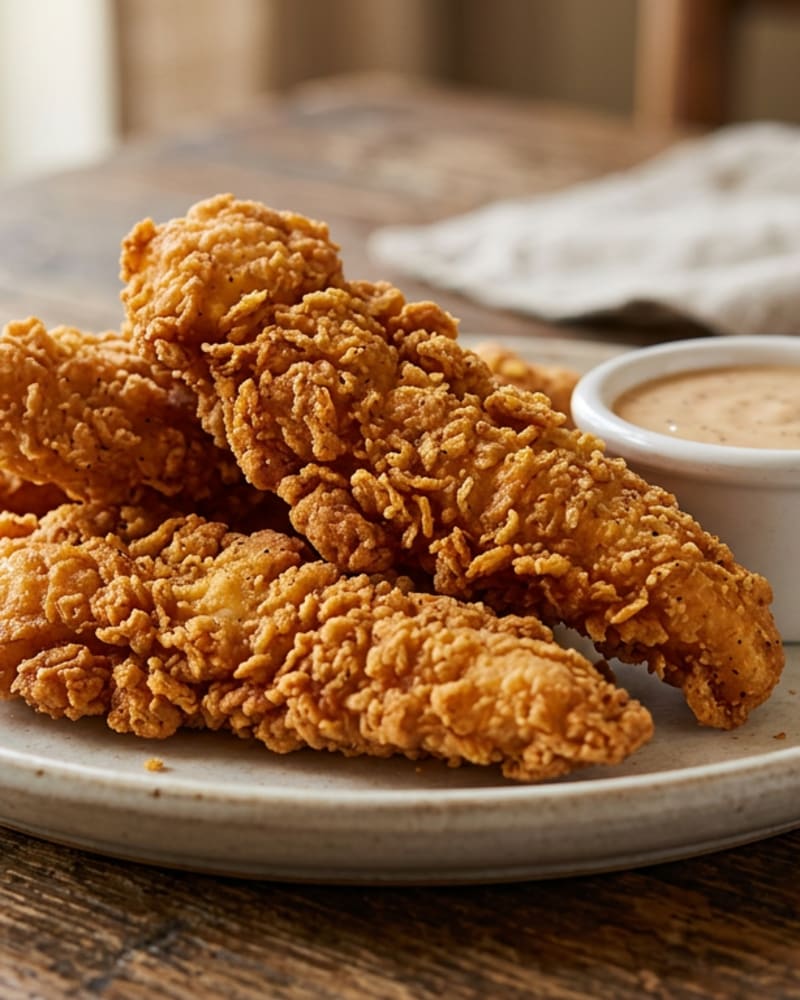
It is 6:15 on a Friday, the buttermilk is out, and you have just admitted to yourself that you want fried chicken fingers more than you want to be a person who orders in. These Raising Cane's-style chicken fingers are a home-kitchen nod to the restaurant favorite (inspired by it, not affiliated with it), and they can be on the table in about half an hour, no driver required.
A buttermilk soak, a double dredge, and oil held at 350 degrees.
You season the tenders, soak them in buttermilk for 20 minutes, then dredge them in seasoned flour, back through the buttermilk, and into the flour again. Fry in batches, 3 to 4 minutes per side, and drain on a rack. The result is a craggy, golden crust over chicken that stays juicy, which is the whole point of Raising Cane's-style chicken fingers done right.
What you need
- 1½ lb chicken tenders
- 2 cups buttermilk
- 2 cups all-purpose flour
- 2 tsp garlic powder
- 1 tsp paprika
- 3 tsp salt
- 6 cups vegetable oil
- 2 tsp black pepper
How to make it
- Pat 1.5 lb chicken tenders dry and season with 2 tsp salt and 1 tsp black pepper about 5 minutes.
- Pour 2 cups buttermilk into a bowl and soak tenders 20 minutes.
- Combine 2 cups flour, 2 tsp garlic powder, 1 tsp paprika, 1 tsp salt and 1 tsp black pepper in a shallow dish.
- Heat 6 cups vegetable oil in a large pot to 350 degrees.
- Dredge each tender in flour then buttermilk then flour again.
- Fry in batches 3 to 4 minutes per side until golden and cooked through.
- Drain on a wire rack and serve hot with your favorite sauce.
Notes
Cooked leftovers keep three to four days refrigerated, per USDA FSIS. Store them in a single layer in a container lined with paper towels, and reheat them on a wire rack in a hot oven or an air fryer so the crust crisps back up. A microwave makes them soft.
These are best eaten fresh, within the first fifteen minutes, when the crust is at its crunchiest. They do not improve on day two, but they are a decent cold snack. They can be frozen after frying, though the crust loses some of its snap on reheating.
The cooked chicken should reach 165°F in the thickest piece, per USDA. Tenders vary in thickness, so check the biggest one in each batch rather than the smallest. A thermometer is the quickest way to know, and it also takes the guesswork out of the golden-brown test, since a deep color alone does not tell you the center is done.
The sauce is half the relationship. You will want to make something creamy and a little peppery and put it in a small bowl, and you will want to guard that bowl as if it were the last one on earth. We will not ask what you do to people who double-dip.
Do not skip the wire rack. It is a small detail, but it is what keeps Raising Cane's-style chicken fingers crisp for the few minutes it takes to get them to the table. Draining fried chicken on paper towels traps steam against the underside and softens the crust you just worked for, while a rack lets air move around every piece.
Swaps that actually work
Leave the buttermilk alone. It is what tenderizes the chicken and gives the flour something tangy to cling to, and plain milk will not do the same job. If you are out, stir a tablespoon of lemon juice into a cup of milk and let it sit a few minutes.
The rest can move. Chicken breast sliced into strips works in place of tenders, and the slices should be of similar thickness so they cook evenly. Any neutral oil with a high smoke point works for frying. If you want more heat, add cayenne to the flour.
A thermometer clipped to the pot is worth using here, because oil temperature drifts when cold chicken goes in. Bring it back up to 350 degrees between batches, and keep the cooked ones on the rack, where they stay crisp. For the sauce, the recipe says your favorite, so mix mayonnaise with ketchup, black pepper, garlic powder, and a splash of Worcestershire for a creamy, peppery dip, or use whatever you already like. Honey mustard, ranch, and barbecue sauce all work too.
If you want extra craggy texture, drizzle a spoonful of the buttermilk into the dry flour and rub it between your fingers so it forms small clumps before you start dredging. Those clumps fry up into craggy ridges. The swap that costs you the dish is skipping the second dredge. The double coating is what builds the craggy crust, and one pass gives you a thin, flat shell.
If it goes wrong
The crust is soggy or greasy. The oil was too cool or the pot was crowded. Let the oil come back to 350 degrees between batches, and keep the batches small. If a batch is already greasy, a few minutes in a hot oven on a rack helps.
The crust falls off. The flour coating did not get pressed on, or the pieces were moved too early. Press the flour on firmly, and leave each tender alone for the first minute or two so the crust sets before you turn it.
The outside is dark but the inside is not cooked. The oil was too hot. Lower the heat, and finish the chicken in a 350°F oven until a thermometer reads 165°F.
It tastes flat. Usually salt. The seasoning is in the flour and on the chicken, so taste a piece and add a pinch of salt straight out of the fryer while it is still hot and the salt will stick.
What to serve with it
The default is hot with a dipping sauce. That is all it needs.
To make it a meal, add crinkle-cut fries or a thick slice of toast, and a simple coleslaw to cut the richness. A pickle or two on the side is welcome. Lemonade is the drink that matches.
They make a good cold lunch the next day. Pack them with a little sauce and they travel better than most fried food.
Why this one earns its place
Some cravings need a drive-through. This one needs a pot, half an hour of attention, and a bowl of sauce. It is a small, deliberate act of self-care, and it tastes like you spent the evening on something that mattered.
Swipe it into your week and the agent shops the tenders, the buttermilk, and the flour, so the only thing left to do is heat the oil.
For more fried favorites, try chicken tenders with honey mustard, Chick-fil-A-style chicken nuggets, or quick weeknight dinner ideas for a few other fast options.
More like this: all American recipes in Crave Corner.