Quiche Lorraine With a Custard That Sets Without Weeping
Jump to recipe ↓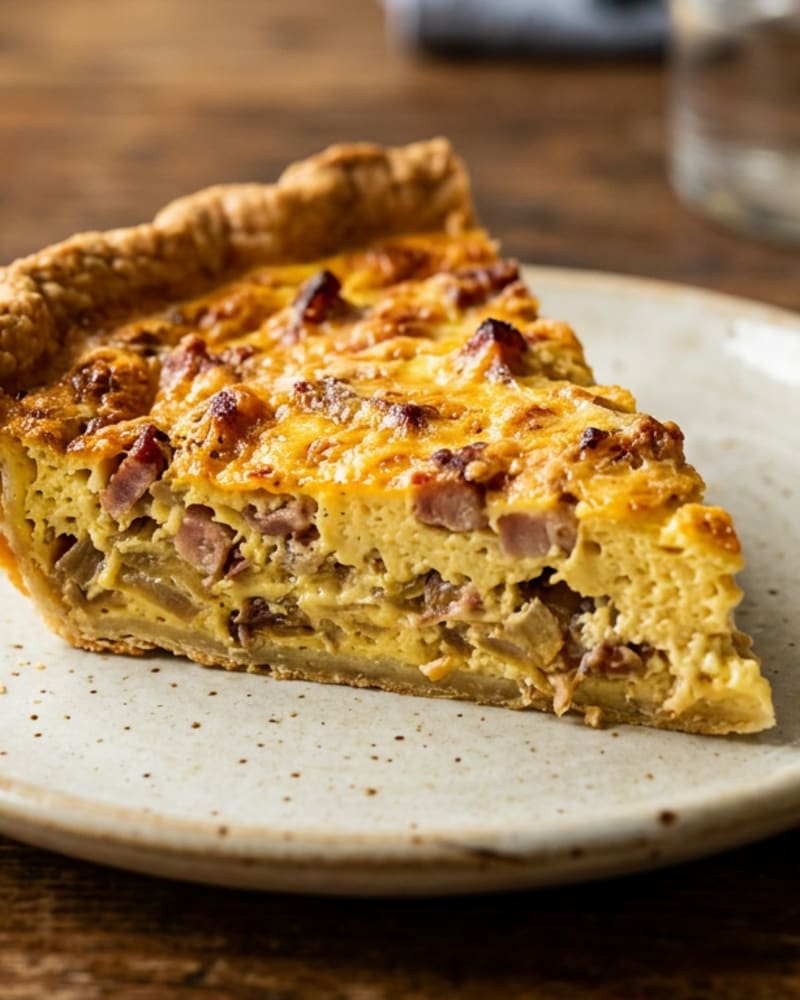
It is 7:40 on a Sunday morning, the bacon is spitting in the skillet, and somebody in the next room has just asked if breakfast is happening. This quiche lorraine says yes, and it does it with the kind of quiet confidence that makes you look like you have brunch figured out.
Bacon, onion, swiss, and a custard that behaves.
You cook the bacon until crisp, soften an onion in the fat it leaves behind, and scatter both into an unbaked pie crust with a cup of shredded swiss. Eggs and heavy cream get whisked together and poured over the top. Thirty-five to forty minutes in a 375°F oven and the whole thing puffs, sets, and turns gold. Cool it for ten minutes and it slices clean.
What you need
- 1 unbaked pie crust
- 4 large eggs
- 6 slices bacon slices
- 1 cup heavy cream
- 1 cup shredded swiss cheese
- 1 medium onion
- ½ tsp salt
- ½ tsp black pepper
How to make it
- Preheat the oven to 375°F.
- Cook the 6 slices bacon in a skillet until crisp, then crumble and set aside.
- Dice the 1 medium onion and sauté it in the bacon fat for 5 minutes until soft.
- Whisk the 4 large eggs with 1 cup heavy cream, salt, and black pepper in a bowl.
- Sprinkle the crumbled bacon, sautéed onion, and 1 cup shredded swiss cheese into the 1 whole unbaked pie crust.
- Pour the egg mixture over the fillings in the crust.
- Bake for 35 to 40 minutes until the center is set.
- Cool the quiche for 10 minutes before slicing.
Notes
Cooked leftovers keep three to four days refrigerated, per USDA FSIS. Wrap the slices or keep the quiche covered in its dish, and reheat a slice in a 350°F oven or a toaster oven so the crust stays crisp.
Quiche lorraine is good on day two, and it is an excellent make-ahead dish. The custard firms up a little more in the fridge and slices very neatly, which is why this works for a meal-prep morning. It can be frozen baked, in slices wrapped well, but the texture of the custard turns slightly softer after thawing, so it is best eaten within a few weeks.
The bacon fat is doing real work here. Sautéing the onion in it for five minutes until soft is what gives the filling a savory backbone, so do not wipe the pan clean. Just pour off any excess if the skillet is swimming. You are looking for a spoonful or two of fat left behind, enough to coat the onion and carry the smoky flavor through the filling.
A smirk, because brunch deserves one: a quiche is a dish that shows up looking sophisticated and then turns out to be mostly eggs, bacon, and cheese. It is the culinary equivalent of someone in a nice jacket who still laughs at your jokes. We approve.
Cool the quiche lorraine for ten minutes before cutting, as the method says. That rest is what lets the custard finish setting, and a slice cut too early slumps instead of holding its shape.
Swaps that actually work
Leave the eggs and cream alone. The ratio of four eggs to one cup of heavy cream is what gives you the silky, sliceable custard, and swapping in milk makes it looser and more likely to weep.
The rest has room. Gruyère is the classic cheese and swiss is the friendly stand-in, so use whichever you can find. Ham or cooked sausage can stand in for the bacon, though the flavor will be slightly different. A little grated nutmeg or fresh thyme in the custard is a good addition if you have it.
Set the pie dish on a baking sheet before it goes into the oven. It catches any drips from a generously filled crust, and it makes the dish easier to slide in and out without sloshing the custard. A frozen pie crust works as long as it is the deep-dish size, or the custard will overflow. A store-bought crust is a perfectly good shortcut. If you have time, you can blind-bake the crust for a crisper bottom, though this recipe works as written with the crust unbaked.
Hold on to the bacon crumbles, too. Crisp bacon is part of what separates a quiche lorraine from a plain egg pie, and it softens in the custard, so cook it until it is properly crisp, not just rendered. The swap that costs you the dish is overbaking. The recipe calls for 35 to 40 minutes until the center is set, and past that the eggs tighten and turn rubbery.
If it goes wrong
The center is runny after 40 minutes. The oven may run cool or the quiche was deep. Return it for five more minutes at a time, checking for a center that barely wobbles. Cover the crust edges with foil if they are already dark.
The custard is rubbery or weeping. It baked too long or too hot. You cannot undo this, but a slice reheated gently and served with a bright salad is still good. Next time, pull it when the center just wobbles.
The crust is soggy. The fillings were wet, or the quiche sat in the dish too long. Pat the bacon on paper towels and make sure the onion has cooked down. Reheating a slice in a hot oven crisps the bottom back up.
It tastes flat. Usually salt. Bacon and swiss both bring some, but eggs and cream need more than you expect. Season the custard before pouring, and serve with flaky salt on the side.
What to serve with it
The default is a slice on its own, which is a complete breakfast. It also holds its own at a brunch table with fruit and coffee.
To improve it, serve it with a simple green salad dressed in lemon and olive oil, whose sharpness cuts the richness. A few roasted tomatoes or a handful of fresh berries on the side also work.
It is a good lunch the next day, warm or at room temperature. Slice it, tuck it into a lunchbox, and you have a meal that tastes like you planned ahead.
Why this one earns its place
Some breakfasts demand your attention at the stove while the whole table waits. This quiche lorraine lets you do the work in one stretch, slide it into the oven, and sit down with a cup of coffee.
Swipe it into your week and the agent shops the eggs, the cream, the swiss, and the crust, so brunch is a decision rather than an errand.
For more make-ahead mornings, try the breakfast burrito, protein baked oats, or meal prep for the week when you want to plan a few days of food in one go.
More like this: all American recipes in Crave Corner.