Potato Curry With Coconut Milk and Almost No Effort
Jump to recipe ↓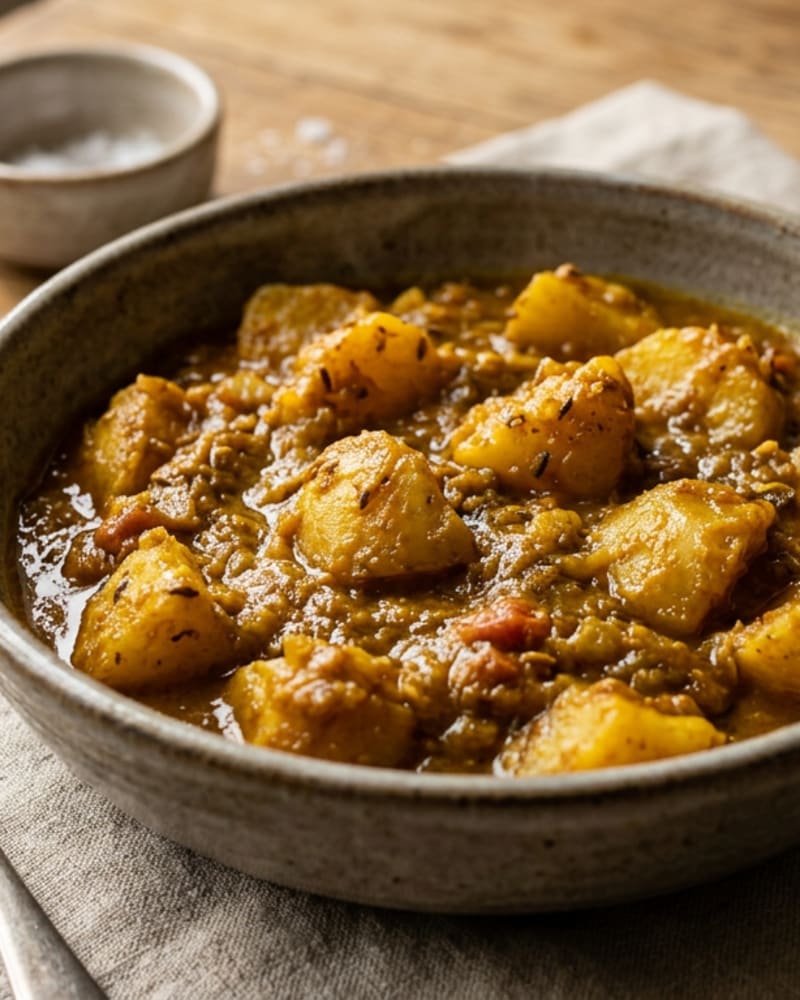
It is 6:50 on a Wednesday, the fridge hums, and the best thing you can find in the kitchen is a bag of potatoes. This potato curry turns that sad inventory into dinner with a can of coconut milk and two spoonfuls of curry powder, which is the culinary version of getting dressed up with whatever is clean.
Four potatoes, one can, one spice, and a pot that mostly looks after itself.
You peel and cube the potatoes, which takes about eight minutes. You drop them into a pot with the coconut milk and the curry powder. You simmer for twenty minutes, stirring now and then, until the potatoes are soft and the sauce has thickened around them. Meanwhile the rice cooks. Then you spoon one over the other and sit down. That is the entire recipe for this potato curry, and it has no right to be this comforting.
What you need
- 4 potatoes, cubed
- 1 can coconut milk
- 2 tbsp curry powder
- 2 cups rice
- 3 microwavable white rice
How to make it
- Peel and cube the 4 potatoes into even pieces, about 8 minutes.
- In a pot combine the cubed potatoes, 1 can coconut milk, and 2 tbsp curry powder.
- Simmer for 20 minutes, stirring occasionally until potatoes are soft.
- Meanwhile, cook 2 cups rice according to package directions.
- Spoon curry over the cooked rice and serve.
Notes
Cooked leftovers keep three to four days refrigerated, per USDA FSIS. The curry thickens as it cools, so loosen it with a splash of water when you reheat it gently on the stove or in the microwave.
This is better on day two. The potatoes keep soaking up spice overnight, and the sauce turns thicker and more settled. It freezes, but potatoes can turn slightly grainy after thawing, so if you plan to freeze it, mash a few pieces back into the sauce and treat it as a stew rather than a curry of distinct chunks. Either way, freeze it flat in a bag so it thaws faster. A frozen slab of potato curry is easier to rescue than a frozen brick.
A word on seasoning, because this potato curry has only three ingredients doing the work: the curry powder is the whole flavor, so check that yours is not a jar from a few years ago. Fresh curry powder smells warm and a little sweet when you open it. Old curry powder smells like a pantry. Because the ingredient list is short, each ingredient has to be good. Use a curry powder you actually like the smell of, and a full-fat coconut milk if you can, since the light kind gives you a thinner, less rounded sauce.
Here is the line that only works for us: this is the dinner you make when you are not trying to impress anyone, and it ends up impressing someone anyway. Low expectations, high returns. We do not judge people who swipe right on that.
Swaps that actually work
Leave the coconut milk alone. It is what turns plain spiced potatoes into a creamy, almost silky curry, and a swap to broth or water gives you something thinner and less rich.
Almost everything else can move. Any curry powder works, from mild to hot, so choose by how much heat you want, and remember that a hotter blend makes the whole pot taste hotter, since there is nothing else in it to mellow the spice. If it ends up too hot, a spoonful of plain yogurt at the table calms it down. If you have an onion, garlic, or fresh ginger, soften them in a little oil first and add them to the pot for a deeper base. That is an upgrade rather than a requirement, and the recipe does not need it.
Waxy potatoes such as Yukon Gold hold their shape better, while russets break down more and thicken the sauce. Both work. Sweet potatoes can stand in for part of the potatoes, though they cook faster, so add them later. A handful of frozen peas or a few spoonfuls of spinach stirred in at the end adds some green.
The swap that costs you the dish is cutting the potatoes unevenly. Small pieces dissolve before the big ones soften, and you lose the texture that makes this satisfying.
If it goes wrong
The potatoes are still hard after 20 minutes. They were cut too big, or the simmer was too gentle. Put the lid on, keep the heat at a steady simmer, and give them five or ten more minutes, testing with a fork. Cutting smaller next time evens this out.
The sauce is too thin. The pot was covered too long, or the coconut milk was a light version. Take the lid off and simmer until it thickens, or mash a few potatoes against the side of the pot and stir them into the sauce.
The sauce is too thick or stuck to the bottom. The heat was too high. Add a splash of water, scrape the bottom, and turn the heat down.
It tastes flat. Usually salt. Potatoes soak up a lot of seasoning, so add a pinch at a time until the curry tastes like itself, and finish with a squeeze of lemon or lime if you have one.
What to serve with it
The default is rice, which is exactly what the recipe asks for. Spoon the curry over the top and let the sauce soak in.
For a better version, add a spoonful of plain yogurt on the side, a handful of chopped cilantro, or a simple cucumber salad to cut the richness. If there is naan or flatbread in the freezer, warm a piece and use it to scoop.
It makes a good lunch the next day, cold or warm, and a fine filling for a wrap if you mash it a bit and add some greens.
Why this one earns its place
Some dishes need a shopping trip and a free afternoon. This potato curry needs four potatoes and a pantry. It forgives you for leaving the pot alone, it forgives you for forgetting the fancy ingredients, and it still tastes like you meant it.
Swipe it into your week and the agent shops the potatoes, the coconut milk, and the rice in one go, which leaves you with nothing to do but peel.
If you want more easy, cozy dinners in the same family, try aloo gobi cauliflower curry, chickpea curry, or the quick weeknight dinner ideas for a few more shortcuts.
More like this: all Indian recipes in Crave Corner.