Pork Souvlaki That Stays Juicy and Still Gets the Char
Jump to recipe ↓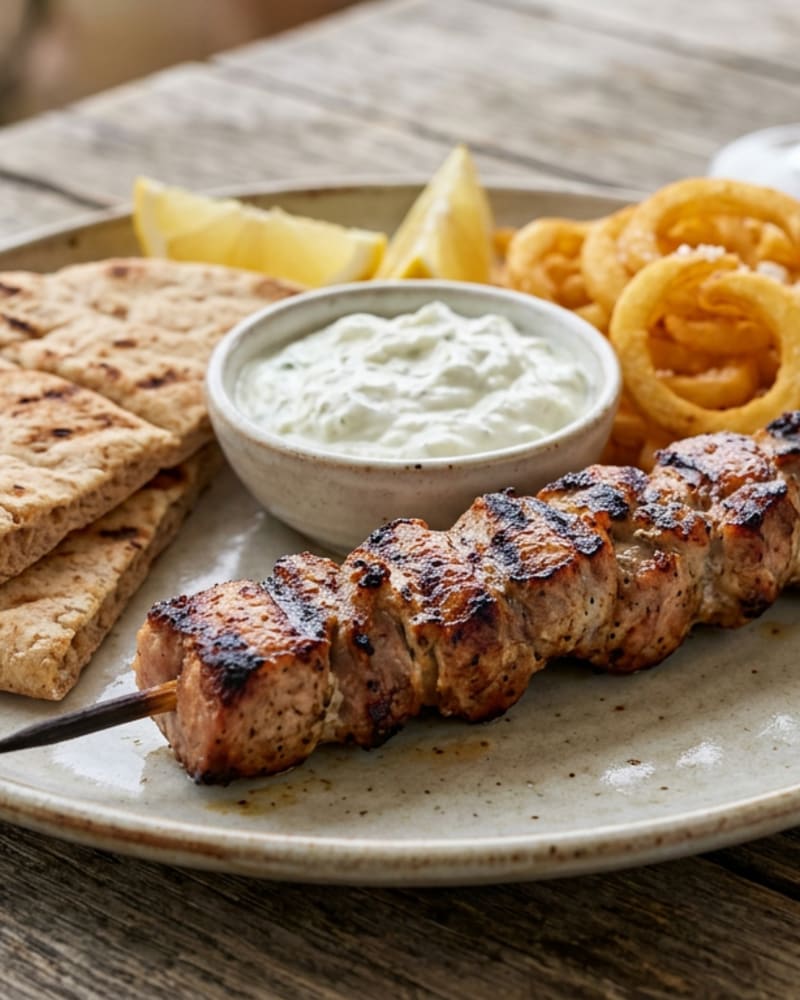
It is 7:05, you have a hungry person behind you and a lemon in your hand, and the grill pan is already smoking a little. This pork souvlaki marinade takes eight minutes to whisk and cube, which is fast enough that you can pretend it was a spontaneous gesture and still get full credit for the effort.
Lemon, garlic, oregano, and a very hot grill. That is the whole love story.
Pork souvlaki is street food in spirit, which means it is meant to be eaten with your hands, a little messy, and possibly standing up. Pork tenderloin cut into one-inch cubes cooks quickly, takes on marinade fast, and chars at the edges before the middle has time to dry out. Thread the cubes onto skewers, give them ten to twelve minutes over high heat, and slide them off into a warm pita. It is a dinner that tastes like a seaside table, and it asks almost nothing from you except that you stop poking at it.
What you need
- 1½ lb pork tenderloin, cubed
- 3 tbsp olive oil
- 2 lemon, juiced
- 4 cloves garlic, minced
- 2 tbsp dried oregano
- 1 tsp salt
- ½ tsp black pepper
- 4 pita bread
How to make it
- Cut 1.5 lb pork tenderloin into 1 inch cubes in about 6 minutes.
- Whisk together 3 tbsp olive oil, juice of 2 lemons, 4 minced garlic cloves, 2 tbsp oregano, 1 tsp salt and 0.5 tsp black pepper.
- Coat pork cubes in marinade and thread onto skewers.
- Grill or broil skewers 10 to 12 minutes turning halfway until pork reaches 145 F.
- Warm 4 pita breads alongside for 2 minutes.
- Slide pork off skewers into warm pitas and serve.
Notes
Cooked leftovers keep three to four days refrigerated, per USDA FSIS. Store the pork off the skewers in a shallow container, and keep the pitas separate so they do not go damp.
Leftover pork souvlaki reheats better than you might expect, because the lemon and oil in the marinade help keep the cubes from drying out. Warm it gently in a skillet over medium heat for a minute or two, or eat it cold in a pita the next day. It freezes fine cooked, but it is better fresh, and the pitas should be bought again rather than frozen and thawed.
Here is how to read the marinade. Two lemons of juice, four cloves of garlic, and two tablespoons of oregano is a loud mix, and it is meant to be. The oregano is the backbone, so use a dried one that still smells like something when you rub it between your fingers. If it smells like dust, it will taste like dust.
Cut the pork as evenly as you can, and consider giving the cubes a little time in the marinade while you light the grill or heat the broiler. The method does not ask for a long soak, so pork souvlaki stays a same-evening plan, but even a short wait lets the lemon and garlic reach the surface of every cube. Cubes of different sizes on the same skewer mean the small ones turn to leather while the big ones catch up. Aim for one inch and keep them honest.
A small smirk, because it earns one: this is the sort of dinner where you hand someone a pita with a still-hot skewer and watch them decide, silently, that you are more interesting than they thought. You do not have to say anything. The oregano is doing the talking.
Swaps that actually work
Leave the lemon alone. Fresh juice from two lemons is what makes this taste Greek rather than merely grilled, and bottled juice turns the marinade sharp without the perfume.
The rest is flexible. If you only have one lemon, use its juice and add a splash of red wine vinegar. If you have fresh oregano, use a few tablespoons of leaves in place of the dried, since fresh is milder. Pork loin cut into cubes works instead of tenderloin, though it is a little less forgiving and needs a careful eye. Chicken thighs are a reasonable stand-in if pork is not on the menu, but cook them to 165°F instead.
If you have wooden skewers, soak them in water while the pork marinates so they do not burn. If you do not own skewers at all, you can broil the cubes in a single layer on a sheet pan and tuck them into the pitas that way. You lose the look of the thing, but not the flavor.
For a vegetarian table, thick slices of zucchini or halloumi take the same lemon and oregano treatment, though that is a different dinner from pork souvlaki and it cooks faster. The swap that costs you the dish is skipping the heat. A lukewarm pan gives you pale, steamed cubes. You want it hot enough that the outside chars while the inside stays tender.
If it goes wrong
The pork is dry. It cooked past 145°F, which tenderloin does quickly because it has so little fat. There is no rescuing the texture, but you can rescue the dinner: slice the cubes, tuck them into the pita with plenty of sauce or yogurt, and add a squeeze of lemon. Next time, pull the skewers a touch earlier and let the three-minute rest finish the job.
The outside is burnt and the inside is raw. The heat was too high or the skewers sat too close to the flame. Move them farther from the heat, turn them more often, and finish them on a lower setting until the center reaches 145°F. A thermometer settles this faster than guessing.
The skewers stick to the grates. The grill was not hot enough, or it was not oiled. Let it heat fully before the skewers go on, and leave them alone until they release on their own. Forcing them tears the meat.
It tastes flat. Usually salt. The marinade has only one teaspoon, and a squeeze of fresh lemon and a pinch of flaky salt over the cooked pork wakes it up at once.
What to serve with it
The default is what the recipe gives you: warm pitas, which you tear and fold around the pork. That is already a complete dinner.
To make it better, add a quick tzatziki, a pile of sliced tomato and red onion, or a handful of cucumber with a little salt. If you have feta in the fridge, crumble some over the top. A simple Greek salad on the side keeps the whole thing feeling fresh against the char.
It also works as lunch the next day. Chop the cold pork and tuck it into a pita with whatever vegetables are left over, or toss it over a bowl of greens with a little of the leftover lemon.
Why this one earns its place
Some weeknights call for something complicated. Pork souvlaki is not one of them. The whole recipe is a marinade, a skewer, and ten to twelve minutes of attention, and the payoff is a plate that looks like you booked a table somewhere with blue shutters.
Swipe it into your week and the agent shops the tenderloin, the lemons, and the pitas without making you write a list. All that is left for you is the part with the fire.
For more of the same energy, try pork gyro, Greek lamb chops, or the quick weeknight dinner ideas when you want a few more fast options.
More like this: all Greek recipes in Crave Corner.