Philly Cheesesteak With Thin-Sliced Ribeye and a Cheese Cap That Gives In
Jump to recipe ↓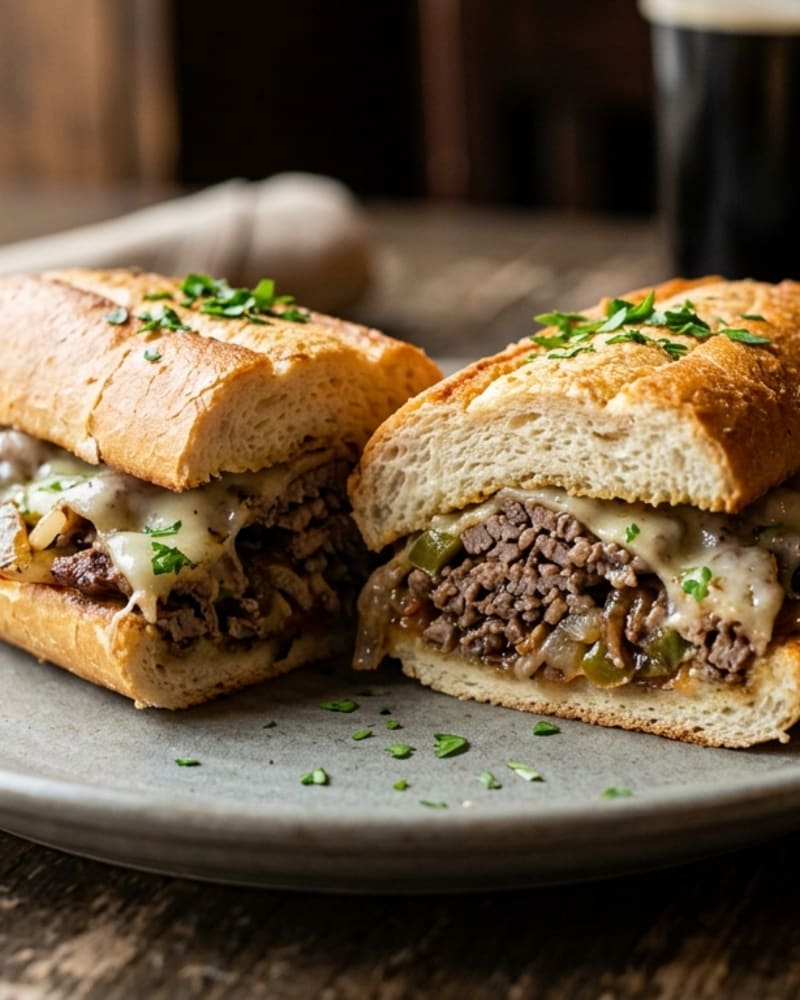
It is 12:10 on a Friday and the desk lunch has started to feel like a personal insult. This Philly cheesesteak is 20 minutes, one skillet and a broiler, and it ends with two slices of provolone per roll, melted until they give up all resistance. Lunch, for once, is the best part of the day, and you did not leave the house for it.
Thin steak, soft peppers, and cheese that goes under the broiler for two minutes: that is the sandwich.
Most of the 20 minutes goes into slicing, since the pan work is six minutes for the peppers and onion and four for the steak. A pound of ribeye, two bell peppers, one large yellow onion, four hoagie rolls, and eight slices of provolone make four sandwiches. Nothing in the pan needs watching more than a stir.
What you need
- 1 lb ribeye steak, thinly sliced
- 4 hoagie rolls
- 8 slices provolone cheese slices
- 2 bell peppers, sliced into strips
- 1 large yellow onion, sliced into strips
- ½ tsp salt
- ½ tsp black pepper
How to make it
- Thinly slice the 1 lb ribeye steak, the 2 bell peppers, and the 1 large yellow onion into strips, which takes about 8 minutes, then season the steak with salt and black pepper.
- Heat a large skillet over medium-high heat and sauté the sliced bell peppers and onion for 6 minutes until softened.
- Add the seasoned steak to the skillet and cook for 4 minutes until browned.
- Divide the steak and vegetable mixture evenly among the 4 hoagie rolls.
- Top each sandwich with 2 slices of the provolone cheese.
- Broil the sandwiches for 2 minutes until the cheese melts.
- Serve the Philly cheesesteaks hot.
Notes
Cooked leftovers keep three to four days refrigerated, per USDA FSIS. Store the steak and vegetable mixture on its own, and keep the rolls separate, so the bread does not go soggy. Build a fresh sandwich with each portion, with the cheese under the broiler for a minute or two.
Leftover Philly cheesesteak filling reheats well in a hot skillet. It does not do well once it is already inside the roll, because the bread soaks up the juices and goes soft. The filling alone also freezes fine, and it thaws into something close to what you cooked.
Slicing a ribeye thin is much easier when the steak is cold and firm. Put it in the freezer for a short while before you cut it, and use your sharpest knife. The four minutes in the method is mostly time for thin slices to brown while you stir.
Cooking the peppers and onion first, for six minutes, gets them soft before the steak goes in. The steak then goes in over medium-high heat and cooks for four minutes until browned. Keep it moving, and break up any slices that stick together.
Sliced steak cooked this way is cooked through by the time it browns. If you want to check, the USDA safe minimum for whole cuts of beef is 145 F with a three-minute rest.
Before the steak goes into the rolls, tip off any liquid that has pooled in the pan. That juice is flavor, but a roll full of it will not hold together, and a damp sandwich is not worth eating.
On SwipeCart, this is the swipe you make at 11:40 when the group chat is still asking where everyone wants to eat. Your agent puts the ribeye, the peppers and the rolls in the cart, and you stop negotiating and make something better yourself.
Swaps that actually work
The ribeye and the provolone are the point of a Philly cheesesteak. Ribeye has the fat that makes the steak tender and rich in a few minutes of cooking, and provolone melts into a soft, slightly sharp blanket. Everything else can move.
Sirloin or flank steak, sliced very thin, works if ribeye is too expensive. They are leaner, so the sandwich is a little chewier and a little less rich. A knob of butter in the pan helps.
White American cheese melts into something creamier and is a classic choice. If you have a jar of cheese sauce, that works too, spooned over instead of broiled. Mozzarella is milder and stretchier, and works if provolone is not on the shelf.
Bell peppers can be green, red or both, and mushrooms can go in with the onion.
Hoagie rolls can be any long, sturdy roll. A soft sandwich roll is the swap that costs you the dish: it collapses under the filling, and what you hold is a pile of steak with a roll on the side. Toasting the cut sides in the skillet first gives the bread some backbone.
If it goes wrong
The steak is tough. It was sliced too thick or cooked too long. Slice thinner next time, and take it off the heat as soon as it is browned. For now, pile it with the cheese and let the melted provolone do some of the work.
The sandwich is soggy. The filling went in wet. Drain the pan before you fill the rolls, and toast the rolls lightly if you have the time.
The cheese did not melt. It needs a few more seconds under the broiler. Stay at the oven door, because the broiler goes from melted to burnt in less time than it takes to look at your phone.
It tastes flat. The recipe seasons the steak with salt and black pepper before cooking. If the filling is bland, add a pinch of salt and pepper to the pan before it goes into the rolls, and taste a piece first.
What to serve with it
The default is the sandwich on its own, with a napkin and no plan to talk.
The better version is a handful of crisp, salty chips and a pickle on the side, with something cold to drink. A Philly cheesesteak is soft all the way through, so it wants something crunchy next to it.
The thing in the fridge that lifts it is a few pickled hot peppers on top, or a smear of mayo on the cut side of the roll. Both are quick and neither needs cooking.
It works as lunch the next day, but only if you store the filling and the rolls apart and put the sandwich together fresh.
If you are making lunch for someone you like, this is the kind of sandwich that says you have good taste and a working broiler.
Why this one earns its place
You want a lunch that tastes like a decision, and this Philly cheesesteak is one: a hot sandwich with real steak, real cheese and a roll that holds. It uses one skillet, and the only real work is slicing. It makes a Friday feel different from the other four days.
For another sandwich in the same family, Arby's-style French dip is the next swipe. For a big, messy beef sandwich with a long history, Portillo's-style Italian beef is the other one. And if the hardest part of lunch is deciding, decision fatigue and what to eat is for you.
More like this: all American recipes in Crave Corner.