Pasta e Fagioli With Tender Beans and Pasta That Stays Al Dente
Jump to recipe ↓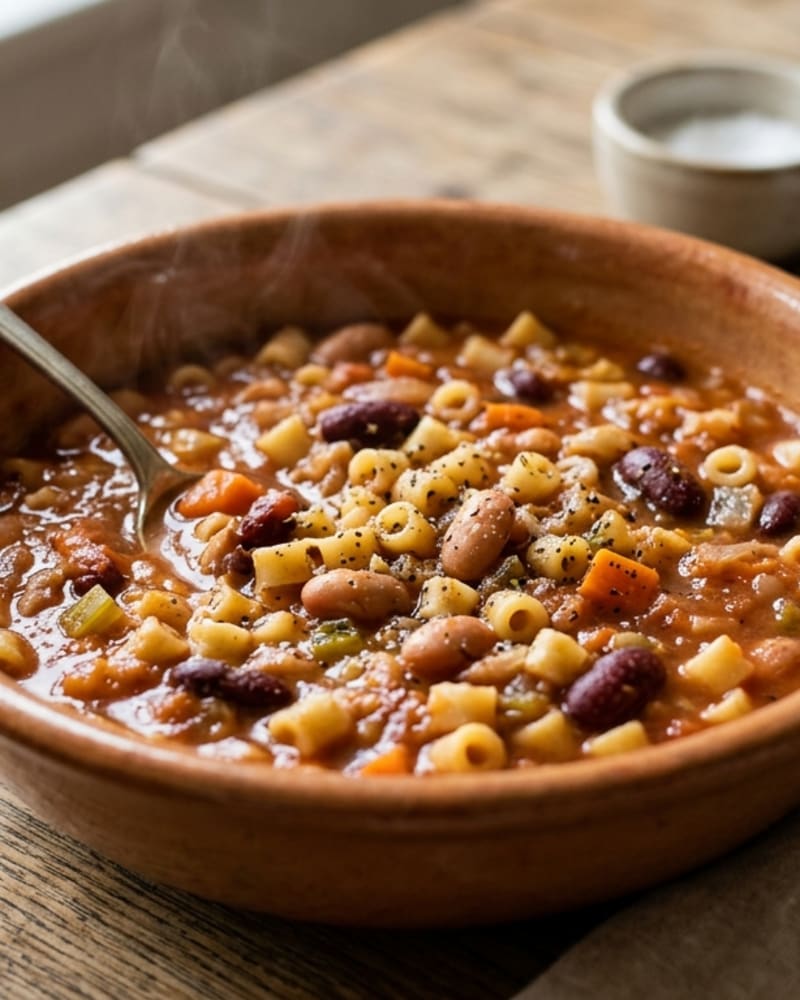
5:50 on a Thursday, the day has gone sideways, and you want something warm that asks nothing of you. This pasta e fagioli recipe is a thick tomato soup full of beans and little tubes of ditalini, done in about 35 minutes, and the pot does most of the talking. It is soup that sticks to you, which is more commitment than most plans manage.
Thick, tomato-red and loaded with beans: a bowl that holds you in place until the day makes sense again.
You chop onion, carrots, celery and garlic, soften them in olive oil, then add diced tomatoes and vegetable broth and bring it to a simmer. The cannellini beans go in to cook for ten minutes while the ditalini boils in a separate pot. The pasta joins the soup at the end for a final five minutes, then you season it with salt and black pepper and ladle it into bowls.
What you need
- 1½ cups ditalini pasta
- 2 cans cannellini beans
- 2 tbsp olive oil
- 1 onion
- 4 cups frozen mixed vegetables
- 28 oz canned diced tomatoes
- 2 carrots
- 4 cups vegetable broth
- 1 tsp salt
- 1 tsp black pepper
How to make it
- Chop onion, carrots, celery, and garlic, about 7 minutes.
- Heat 2 tbsp olive oil in a pot, cook vegetables 5 minutes.
- Add 28 oz diced tomatoes and 4 cups vegetable broth, bring to simmer.
- Drain and add 2 cans cannellini beans, cook 10 minutes.
- Boil 1.5 cups ditalini pasta in a separate pot 8 minutes until al dente.
- Drain pasta and stir into soup.
- Simmer together 5 minutes, season with salt and black pepper.
Notes
Cooked leftovers keep three to four days refrigerated, per USDA FSIS. This soup thickens a lot in the fridge, because the pasta and beans keep absorbing broth.
Day two of this pasta e fagioli recipe is a different dish, more stew than soup. Add a splash of water or broth when you reheat it, stirring as it warms, and taste again for salt, since more liquid dilutes the seasoning. Some people like it that thick and eat it with a fork.
If you want leftovers that taste like the first night, store the soup and the cooked pasta separately and combine them in the bowl when you reheat. It takes a second container and keeps the pasta from turning soft overnight.
Pasta in soup tends to go soft when it thaws. If you want to freeze a batch, freeze the soup alone and cook fresh pasta when you reheat it.
The method has you boil the ditalini for eight minutes until al dente, then simmer it in the soup for five more. That second stretch finishes the pasta, so pull it from the water when it still has a little bite in the center.
Beans and pasta are not a one-night stand, they are a long-term arrangement, and the pot is better for it. Swipe right on both.
Swaps that actually work
The beans are the point of any pasta e fagioli recipe. Leave the cannellini alone, since their creamy, mild texture is what gives the soup its body. Two cans, drained as the method says, and added to the pot before the pasta so they have time to soften further in the tomato.
Ditalini is the traditional shape because the small tubes sit on a spoon with a bean. If you do not have it, any small pasta works: small shells, elbows or broken spaghetti. Cook it by the package time, taking a minute or so off if it will spend another five in the soup.
Vegetable broth keeps the soup vegetarian. Chicken broth works if that is what you have, and it gives a deeper flavor, though it means the pot is no longer vegetarian.
The vegetables in the base can move around a little. An extra carrot is fine, a different onion is fine, and a handful of chopped greens in the last few minutes makes it more of a meal. The base is a flavor builder, so cook it the full five minutes before the tomatoes go in.
A rind of hard cheese dropped into the simmering broth, and fished out before serving, adds a savory depth. It is not in the ingredient list, so think of it as a bonus.
The swap that costs you the dish is water in place of the broth. The broth is the savory backbone of the pot, and with plain water you get something closer to boiled tomato than soup.
If it goes wrong
The soup is too thick. The pasta and beans have absorbed the broth. Stir in hot water or more vegetable broth, a splash at a time, until it moves the way you want, and taste for salt afterward.
The soup is thin and watery. It did not simmer long enough, or you added too much liquid. Let it bubble gently with the lid off for a few more minutes, and mash a few of the beans against the side of the pot to thicken the broth.
The pasta is mushy. It cooked too long or sat in the soup. Cook the next batch for the full eight minutes only, drain it as soon as it is al dente, and stir it in right before serving.
It tastes flat. Salt, most likely. Canned beans and tomatoes vary in how much salt they carry, so add a pinch, stir, taste, and keep going. The method calls for salt and black pepper at the very end, so check the seasoning then rather than before.
What to serve with it
The default for a pasta e fagioli recipe is a bowl of soup and a spoon, with a piece of crusty bread to run through the bottom.
A better version of the default is a drizzle of good olive oil over each bowl at the table. It adds a fruity, peppery finish that makes a pot of pantry staples taste more considered.
The thing in the fridge that lifts it is a handful of grated hard cheese stirred in at the table, or a few torn basil leaves if you have them. Neither is part of the recipe, and both are worth the thirty seconds.
It works as lunch the next day, and it is the kind of soup that tastes better when you have not had to cook it that day. Reheat it gently and loosen it with water or broth.
Why this one earns its place
On a bad day, a pasta e fagioli recipe gives you dinner that sticks to you, makes no demands and tastes like someone cared. It comes from a handful of cans and a bag of pasta.
Swipe it into your week and the agent can fill the cart with beans, tomatoes, broth and ditalini, so the only thing left to do is chop an onion and hope no one is watching you cry about it.
If you are still choosing, lasagna soup gives you the same mood with more cheese, creamy tomato basil soup is the quieter cousin, and meal planning and food waste is useful when the cupboard is full of cans you keep meaning to use.
More like this: all Italian recipes in Crave Corner.