Panda-Style Sesame Chicken With a Crisp Crust Under the Glaze
Jump to recipe ↓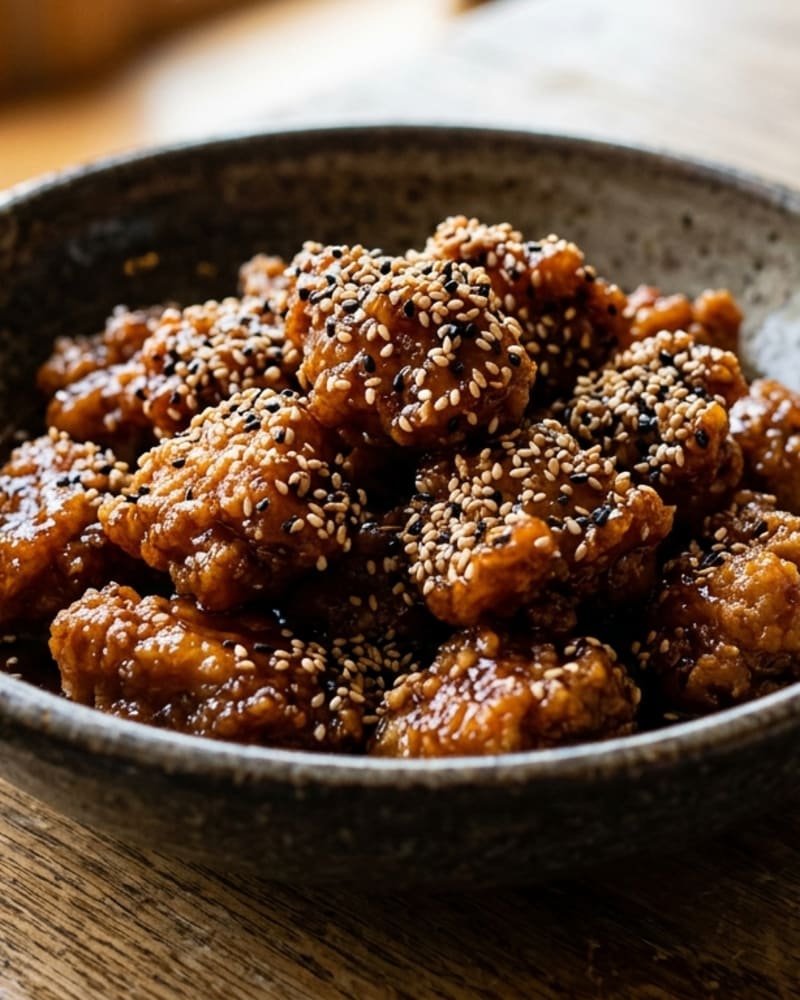
At 6:30 on a Sunday the takeout menu is open in one tab and the fridge is open in front of you. This sesame chicken recipe is 31 minutes of crisp, glossy, sticky-sweet chicken over rice, a home riff on the Panda Express favorite, not their recipe and not affiliated with them. Stay in, lock the door, and let the delivery app wonder where you went.
Dredge, fry, glaze, sesame: four moves, and the glaze is the only one that makes you stand still.
Chicken thigh goes into 1-inch pieces, gets seasoned with salt and black pepper, dips in beaten egg, and rolls through a mix of flour and cornstarch. It fries at 350°F in batches for 4 to 5 minutes until golden, and then it waits on a rack while the sauce comes together in a clean skillet. Soy sauce, honey, brown sugar, rice vinegar, sesame oil and garlic thicken for 2 to 3 minutes into something that coats the back of a spoon. The chicken goes in, gets tossed until fully coated, and takes a shower of sesame seeds.
What you need
- 1½ lb chicken thigh
- 1 tsp salt
- ½ tsp black pepper
- ½ cup all-purpose flour
- ¾ cup cornstarch
- 2 egg
- 3 cups vegetable oil
- ¼ cup soy sauce
- ¼ cup honey
- 3 tbsp brown sugar
- 2 tbsp rice vinegar
- 1 tbsp sesame oil
- 3 garlic
- 2 tbsp sesame seed
- 3 green onion
- 1½ cups long-grain white rice
How to make it
- Mince 3 garlic cloves and thinly slice 3 green onions, about 5 minutes. Cut 1.5 lb chicken thigh into 1-inch pieces and season with 1 tsp salt and ½ tsp black pepper.
- Rinse 1.5 cups long-grain white rice until the water runs clearer. Cook with 3 cups water according to package directions, about 15 to 18 minutes, then keep warm.
- Whisk 2 eggs in a bowl. In another bowl, mix ½ cup all-purpose flour and ½ cup cornstarch. Dip chicken in egg, then dredge in the flour mixture.
- Heat 3 cups vegetable oil in a deep skillet to 350°F. Fry chicken in batches for 4 to 5 minutes until golden and cooked through. Drain on a rack.
- In a clean skillet over medium heat, combine ¼ cup soy sauce, ¼ cup honey, 3 tbsp brown sugar, 2 tbsp rice vinegar, 1 tbsp sesame oil, the minced garlic, and ¼ cup cornstarch mixed with ¼ cup water. Simmer 2 to 3 minutes until glossy and thick.
- Toss the fried chicken in the sauce until fully coated. Sprinkle with 2 tbsp sesame seed and the sliced green onions.
- Serve the sesame chicken over the hot cooked rice.
Notes
Cooked leftovers keep three to four days refrigerated, per USDA FSIS. Store the chicken and the rice in separate containers so the coating does not sit in steam.
The sauce clings best right after it is made. The coating softens overnight, so day two is stickier and chewier. Reheat the chicken on a rack in the oven or in a dry skillet to bring some of the texture back. Freezing is not worth the trouble for a fried coating, so cook what you will eat.
The oil is the part of this sesame chicken recipe that needs your attention. The 3 cups of vegetable oil go into a deep skillet and come up to 350°F, so a thermometer clipped to the pan saves you guessing, and a rack set over a tray is ready for the batches as they come out. Cook the chicken until it is golden and cooked through, and confirm 165°F in the thickest piece, the USDA safe minimum for poultry.
Swipe this one on SwipeCart and the agent shops the thighs, honey and rice vinegar for you. The deep skillet and the nerve are your department. Fry in batches so the oil stays hot, and keep the cooked pieces on the rack until the sauce is ready.
Swaps that actually work
The chicken thigh is the point. It tends to stay juicy through the fry and the sauce. Breast works, and it dries out sooner, so watch the clock and take it out the moment it reaches 165°F.
The egg, flour and cornstarch coating is what separates this from sticky chicken in a pan. Skip it and the sauce has nothing to cling to, which makes it the swap that costs you the dish.
Honey and brown sugar can trade places in small amounts, but the sauce needs both for the gloss and the depth. Rice vinegar can become apple cider vinegar in a pinch, a little sharper and a little fruitier. Any neutral oil that handles 350°F can take the place of vegetable oil.
Brown rice or jasmine can stand in for long-grain white rice, with their own timing on the package. Cook it first and keep it warm, as the method does, so the chicken goes straight from sauce to bowl. Choosing between takeout and cooking at home is a relationship decision, and this dish makes a decent case that you picked right.
If it goes wrong
The coating slid off. The chicken was not pressed into the flour mix, or the pieces were crowded and knocked against each other. Press each piece firmly into the dredge, fry in batches, and leave it alone for the first minute or two.
It is greasy. The oil was below 350°F when the chicken went in. Let the oil come back up between batches and drain the pieces on a rack instead of paper towels.
The sauce is thin. It has not simmered long enough. Give it another minute until it is glossy and thick, since the cornstarch needs the heat to do its work.
The sauce is too sweet. Honey and brown sugar are showing off. Add a splash of rice vinegar and let it play chaperone.
The chicken is soggy. It sat in the sauce too long. Toss the chicken in the sauce right before serving, and sprinkle the sesame seeds at the last second.
What to serve with it
The default is long-grain white rice, and the recipe starts it before the chicken for a reason: 15 to 18 minutes and it is done and warm.
The better version of the default is a pile of steamed broccoli on the side. The chicken is sweet and sticky, and something green and a little bitter gives the plate balance.
The thing in the fridge that lifts it is sliced green onion, a squeeze of lime, or a few chili flakes. The sesame chicken recipe wants a little heat or acid to push back on the honey.
It makes a fine next day lunch if you reheat the chicken on its own and add the rice after.
Why this one earns its place
This sesame chicken recipe looks like effort and feels like a treat, and the effort is mostly in the order of operations. Cut the chicken, rinse the rice, mince the garlic and slice the green onions while the oil heats, and the frying goes smoothly. One station for the dredge, one pan for the fry, one for the sauce, and a rice cooker doing its job in the background.
It also works for a dinner for two when you want to impress without saying you tried. Takeout is the easy option; this is the one that shows up. If the sweet-and-sticky mood has hold of you, General Tso chicken and Chinese American orange chicken bowls are the neighboring swipes. And the swipe meal planner is how you keep a night like this from being a one-off.
More like this: all Chinese recipes in Crave Corner.