Panang Curry With Beef That Turns Tender and a Sauce That Clings
Jump to recipe ↓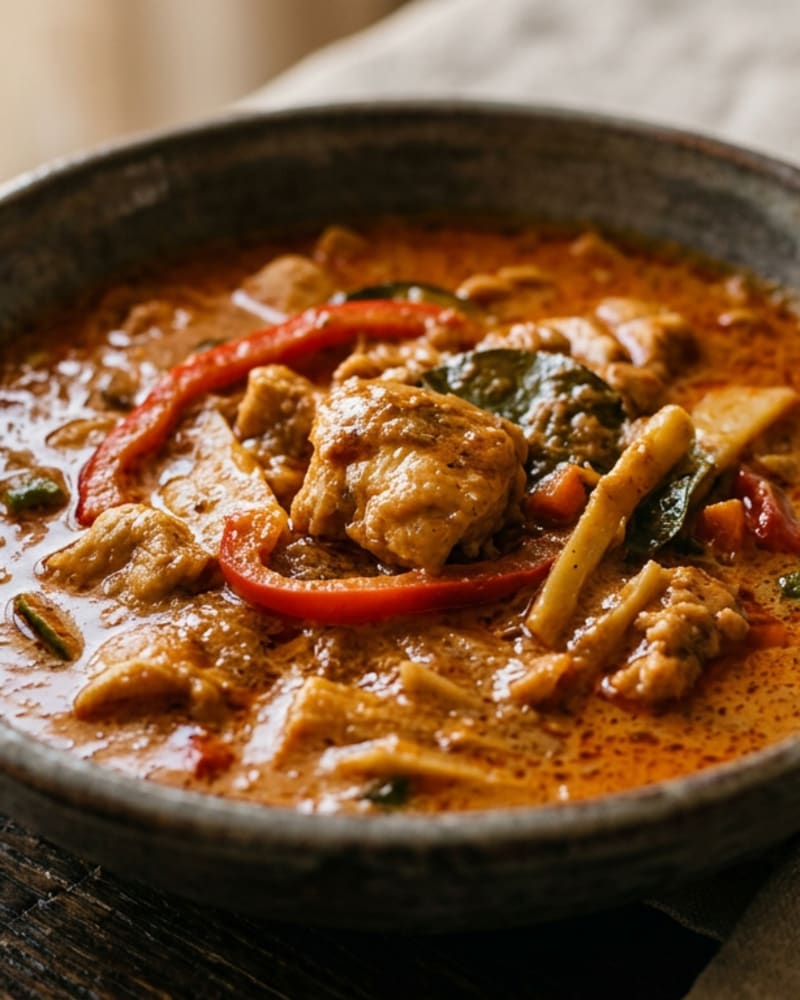
It is 6:45 on a Wednesday, the rice cooker is humming, and you are staring at a can of coconut milk with the confidence of someone who has a plan. This panang curry recipe takes 20 minutes of prep and 15 of cooking by the clock on the card, and it ends with a thick, glossy sauce that smells like a restaurant you would book twice. Rich, a little nutty and a little flirtatious, it is the dish you make when you want dinner to make a first impression.
Beef chuck, panang paste and two cans of coconut milk, and a spoonful of peanut butter that holds it all together.
Panang is a Thai curry known for being thicker and sweeter than most, with a nutty undertone. You slice the beef thin, simmer panang paste in the first can of coconut milk, then add the beef and cook it until tender. The second can and a couple of spoonfuls of peanut butter go in next, and a final simmer thickens the sauce until it coats a spoon. Serve it over rice and let the sauce soak in.
What you need
- 1 lb beef chuck, thin strips
- 3 tbsp panang curry paste
- 2 cans coconut milk
- 2 tbsp peanut butter
- 2 cups rice, cooked
- ¼ tsp salt
- ¼ tsp black pepper
How to make it
- Slice 1 pound beef chuck into thin strips, about 5 minutes.
- Simmer 3 tablespoons panang curry paste in 1 can coconut milk for 5 minutes.
- Add the sliced beef and cook 15 minutes until tender.
- Pour in the second can coconut milk and 2 tablespoons peanut butter.
- Simmer 10 minutes until thickened.
- Season with salt and black pepper to taste.
- Serve with the 2 cups cooked rice.
Notes
Cooked leftovers keep three to four days refrigerated, per USDA FSIS. Store the curry and rice separately so the rice does not turn soft.
This panang curry recipe tastes better on day two. The flavors settle, and the sauce thickens in the fridge, so add a splash of water or coconut milk when you reheat it. Warm it over medium-low heat and stir until it loosens.
It freezes reasonably well, though coconut milk can separate after thawing. Stir it hard as it reheats and it comes back together.
Slice the beef thin against the grain. Thin strips tenderize faster in the simmer, and they pick up more of the sauce. If the beef is partly frozen, it slices more cleanly, so put it in the freezer for a few minutes first.
The method simmers the beef for 15 minutes and then the finished curry for another 10, so give yourself time beyond the prep and cook times on the card. It is a weeknight dinner, though one that wants you nearby.
Whole cuts of beef are safe at 145°F with a rest, and the long simmer takes the chuck well past that.
Swaps that actually work
In a panang curry recipe, the panang paste and the coconut milk are the point, so leave them alone. They give the curry its color and its creamy base, and they are hard to replace.
Beef chuck can give way to sliced chicken thigh, which cooks faster, or to firm tofu and a handful of vegetables for a meatless version. If you use chicken, shorten the simmer and check that it reaches 165°F.
Peanut butter can be smooth or crunchy. Choose an unsweetened one if you can, because sweetened versions tilt the curry toward dessert.
Add red bell pepper strips or bamboo shoots during the last few minutes of simmering. A handful of basil leaves stirred in at the end adds a fresh, peppery note. Swipe right on the bell pepper and the agent adds it to the cart without asking whether you really need a vegetable in a curry this indulgent.
Fish sauce, a pinch of sugar and a few torn lime leaves round the sauce out if you have them. Taste before adding any, because the paste and the peanut butter already bring salt and sweetness, and a curry that has gone too sweet is harder to rescue than one that is too plain. A swap that costs you the dish is using light coconut milk. The sauce depends on fat to thicken and carry the paste, and the light version leaves you with something thin and pale.
Stir the pot a few times during the final simmer and scrape the bottom, because coconut milk with peanut butter can catch on the base of a pan faster than it looks.
If it goes wrong
The sauce is thin. It did not reduce enough. Take the lid off, raise the heat a little and simmer for a few more minutes, stirring, until it coats a spoon. A bit more peanut butter helps if you are in a hurry.
The sauce is oily or split. The heat was too high. Take it off the burner, add a splash of coconut milk or water, and stir until it comes together. Keep the simmer gentle from here.
The beef is tough. It was cut too thick or cooked too fast. Keep the simmer low, cover the pot and give it more time, tasting a piece until it is tender.
It tastes flat. Salt, so add a pinch at a time. The recipe seasons with salt and black pepper at the end. If it is still dull, a squeeze of lime or a splash of fish sauce adds brightness.
What to serve with it
The default for this panang curry recipe is steamed rice, which the recipe already includes. Jasmine rice is a common pick, and it soaks up the sauce.
The better version has a handful of fresh herbs or sliced chili on top, and a few lime wedges on the side. A simple cucumber salad cools each bite.
For something from the fridge, a few steamed green beans or sautéed greens turn the plate into a full meal. A bottle of chili sauce lets each person set their own heat.
As lunch the next day, it reheats well over rice. Add a splash of water and stir gently.
Why this one earns its place
Because this panang curry recipe tastes like a decision. A short ingredient list, one pot and a long, easy simmer produce a curry that feels rich and a little indulgent.
Swipe it into your week when you want dinner with some depth, and let the agent shop the paste, the beef and the coconut milk. You supply the rice and a good reason to light the stove. The two cans and the pound of beef stretch across four bowls, and the rice does the rest of the filling.
For more curry nights, try chicken tikka masala, khao soi for another coconut-based Thai dish, or weekly meal planning.
More like this: all Thai recipes in Crave Corner.