Musakhan With Sumac Chicken Piled on Warm Pita
Jump to recipe ↓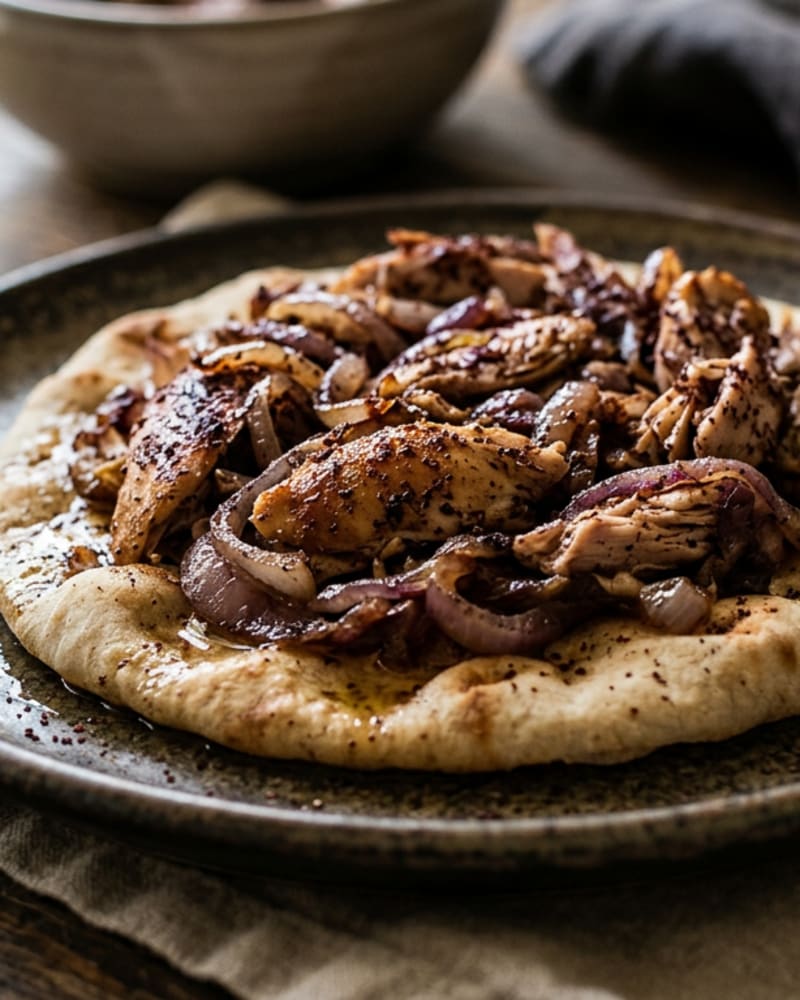
At 6:15 on a weeknight, the skillet and a quick oven for the pita are all you need to turn on, and the kitchen already smells like onions going soft and golden. This musakhan recipe takes about 31 minutes, and it piles sumac chicken onto warm pita like it is trying to show off. It is a little bit messy, a little bit generous, and it will have people leaning in.
Sumac is the spice that makes the table ask what you did.
Musakhan is chicken thighs, a lot of red onion, and tart, red sumac, all of it spooned over pita. The onions cook in olive oil until soft and golden, the chicken browns in the same pan, and the two end up sharing every bit of flavor. You shred the chicken, pile it high, and bring the whole thing to the table while the pita is still warm. There is no sauce to make and no dough to knead, only a short list and a hot pan.
What you need
- 2 lb chicken thighs
- 3 tbsp sumac
- 4 tbsp olive oil
- 4 red onions
- 4 pita bread
- 1 tsp salt
- 1 tsp black pepper
How to make it
- Slice the 4 red onions into thin half moons about 5 minutes.
- Heat 4 tbsp olive oil in a large skillet over medium heat.
- Add sliced onions and cook until soft and golden, 8 minutes.
- Season 2 lb chicken thighs with 3 tbsp sumac, 1 tsp salt and 1 tsp black pepper.
- Add chicken to the skillet and cook until browned and cooked through, 15 minutes.
- Warm the 4 pita breads in the oven at 350F for 3 minutes.
- Shred the chicken and pile onto the warm pitas with the onions.
- Serve hot with extra sumac sprinkled on top.
Notes
Cooked leftovers keep three to four days refrigerated, per USDA FSIS. That is worth knowing before you commit to this musakhan recipe. Store the chicken and onions together and the pita separately, because warm pita is the point and soggy pita is not.
The chicken is cooked when it reaches 165°F in the thickest part of the thigh, the USDA safe minimum for poultry. The recipe browns the thighs in the skillet for 15 minutes, and a thermometer tells you more than the clock does.
Slice the onions into thin half moons and keep the pieces even, so they soften at the same pace. Four red onions look like a lot, and they are, but they collapse into a jammy tangle by the time the chicken is browned. Let them go until they are soft and golden before the chicken joins them.
Season the chicken before it goes in the pan, with the sumac, salt and pepper, so the spice clings to the surface and toasts a little as it browns. Sumac is tart rather than hot, so do not be shy with it. That is three tablespoons for two pounds of thighs, and it is meant to be a strong flavor.
Warm the pita just before serving. The recipe has it going into a 350°F oven for 3 minutes, which is enough to soften it and take the chill off. Longer and it begins to dry and crack, and it will not fold around the chicken.
Leftover musakhan makes a good cold lunch, tucked into a fresh pita with a handful of greens. The sumac holds up overnight, and the onions get sweeter as they sit.
Swaps that actually work
Before you change anything in this musakhan recipe, know which part is holding it up. The sumac is the point. It brings a bright, lemony tartness that is hard to fake, so find it if you can. Many grocery stores carry it in the spice aisle or near the international foods. If you cannot find it, a little lemon zest with a pinch of paprika gets you in the same direction, though it will taste like a cover version.
Red onions are what the recipe uses, and they turn a deep, glossy color. Yellow onions work and taste a little sweeter. Keep the quantity high, because four onions cook down to a modest pile.
Chicken thighs stay juicier than breasts, which makes them a better fit here. If you only have breasts, slice them thinner and keep a close eye on them, because they dry out faster.
For the bread, pita is the base here. Any soft flatbread will do the job, and a naan or a lavash works if that is what is in the cupboard.
The swap that costs you the dish is cutting the onions. They are not a garnish. They are half of what you are eating, so treat them as the partner and not the plus-one, and the sweetness is what balances the sumac.
If it goes wrong
The onions are browning but not softening. The heat is too high. Turn it down to medium or lower, add a splash of water to the pan, and cover it for a minute so they steam through before they color.
The chicken is dry. It stayed in the pan too long, or the pieces were small and thin. Shred them while they are warm, then toss them back into the onions and any pan juices to pick up moisture.
The pita is stiff. Stale pita is a bad first impression, and a few drops of water and a towel are the second chance. It stayed in the oven too long, or it was already stale. Sprinkle a few drops of water over it, wrap it in a clean towel for a minute, and it will soften again.
It tastes flat. Salt is the first thing to try, then a little more sumac. Taste a piece of chicken and a bite of onion together, and add a pinch of salt or a sprinkle of sumac on top until it perks up.
What to serve with it
The default for this musakhan recipe is a plain, crisp salad of tomato, cucumber and parsley, dressed with lemon and olive oil. The freshness cuts through the richness of the onions.
The better version is a small bowl of plain yogurt on the side, or a few pickles, for contrast. A few olives, if you like them.
The thing in the fridge that lifts it: a squeeze of lemon over the top, and a scatter of chopped parsley or toasted nuts if you have them.
It works as lunch the next day, as a rolled-up wrap with leftover chicken and onions tucked into fresh pita, or just eaten cold from the container on a busy day.
Why this one earns its place
Some dinners need a lot of time, and some need a lot of attitude. This musakhan recipe asks for 31 minutes and a skillet, and it comes back with a plate that looks like it took an afternoon. It is generous and a little bit saucy, the kind of meal that makes a Wednesday feel less like a Wednesday. Swipe it into your week when you want to cook something that has a point of view.
If you are cooking for two, Meal Planning for Couples is a good place to see how a dish like this fits into the week. For a similar spice-forward chicken, try Chicken Kabsa, and for a pita-based dinner of the same flavors, Shawarma Plate is a short walk away.
More like this: all Middle Eastern recipes in Crave Corner.