Lasagna With Three Layers and a Rest That Keeps the Slices Standing
Jump to recipe ↓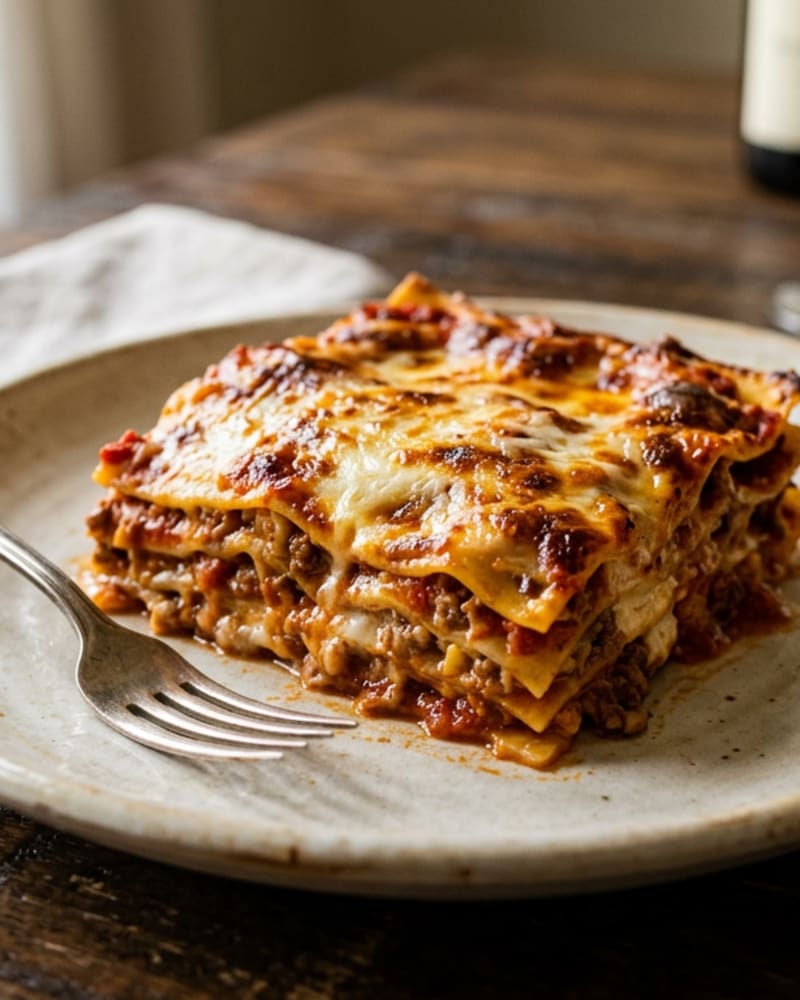
It is 5:15 on a Sunday, the oven is at 375°F, and you are about to spend 68 minutes making the one dish that makes a quiet house smell like someone is coming over. This lasagna recipe asks for 5 minutes of prep and rewards you with layers, and it will not tell anyone how little you did.
Three layers, one pan, and a 10-minute rest that is the hardest part.
Here is the whole plan. You brown a pound of beef, stir in marinara, and let it simmer for 5 minutes. You mix ricotta with a cup of mozzarella, then stack sauce, noodles and cheese in a 9x13 pan. Foil on for 25 minutes, foil off for 15, and a rest before you cut, because a lasagna sliced straight from the oven is a lasagna that slumps across the plate.
What you need
- 9 lasagna noodles
- 1 lb ground beef
- 3 cups marinara sauce
- 15 oz ricotta cheese
- 2 cups mozzarella cheese
- ½ tsp salt
- ½ tsp black pepper
How to make it
- Preheat the oven to 375 degrees F.
- Brown the ground beef in a skillet over medium heat for 8 minutes, then stir in the marinara sauce and simmer for 5 minutes.
- Mix the ricotta cheese with 1 cup mozzarella cheese in a bowl.
- Spread 1 cup of the meat sauce in a 9x13 pan.
- Layer 3 lasagna noodles, half the ricotta mixture, and 1 cup sauce, then repeat the layers ending with noodles and sauce.
- Top with the remaining mozzarella cheese, cover with foil, and bake for 25 minutes.
- Remove the foil and bake 15 more minutes until bubbly and golden, then rest 10 minutes before slicing.
Notes
Cooked leftovers keep three to four days in the fridge, per USDA FSIS. Cut the pan of this lasagna recipe into squares before you chill it, so each portion rewarms on its own and you are not hacking at a cold block.
This lasagna recipe freezes well in individual squares, and it often tastes better on day two once the layers have settled and the sauce has had time to soak into the noodles. Reheat covered so the top does not dry out.
A note on the noodles: the method layers them as they are, with no boiling step, so reach for no-boil (oven-ready) sheets. Regular dry noodles need cooking first, and that is a different recipe than the one written here.
The pan matters in this lasagna recipe. The method calls for a 9x13, and the 9 noodles are counted to fit it, three to a layer. If your sheets are longer than the pan, snap them to fit rather than letting them climb the walls.
When you spread the first cup of meat sauce across the bottom, do it to the corners. That thin layer is what keeps the first row of noodles from welding itself to the dish. It is also, you may notice, the only time in the recipe when you are asked to be thorough.
Build the layers from the edges in. Spread sauce and cheese to the corners of the pan, because the corners are where a lasagna dries out first and where the best browned bits live. Press the noodles flat as you go, and the finished slice will stand up straight instead of leaning on its neighbor.
Swaps that actually work
Leave the ricotta and mozzarella alone. The ricotta layer is the soft center, and the mozzarella on top is the browned lid. Everything else can move.
Ground turkey or Italian sausage can stand in for the beef in the same quantity. If you go with sausage, taste before you salt, because the marinara and the sausage may already carry a lot. A jar of marinara you actually like is the biggest quality lever in the dish, so spend there.
Cottage cheese will stand in for ricotta in a pinch, though the texture reads more curd than cream. Squeeze or drain it first if it looks wet. If you only have a single bag of shredded cheese, split it as the recipe does: part into the ricotta, the rest on top for browning.
The swap that costs you the dish: skipping the foil stage. The 25 minutes covered are what steam the noodles through. Without them you get a crisp top over a firm, underdone middle.
Ricotta is soft and a little shy, so spoon it on in dollops and spread it gently rather than dragging it across the noodles. If a noodle slides, nudge it back and keep going. The oven is forgiving, and the mozzarella on top will cover for anyone's layering sins.
If it goes wrong
The noodles are crunchy in the middle. They were not given enough moisture, or the foil was loose. Make sure the top layer of noodles is fully covered in sauce, seal the foil tightly, and if you catch it late, re-cover and give it 10 more minutes before you take the foil off.
It is soupy on the plate. Either the sauce was loose going in or you cut too soon. Let it rest the full 10 minutes, and next time simmer the meat sauce a couple of minutes longer so the marinara thickens before it meets the noodles.
The top is pale. The oven ran cool or the foil came off late. Leave it uncovered until it is bubbly and golden, as the method says, and if it needs help, run it under the broiler for a minute while you watch it.
It tastes flat. Usually salt, sometimes a lack of acid. Add a pinch of salt and a little pepper to the sauce before you build it, because the seasoning in the finished pan is hard to adjust. Fresh basil or a little grated cheese on the plate also lifts it.
USDA's safe minimum for ground beef is 160°F, so the 8-minute browning step should leave you with no pink before the marinara goes in.
What to serve with it
The default is a green salad with a sharp dressing, because lasagna is rich and wants a counterpoint. Garlic bread is the second default, and the table tends to approve.
The better version of the default is a salad of bitter leaves with lemon and olive oil, which cuts through the cheese so the second square tastes as good as the first. If something is in the fridge, a handful of olives or a few torn basil leaves lifts it.
As lunch the next day, it is excellent cold or microwaved, depending on how honest you are being with yourself about it.
A plate of lasagna can also carry a second act. Leftover squares reheated with a spoon of extra marinara on top come back moist, and a little grated cheese melted over them makes them taste freshly baked. Keep a few squares aside for a lunch that makes the person at the next desk lean over.
Why this one earns its place
You can swipe lasagna into your week for a night when the people at the table matter more than the dish. It is the kind of dinner you make for someone you want to keep, and it looks like you worked harder than you did. The agent can shop the noodles, the ricotta and the marinara while you decide whether the guest list needs a second bottle.
If you are in a baked-pasta mood, Olive Garden-style lasagna and baked ziti sit close by, and weekly meal planning shows how to make a Sunday pan stretch.
More like this: all Italian recipes in Crave Corner.