Chicken Maqluba, the Upside-Down Rice Dinner With a Built-In Reveal
Jump to recipe ↓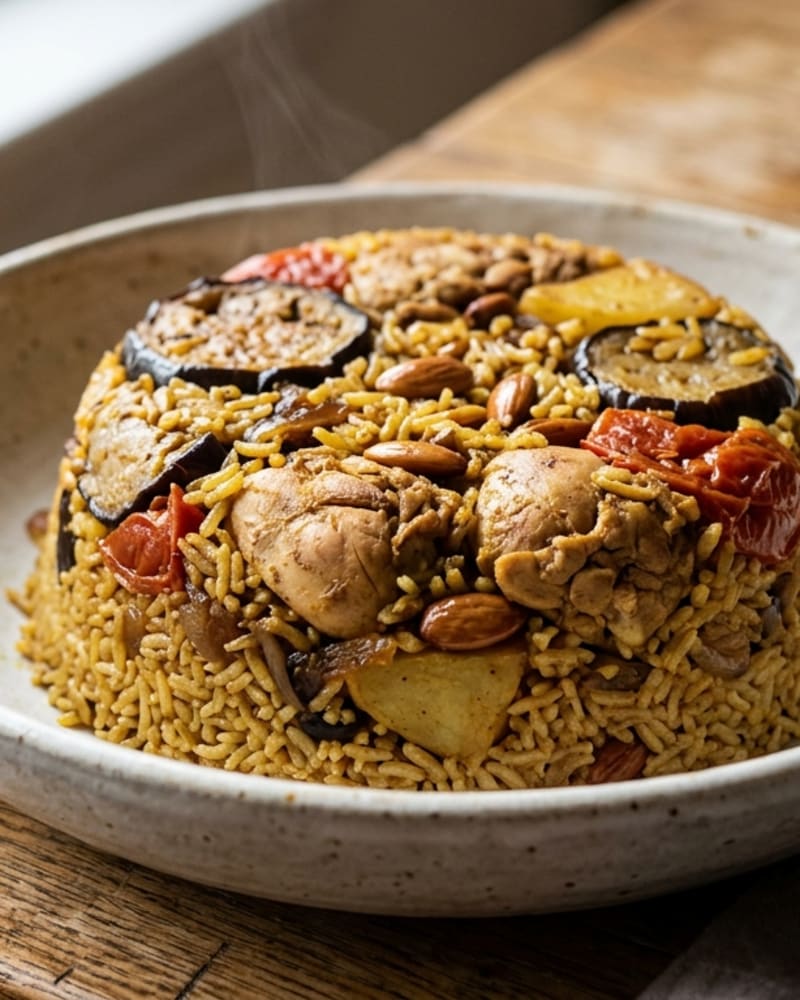
It is 5:45 on a Friday, and tonight's dinner comes with a reveal. Maqluba means upside down in Arabic, which makes this chicken maqluba a dish with a moment of suspense built in, about 79 minutes from first rinse to platter, and a good share of that is hands off. Spend an hour being mysterious in the kitchen, then let the dinner do the talking.
A dinner that makes an entrance.
This is a one-pot dish popular across the Levant, built on cumin, coriander, turmeric and cinnamon, the quiet quartet that makes the whole kitchen smell like you planned ahead. Chicken thighs, eggplant and cauliflower each bring something different to the rice, and the onion at the bottom turns into the sweet, browned layer that ends up on top. It serves six, so it suits a table with company rather than a quiet night in. A pot of chicken maqluba on the table also tends to start conversation, partly because the guests want to know how it will land and partly because the smell has been working on them for an hour.
What you need
- 2 lb chicken thighs
- 2 cups basmati rice
- 1 eggplant
- 1 cauliflower
- 1 yellow onion
- 3 cups chicken broth
- ¼ cup olive oil
- 1 tsp ground cumin
- 1 tsp ground coriander
- ½ tsp ground turmeric
- ½ tsp cinnamon
- 1½ tsp salt
- 1 tsp black pepper
How to make it
- Rinse 2 cups basmati rice until the water runs clearer, then soak it in cold water for 15 minutes. Slice 1 eggplant into 1/2-inch rounds, cut 1 cauliflower into florets, and slice 1 yellow onion, about 8 minutes.
- Pat 2 lb chicken thighs dry. Season with 1 tsp ground cumin, 1 tsp ground coriander, ½ tsp ground turmeric, ½ tsp cinnamon, salt to taste, and black pepper to taste.
- Heat ¼ cup olive oil in a large heavy pot over medium-high heat. Brown the chicken thighs 4 minutes per side, then transfer to a plate.
- In the same oil, fry the eggplant slices and cauliflower florets in batches until golden, about 3 to 4 minutes per side, adding a splash more oil only if the pot looks dry. Set vegetables aside.
- Drain the rice. Layer the sliced onion in the bottom of the pot, then the chicken, then the fried eggplant and cauliflower. Spoon the drained rice evenly over the top.
- Pour 3 cups chicken broth gently over the rice. Bring to a boil, then cover, reduce heat to low, and cook for 25 to 30 minutes until the rice is tender and liquid is absorbed.
- Rest off heat for 10 minutes. Run a spatula around the edge, invert onto a large platter in one confident flip, and serve the maqluba in wedges.
Notes
Cooked leftovers keep three to four days refrigerated, per USDA FSIS. Reheat a wedge covered, with a splash of water, so the rice steams back to softness instead of drying out at the edges.
Chicken maqluba is often better the day after, in the way that many one-pot rice dishes are, because the spices have had time to settle into the grains. The eggplant softens further, which some people like and some do not, so decide which camp you are in before you pack lunches.
Choose a heavy pot with straight sides and a lid that fits. Straight sides help the rice come out in a tidy dome, and a heavy base is gentler on the layer that sits against the heat. A pot with sloping sides may still work, though the shape you serve will be a little less dramatic.
Much of the work can be moved earlier in the day. The rice can soak while you do something else, the vegetables can be fried and set aside until you are ready to build, and the chicken can be browned ahead and left on a plate. The assembly then goes quickly when guests are already at the door.
Cooked rice dishes can go in the freezer, though the eggplant and cauliflower may turn watery on thawing, so treat this as a fridge dish first.
Swipe it into the week the in-laws are visiting, and let the agent worry about two pounds of thighs and the rest of the cart.
Swaps that actually work
Leave the basmati alone. Its long grains tend to stay separate under the weight of everything stacked on top, and shorter, starchier rices are more likely to turn sticky and make the flip collapse.
Drumsticks or bone-in thighs can stand in for the chicken, though bone-in pieces may need longer than boneless ones, so check that the thickest piece reaches 165°F before you flip. Many versions of maqluba tuck in potatoes or tomato slices, and a handful of toasted almonds is a popular finish; all of those are welcome here as long as you do not crowd the pot.
Chicken maqluba works with whatever hardy vegetables you have, so long as they hold their shape in a long, steamy cook. Zucchini or bell peppers can replace the eggplant if that is what you have. Broth is what the rice cooks in, and water will work but tastes thinner, so add a little more salt if you go that way.
If a spice is missing, do not skip all of them. The mix of cumin, coriander, turmeric and cinnamon is what makes it taste like maqluba rather than chicken and rice, so borrow a pinch of something warm before you give up on one.
The swap that costs you the dish is the onion layer. It is the sweet, browned bottom that tends to start an argument about who gets the corner piece, and it is not a layer to get clever with.
If it goes wrong
It will not release from the pot. The rice stuck to the bottom, or the pot was flipped too soon. Rest it the full 10 minutes, run a thin spatula around the edge, and set a hot, damp towel under the pot for a minute, which can help loosen the bottom layer. If it still breaks apart, serve it as a spoonable pilaf, call it deconstructed, and say it with confidence.
The rice is mushy. Too much liquid, or rice that was not drained well, is a likely story. If it is wet at the end, set the pot back on low heat uncovered for a few minutes to steam off the surface, and drain the rice more thoroughly next time.
The rice is crunchy in the middle. The heat was too high or the lid let steam escape. Splash in a little hot broth or water, cover, and give it a few more minutes on low before resting again.
The eggplant is greasy. It soaked up the oil in the pan. Lift the slices out onto paper towels as they finish, and add extra oil when the pot looks dry, so the rice is not sitting in a puddle.
It tastes flat. It is often salt. Sprinkle a little over each serving at the table, and taste the broth before you pour it next time.
What to serve with it
The default for chicken maqluba is a bowl of plain yogurt on the side, which cools the spices and tends to suit the rice well.
A better version of the default is a chopped cucumber and tomato salad with lemon, olive oil and salt, which gives the rich, soft layers something sharp to push against.
The thing in the fridge that lifts it is fresh parsley, or a few toasted nuts if you have them. Leftovers make a good next-day lunch, with a wedge reheated gently and the yogurt cold beside it.
Why this one earns its place
Chicken maqluba is a magic trick you can eat, and it gives you something to talk about before anyone has picked up a fork. If you want to impress someone without anything that looks like effort, the flip does the flirting. You get a pot-to-platter moment, a house that smells like you cooked all day, and leftovers that make Saturday lunch less of a decision.
For more rice dishes that feed a table, chicken biryani and arroz con pollo sit in the same family of one-pot comfort. When a dish like this needs a plan around it, weekly meal planning is how it becomes a night you look forward to.
More like this: all Middle Eastern recipes in Crave Corner.