Caprese Stuffed Chicken, Without the Cheese Escaping
Jump to recipe ↓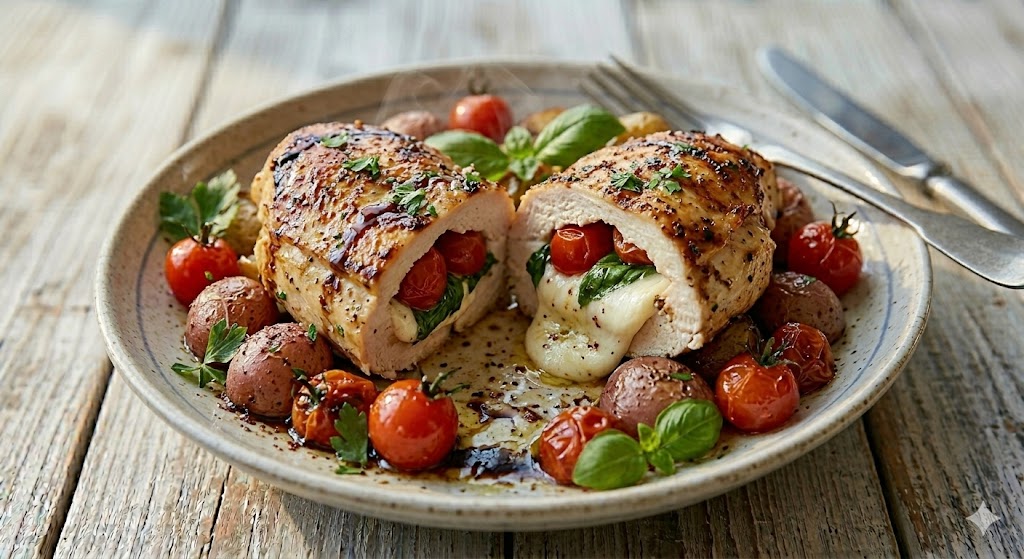
About 412 calories per serving, estimated from the ingredient list.
Six o'clock, four chicken breasts, and the strong suspicion that stuffed anything is a weekend project. This caprese stuffed chicken recipe is thirty-four minutes and one pan, most of which is the oven working while you do something else.
The cheese escapes for two reasons, and both of them are avoidable.
Wet tomato turns to steam and forces the pocket open from the inside. And a pocket cut all the way through is not a pocket, it is a flap with ambitions. Dry the tomato properly, stop the knife short of the far edge, and the filling stays where you put it.
What you need
- 4 chicken breasts
- 125g fresh mozzarella, sliced and patted dry
- 2 tomatoes, sliced and patted very dry
- 1 handful basil leaves
- 2 tbsp olive oil
- Salt, black pepper, and balsamic to finish
How to make it
- Heat the oven to 200C fan.
- Slice a deep horizontal pocket into the thick side of each breast, stopping short of the far edge so it stays a pocket rather than a flap.
- Pat the tomato and mozzarella slices dry on kitchen paper until they stop leaving marks.
- Layer tomato, mozzarella and basil into each pocket and press the opening closed. Two cocktail sticks per breast if it gapes.
- Season the outside well and sear in an ovenproof pan in the olive oil, four minutes, until deep gold.
- Turn, then move the whole pan to the oven for fifteen to eighteen minutes, until the thickest part reads 74C.
- Rest five minutes before slicing, and finish with balsamic on the plate rather than in the pan.
Notes
Cooked chicken keeps three to four days refrigerated, per USDA FSIS. Do not write yourself a longer number than that on the container.
It reheats acceptably at a low temperature, covered, though the mozzarella will never again be what it was on the first night. The better move is to slice it cold into a salad the next day, where the firmer cheese is an advantage rather than a disappointment.
It does not freeze well. The tomato collapses into water on thawing and the mozzarella turns rubbery, so you end up with a wet pocket and a dry breast, which is precisely the failure this recipe exists to prevent.
A meat thermometer matters more here than in most chicken recipes, because you cannot see the middle and the filling insulates it. Chicken breast goes from correct to dry across a very narrow band, and the pocket makes the visual cues useless. If you own one thing for this dish, own a thermometer rather than a better pan.
The most common disappointment is a breast that is beautifully browned outside and bland inside. The fix is seasoning the meat, not the filling.
Buy the breasts as evenly sized as you can, and if one is noticeably larger, give it two or three extra minutes in the oven rather than pulling everything at once. Four breasts of different weights is the quiet reason one person at the table gets something dry while everyone else is happy, and it is entirely avoidable by checking each one rather than trusting the timer.
Let the pan cool for a minute before you cut the pocket, if you are working ahead. Warm chicken is softer and the knife wanders, which is how a pocket becomes a through cut without you noticing until the cheese is already on the floor of the oven.
Swaps that actually work
Fresh mozzarella is the point. The low moisture block sold for pizza will melt perfectly well, but it will not give you the soft pull that makes this read as caprese rather than as cheesy chicken. Buy the ball in water, and dry it properly.
The chicken can move. Thighs work well, boned and opened out flat, then rolled around the filling rather than stuffed into it, and they are considerably more forgiving of a few extra minutes in the oven. Turkey breast works and is cheaper.
Basil can become rocket, or spinach at a push, though at that point you have made a good stuffed chicken rather than this one specifically.
Sun dried tomato in place of fresh is a genuinely good swap and it solves the moisture problem outright, since the water is already gone. Pesto smeared inside the pocket is another, and it seasons the meat as it melts.
The swap that costs you the dish is skipping the sear and going straight into the oven. You lose the crust, the outside stays pale and slack, and nothing later in the process puts colour back.
If it goes wrong
The cheese leaked into the pan. The pocket was cut through, or the tomato went in wet. Cocktail sticks next time, and dry the slices until they stop marking the paper.
The chicken is dry. It went past 74C. Pull it at temperature rather than at time, and rest it for five minutes so the juices redistribute instead of running onto the board.
The outside is pale. The pan was not hot enough at the sear, or it was crowded and the breasts steamed each other. Sear in two batches if your pan is not genuinely large.
It is flat. Salt, and then the balsamic. Season the outside of the chicken properly before it goes anywhere near the pan, because seasoning the finished slice only ever reaches the surface.
What to serve with it
The default is something green and sharp, dressed rocket straight onto the plate, letting the resting juices run into it and do the rest of the work.
The better version of the default is orzo, white beans or bread underneath, because the balsamic and the juices need something absorbent to land on and it is a waste to leave them on the plate.
The thing in the fridge that lifts it is half a lemon, squeezed over at the table. The balsamic brings sweetness and the lemon brings the edge that the sweetness needs.
It is a strong next day lunch sliced cold, which is not true of most stuffed chicken, and it is the reason to cook four even if two of you are eating.
Why this one earns its place
It looks like considerably more effort than it is, and that is a genuinely useful property on a weeknight when someone else is eating with you and you would rather not spend the evening at the hob.
It also solves the specific problem of chicken breast being dull without turning the solution into a project. The filling seasons the meat from the inside as it cooks and keeps it moist while it does, which is why this works better than serving the same four ingredients next to each other on a plate.
If chicken breast has quietly stopped being interesting in your house, quick weeknight dinner ideas has more in this range. For cooking like this for two rather than four without wasting half of it, meal planning for couples is the practical version. And weekly meal planning is how a dish like this stops being an occasion and starts being a Tuesday.
More like this: all Italian recipes in Crave Corner.