Briam, the Greek Roasted Vegetable Pan That Turns Silky in Olive Oil
Jump to recipe ↓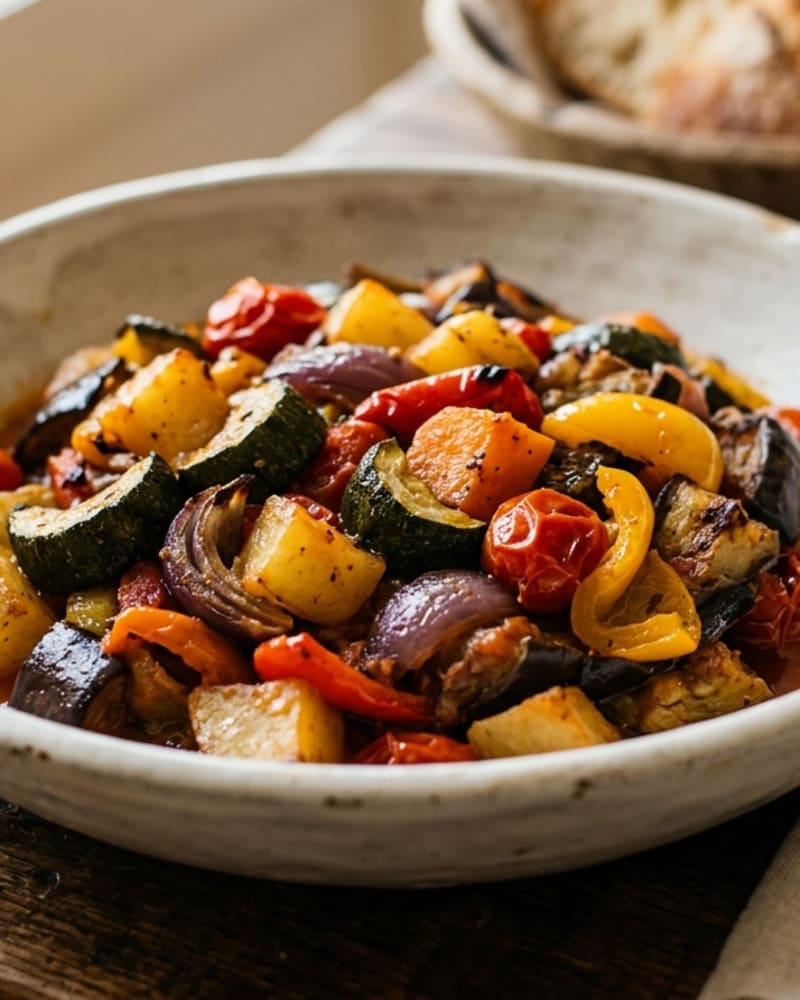
6:15 p.m., the oven is at 425°F, and the cutting board is a small farm. This briam recipe is 62 minutes from first cut to first forkful, and most of it is the oven doing the work while you do something else. Olive oil, a hot oven and a pile of chopped vegetables is the dinner equivalent of dimming the lights, and the zucchini are not subtle about their intentions.
Seven vegetables, one pan, and a blanket of olive oil that makes them silky.
Briam is a Greek dish of summer vegetables roasted together: zucchini, eggplant, potatoes, a bell pepper, a red onion, roma tomatoes and a handful of thin-sliced garlic. They go onto a rimmed sheet pan with a third of a cup of olive oil and oregano, and they roast until the potatoes are tender and the edges turn brown and sweet. Feta crumbles over the top for the last five minutes, and a few slices of crusty bread do the rest.
There is a lot of chopping, about twelve minutes by the method's count, and then nothing. No stirring beyond one turn halfway, no sauce to watch, no pan to babysit. It is a good choice for a night when you want dinner to feel generous without feeling difficult.
What you need
- 2 zucchini
- 1 eggplant
- 2 potato
- 1 bell pepper
- 1 red onion
- 3 roma tomato
- 4 garlic
- ⅓ cup olive oil
- 1½ tsp dried oregano
- 4 oz feta cheese
- 4 slices 4 crusty bread
- 1 tsp salt
- ½ tsp black pepper
How to make it
- Preheat the oven to 425 F. Slice 2 zucchini, 1 eggplant, 2 potatoes, 1 bell pepper, 1 red onion, and 3 roma tomatoes into chunky pieces, and thinly slice 4 garlic cloves, about 12 minutes.
- Pile all the cut vegetables and garlic onto a large rimmed sheet pan.
- Drizzle with 0.33 cup olive oil, sprinkle with 1.5 tsp dried oregano, salt, and black pepper, and toss until everything is coated.
- Spread in an even layer and roast for 40 to 45 minutes, stirring once halfway, until the potatoes are tender and the edges caramelize.
- Crumble 4 oz feta cheese over the hot vegetables and return to the oven for 5 minutes.
- Serve straight from the pan with 4 slices crusty bread.
Notes
Cooked leftovers keep three to four days refrigerated, per USDA FSIS. A briam recipe like this one is good cold, good at room temperature and good reheated, and the flavors often settle together by the next day. Store it in a covered container with any oil that pooled in the pan, because that oil carries the oregano and garlic.
It reheats well in a skillet or the oven. The potatoes soften more with time, so if you like them with some bite, eat it the first night.
Cut the vegetables into chunky pieces, not thin slices. The method is specific about this because each vegetable cooks at a different speed. Large pieces of zucchini and eggplant hold their shape, and the potatoes get enough bulk to finish at the same time as everything else. If you cut the potatoes smaller than the rest, they will usually be done first.
SwipeCart's idea of a good first date is a dinner that texts you back: swipe right on this pan and the agent puts the eggplant in the cart before you have finished imagining the oil. Meanwhile, slice the garlic thin and do not mince it. Thin slices roast into sweet, golden coins, while minced garlic tends to burn in a 425°F oven. Tuck a few slices underneath the vegetables if you see them coloring too fast.
Roma tomatoes tend to carry less water than big slicing tomatoes, and that matters when the whole pan is supposed to roast instead of stew. The tomatoes will collapse and slick the pan, and that juice mixed with the olive oil is the sauce.
The feta goes on hot. Crumble it over the vegetables when they come out and return the pan for five minutes so the edges soften and warm. It does not melt, and it is not supposed to. It turns creamy at the edges and stays salty in the middle.
Swaps that actually work
The point of this briam recipe is the olive oil and the oregano. The third of a cup of oil is what makes the vegetables silky instead of dry, and the oregano is what makes it taste Greek. Leave both alone, and use an olive oil you would be happy to dip bread in.
Vegetables are flexible. Yellow squash can replace zucchini. Sweet potatoes can replace the potatoes, though they cook a little differently, so check them early. Fennel or mushrooms can join the pan if you need to use them up.
Feta is the salty finish. A tangy goat cheese or a crumbly ricotta salata can stand in, and a few spoonfuls of yogurt on the side add cool, creamy contrast. If you are cooking without dairy, a squeeze of lemon and a handful of chopped parsley brighten the pan in a similar way.
Dried oregano can be swapped for a smaller amount of fresh, added at the end. Thyme or a pinch of smoked paprika is a different dish, but it is a good one.
The swap that costs you the dish is skimping on the oil. Less olive oil gives you dry, tough edges instead of silky centers, and the vegetables stick to the pan. If you are choosing between options at the store, this is the place to spend. And if you would rather skip the shopping debate, the agent can build the cart for you, so the zucchini and eggplant show up before the dinner plan changes its mind.
If it goes wrong
The vegetables are soggy and pale. The pan was too crowded, so they steamed. Spread them out, move half to a second pan if you need to, and give them the full 40 to 45 minutes.
The potatoes are still hard. They were cut too large, or the oven was cooler than it says. Keep roasting, stirring once more, until a fork goes in without a fight.
The pan is swimming in liquid. The tomatoes and zucchini released water. Return it to the oven for ten more minutes, or spoon some of the liquid off and save it for dipping the bread.
It tastes flat. Usually it is salt. Add a pinch, and finish with a little more oregano or a squeeze of lemon. The feta adds salt too, so taste before you add more.
The garlic is bitter. It sat on top and burned. Slice it a little thicker next time and tuck it under the other vegetables.
What to serve with it
The default is crusty bread, which is exactly what the method asks for. Tear it and use it to drag through the oil at the bottom of the pan.
To make it better, serve it with a spoonful of thick yogurt, a few olives and a squeeze of lemon. A fried or poached egg on top turns it into a more substantial dinner, and a green salad with a sharp dressing cuts through the richness.
It works as lunch the next day, cold or reheated. Pack it with a piece of bread and a little extra feta, and it holds up well at a desk.
Why this one earns its place
You know the dinner where you want to eat well and do almost no work? This briam recipe is that dinner. It looks like a holiday on a Greek island, costs you one sheet pan, and never once asks where this is going. Think of it as the date who shows up on time, pours the oil and leaves the dishes to the pan. It is also a gentle way to use the vegetables that are about to turn.
For a use of the leftovers, fold a spoonful into the Greek omelette. If you want another pan of slow-cooked Mediterranean flavor, try the chickpea tagine. And for a way to stop vegetables going to waste, read meal planning and food waste.
More like this: all Greek recipes in Crave Corner.