Beef Fajitas With Charred Peppers and Steak That Stays Tender
Jump to recipe ↓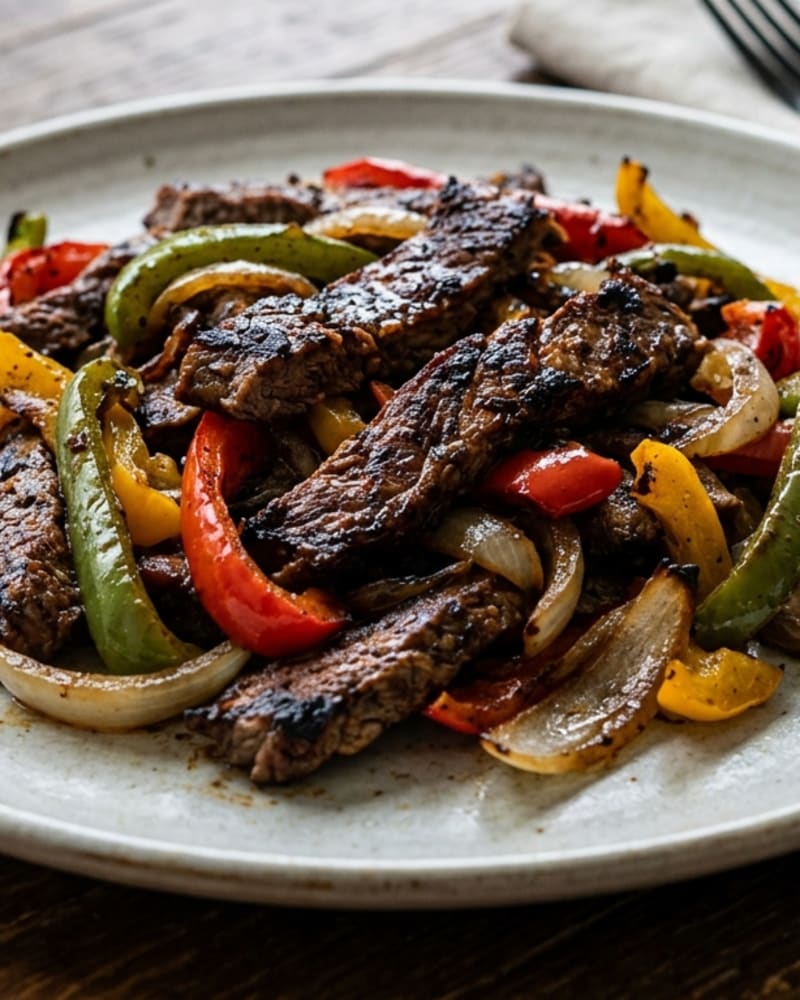
It is 7:05 on a Wednesday, the pan is smoking a little, and you want the sound of a restaurant without the reservation. Beef fajitas are 15 minutes of high heat, a pile of sliced peppers and onion, and a skillet that does all the talking. You swiped right on something with sizzle, the agent put the flank steak in the cart, and you are about to look very good with a very short list.
Hot pan, thin steak, charred vegetables, and about 10 minutes of real cooking.
The method is a quick sear of the beef, a quick char of the vegetables, and a toss at the end that brings them back together. There is no marinade to plan ahead and no long simmer, which is how a weeknight dish earns the word "fast." Salt and pepper do the seasoning, and the pan does the rest.
What you need
- 1 lb flank steak, thinly sliced
- 2 bell peppers, sliced
- 1 onion, sliced
- 2 tbsp vegetable oil
- ¼ tsp salt
- ¼ tsp black pepper
How to make it
- The 1 lb flank steak is already thinly sliced, about 1 minute to check and separate pieces if needed.
- The 2 whole bell peppers and 1 whole onion are already sliced, about 1 minute to separate pieces if needed.
- Heat 2 tbsp vegetable oil in a large skillet over high heat until shimmering.
- Add the sliced 1 lb flank steak and sear 3 minutes until browned, stirring once, then remove to a plate.
- Add the sliced 2 whole bell peppers and 1 whole onion to the hot skillet.
- Cook the vegetables 5 minutes until they char at the edges and soften.
- Return the steak to the skillet, season with salt and black pepper, and toss everything together 1 minute more.
Notes
Cooked leftovers keep three to four days refrigerated, per USDA FSIS. Beef fajitas reheat well in a hot skillet for a couple of minutes, which brings back some of the char. The microwave works too, but the vegetables soften further.
USDA lists 145°F with a 3 minute rest for whole cuts of beef. Thin strips of flank steak cook through in a few minutes over high heat, so the 3 minute sear in the method is meant to get them browned outside and just cooked inside. Cut into the thickest strip if you want to check.
They freeze fine in a container, though the peppers will lose some bite after thawing. Day two is good for tucking the meat and vegetables into a bowl, a wrap or an omelet.
The steak should go in a single layer. If the pan looks crowded, sear it in two batches, because a crowded pan steams the meat.
Slice the peppers and onion into strips of similar thickness so they char and soften at the same pace. Thick pieces stay raw in the middle while the edges blacken, and thin ones turn limp before the steak is back in the pan.
Wait for the oil to shimmer. That visual cue in the method is more reliable than a number, and it means the pan is hot enough to sear instead of simmer.
A little SwipeCart smirk: you swipe in a dish that sounds like a night out and shows up in 15 minutes. The agent shops the flank steak, the peppers and the onion, so the only thing left to heat up is the pan.
Swaps that actually work
The flank steak is the point of beef fajitas, so leave it alone. It is lean and flavorful, and sliced thin it cooks quickly and stays tender.
Skirt steak or sirloin can work in a pinch. Slice any cut across the grain, in thin strips, because the direction of the cut is what determines how chewy the bite is.
Salt and pepper are all the recipe asks for, and the dish still works. If you have them, chili powder, cumin, garlic powder and smoked paprika make it taste more like the classic. A squeeze of lime over the finished pan is a good finish.
Chicken or shrimp can take the place of beef, though the cooking times change. Shrimp cooks in a couple of minutes, and chicken needs to reach 165°F, so check it before you move on.
Tortillas are not on the ingredient list, which keeps the plate light on carbs as written. If you want them, warm a few in a dry pan and serve alongside, and add sour cream, guacamole or salsa if you like.
The swap that costs you the dish is a cold or crowded pan. High heat is how the vegetables char at the edges instead of going limp.
If it goes wrong
The steak is gray and chewy. The pan was too crowded or not hot enough, so the meat steamed. Sear it in batches over high heat, and for tonight, toss it with the charred vegetables and a squeeze of lime.
The vegetables are soggy. They went in cold or were crowded. Turn the heat up, spread them in a single layer and give them a few minutes without stirring.
The meat is tough. It was cut with the grain or cooked too long. Slice the rest across the grain in thinner strips, and keep the sear to the time in the method.
It tastes flat. This is usually salt. Taste after the final toss and add a pinch of salt, then a squeeze of lime if you have one.
What to serve with it
The default with beef fajitas is warm tortillas, rice and beans, and anything creamy.
The better version is a platter in the middle of the table with tortillas, lime wedges, sour cream, salsa and sliced avocado, so each person builds their own. Fajitas are a good dinner for two because it feels like a shared project.
The thing in the fridge that lifts it is a handful of cilantro and a jar of pickled jalapeños. Both bring a fresh sharpness to a rich plate.
If you are skipping the tortillas, a bowl of rice or a green salad on the side keeps it low-key. As lunch the next day, the leftovers go over greens or into a warm skillet with an egg.
Why this one earns its place
Because beef fajitas are fast without feeling like a shortcut. The ingredients fit on a short list, the cooking takes about 10 minutes, and the pan does the work of making it look impressive. It is a weeknight dinner that feels like a plan.
Swipe it into your week and the agent builds the cart, leaving you with a skillet and a few minutes. If you want the chicken version, try chicken fajitas. For another steak dinner with a little char, there is carne asada. And the swipe meal planner is where choosing dinner starts to feel like a game.
More like this: all Mexican recipes in Crave Corner.