Barbecue Chicken With Sticky Sauce and No Burnt Bottoms
Jump to recipe ↓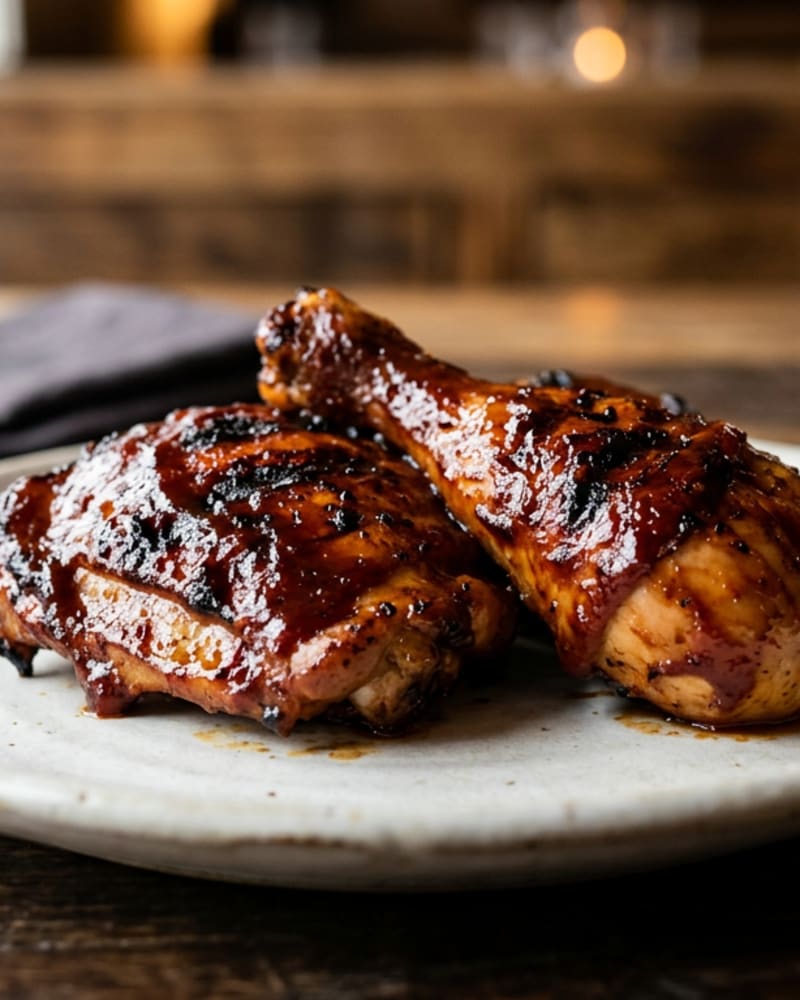
6:30 on a Thursday, the grill is hot, and the only decision left is whether you want sticky fingers. This barbecue chicken is two ingredients plus salt and pepper, and it leaves a glossy, lacquered finish that makes the plate look like a date night in July. You swiped right on a dinner you can eat with your hands, and the agent already put the thighs and the sauce in the cart.
Grill first, sauce last, and let the heat caramelize it for you.
Boneless thighs are forgiving, juicy and hard to ruin, and the sauce does the rest of the flirting. There is almost nothing to prep and almost nothing to clean, which leaves your hands free for a cold drink and your attention free for the person across the table.
What you need
- 2 lb boneless chicken thighs
- 1 cup barbecue sauce
How to make it
- Preheat a grill to medium-high heat, about 375 degrees.
- Pat the 2 lbs boneless chicken thighs dry and season both sides with salt and black pepper to taste.
- Place the seasoned chicken thighs on the grill and cook 6 minutes per side.
- Brush the 1 cup barbecue sauce generously over both sides of the chicken.
- Grill the chicken 4 minutes more until the sauce caramelizes and the internal temperature reaches 165 degrees.
- Remove the chicken from the grill and rest 5 minutes before serving.
Notes
Cooked leftovers keep three to four days refrigerated, per USDA FSIS. Barbecue chicken reheats well in a covered pan with a splash of water or in a hot oven, and the sauce does a good job of keeping the meat moist.
For doneness, the method lands on 165°F, which matches the USDA safe minimum for poultry. Slip an instant read thermometer into the thickest thigh to check it, and if it is not there yet, give it another minute or two on the grill.
It freezes fine once cooked. Cool the chicken, wrap it well, and thaw it overnight in the fridge before you reheat it. Day two is a good day for pulling it into bite-size pieces for a sandwich.
The grill matters more than the sauce. Medium-high is the instruction, about 375 degrees, and a grill that is too cool will steam the chicken instead of marking it. Preheat properly and give the grates a moment before the chicken goes on.
Resist the urge to move the chicken around. Let it sit for its six minutes so it releases cleanly and gets those dark grill lines, then flip once.
Pat the thighs dry before you season them, as the method says. A dry surface browns and marks on the grill, while a wet one steams and sticks, and the extra ten seconds with a paper towel is worth it.
A little SwipeCart smirk: this is the plan you swipe in when you have been told "anything is fine" and you know it is not. The agent shops the thighs and the sauce, and you decide whether to share.
Swaps that actually work
The thighs are the point, because their extra fat keeps the chicken juicy over direct heat. Keep that in mind before you swap them, and keep the cooking time and the thermometer in charge no matter which cut you buy.
Boneless, skinless breasts will work, but they dry out faster, so pull them as soon as they read 165°F. Bone-in pieces are another route, though they will need more time than the method gives, so rely on the thermometer instead of the clock.
Barbecue sauce is where you can have fun. Sweet and smoky is the classic, but a vinegary Carolina style or a spicy one will each give a different dinner. A spoonful of honey or hot sauce stirred into the bottle is an easy upgrade.
If you do not have a grill, a grill pan on the stovetop or a hot skillet will do the job, though you will get less char. The method assumes a grill at 375 degrees, so keep an eye on the pan and adjust the heat.
Season the chicken with salt and pepper before it goes on the heat. A pinch of garlic powder or smoked paprika is a welcome addition if you have either.
The swap that costs you the dish is saucing early. Sugar-heavy sauce on a hot grill blackens quickly, and the first thing you taste is char.
If it goes wrong
The sauce burned. It went on too soon or the heat was too high. Scrape off the blackest bits with a knife, brush on a fresh coat of sauce off the heat, and serve with extra sauce on the side.
The chicken is dry. It stayed on the grill past 165°F. Slice it, toss it with a little warmed sauce, and treat it as pulled barbecue chicken for sandwiches.
It is not cooked through. The thighs were thick or the grill was cool. Move them to the cooler side of the grill with the lid down and check again after a few minutes, until the thermometer reads 165°F.
It tastes flat. This is usually salt. Season the chicken before it goes on, and add a pinch of flaky salt on the plate if it still tastes dull.
What to serve with it
The default with barbecue chicken is corn on the cob and a pile of potato salad, and it is a good default.
The better version is a crunchy slaw, a vinegary one if you can, because the sauce is sweet and sticky and you want something sharp next to it. Grilled corn is a strong second, and a few slices of watermelon bring the cool.
The thing in the fridge that lifts it is a handful of pickles. Their sourness cuts straight through the glaze.
It works the next day as a sandwich: shred the cold chicken, warm it in a pan with a little extra sauce, and pile it on a bun.
Why this one earns its place
Because barbecue chicken does a lot with a little. Two ingredients, a hot grill and a short list of steps will get you a plate that tastes like someone worked at it. It is the right kind of dinner for a warm evening, a casual guest or a Thursday that deserves a small reward.
Swipe it into your week and the agent shops the chicken and the sauce, which leaves the grill and the timing to you. For more sticky chicken, try honey garlic butter chicken. If you want to see what the leftovers can become, there is BBQ pulled pork. And decision fatigue and what to eat is the longer read on picking dinner without the spiral.
More like this: all American recipes in Crave Corner.