Baked Cod With Lemon and Herbs That Flakes Instead of Dries Out
Jump to recipe ↓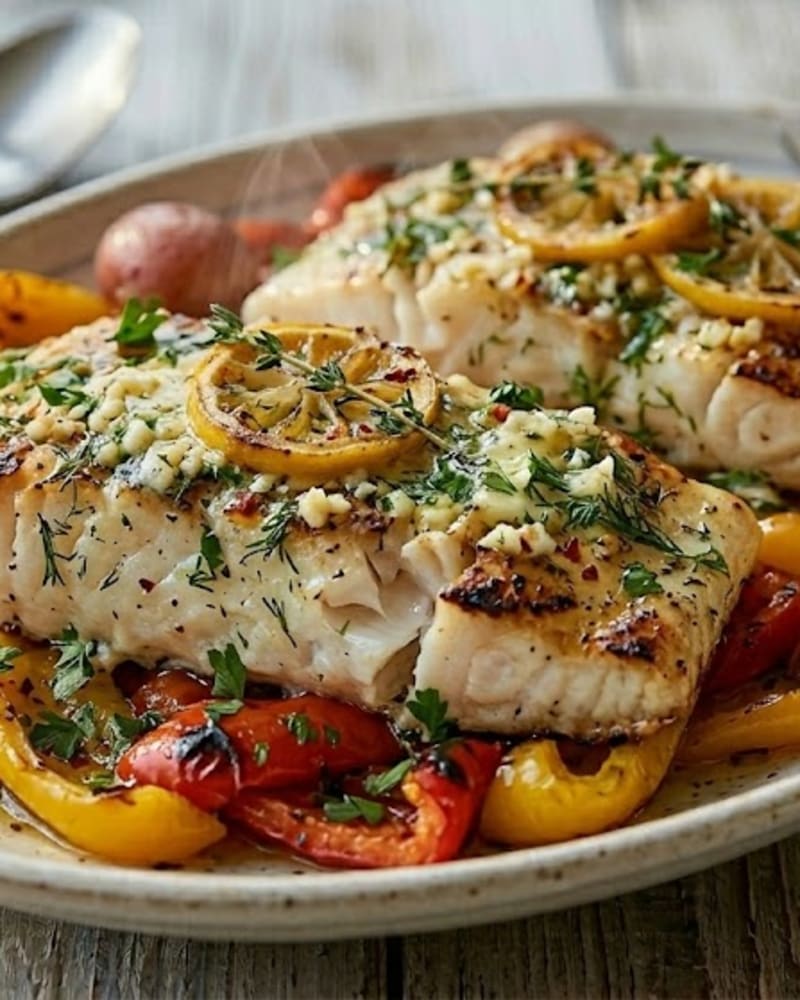
It is 6:10 on a Wednesday, the oven is hot, and you want something that feels like a date but costs you one baking sheet. Baked cod with lemon and herbs is 20 minutes from start to plate, and it tastes like you made a reservation. You swiped right on a fish dinner, which is the cooking equivalent of wearing the good shirt, and the agent took care of the shopping.
One sheet pan, one lemon, and a dinner that looks far more composed than it is.
Cod is mild, which is exactly why it works: it takes on lemon, garlic and capers without fighting for attention. Cherry tomatoes burst around it and make their own sauce, so there is nothing to whisk and no pan to scrub afterward. It suits a dinner for two just as well as a family of four, and it rewards you for paying attention for the last few minutes.
What you need
- 4 cod fillets
- 1 pint cherry tomatoes
- 2 tbsp capers
- 1 lemon
- 2 tbsp fresh parsley
- 2 tbsp olive oil
- 2 cloves garlic
- 1 tsp salt
- ½ tsp black pepper
How to make it
- Preheat oven to 400F. Mince the 2 cloves garlic, chop the 2 tbsp fresh parsley, and halve the 1 pint cherry tomatoes, about 5 minutes.
- Place the 4 cod fillets on a parchment-lined baking sheet and season with salt and black pepper.
- Drizzle the fillets with the 2 tbsp olive oil and juice from the 1 lemon.
- Scatter the halved cherry tomatoes around the fish and sprinkle everything with the minced garlic, capers, and chopped parsley.
- Bake 12-15 minutes until the cod flakes easily with a fork.
- Plate the cod with the roasted tomatoes and drizzle with any remaining lemon juice from the lemon.
Notes
Cooked leftovers keep three to four days refrigerated, per USDA FSIS. Leftover baked cod with lemon is gentler cold than reheated, so flake it over a salad or fold it into a warm grain bowl instead of putting it back under heat for long.
For doneness, USDA lists 145°F as the safe minimum internal temperature for fish. The fork test in the method gets you there for many fillets, and if you want certainty, an instant read thermometer slipped into the thickest part settles the question.
Thin fillets finish sooner than thick ones, so look at the tail ends first. The range in the method is 12 to 15 minutes, and the lower number is a reasonable time to start checking.
Cooked cod is not a great candidate for the freezer, since the texture tends to go watery, and it does not improve on day two. This is a dish for the night you make it, with a small, respectable lunch afterward.
If the fillets arrive from the freezer, thaw them fully in the fridge and pat them dry before they go on the pan. Water on the surface pools into the tomatoes and dilutes everything.
A small SwipeCart smirk: this is the dish you swipe in when the week has been a lot and you want to look like someone who has it together. The agent builds the list, and you take the credit. Light the candle if you must; the fish will not judge.
Swaps that actually work
The cod is the point, so keep a mild, firm white fish in its place. Haddock, halibut or pollock should behave similarly, though a very thick fillet will need more time than the method gives, so rely on the flake test rather than the clock.
Capers bring the briny punch. If you have none, chopped green olives work, or a pinch more salt and a little extra lemon. The brine is doing a job, so do not simply leave it out and hope.
Parsley can swap for dill, chives or a handful of basil. Use fresh, since dried herbs go dusty on the pan and will not give you that fresh, green lift at the end.
Cherry tomatoes can give way to halved grape tomatoes or sliced bell pepper if that is what the fridge holds. Peppers need a little longer to soften, so slice them thin.
The swap that costs you the dish in baked cod with lemon is bottled lemon juice. The method uses the juice of one lemon plus whatever is left on the pan, and the fresh version is brighter and not harsh.
If it goes wrong
The cod is dry and chalky. It stayed in the oven past the point where it flakes. Check at 12 minutes next time, and for tonight, spoon the tomato juices and a squeeze more lemon over it to bring it back.
It is watery. The fish or the tomatoes were wet going in. Tip the pan juices into a small saucepan and simmer them for a couple of minutes, then spoon them back over the cod.
The cod is still translucent in the middle. It needed a bit longer. Return the pan to the oven and check again at two minute intervals until it flakes and reads 145°F.
It tastes flat. This is usually salt. A pinch of flaky salt and a final squeeze of lemon over the plated fish will wake it up.
What to serve with it
The default for baked cod with lemon is rice or boiled potatoes, something plain that will catch the juices.
The better version is a bed of couscous or orzo with the pan juices stirred through, or a few slices of toasted crusty bread for mopping. The tomato and lemon juices on the pan are the best part of the dish, so give them somewhere to go.
The thing in the fridge that lifts it is a green salad with a sharp dressing, or a spoonful of plain yogurt stirred with a little lemon zest. Something cool and creamy next to the warm fish works well.
As a lunch the next day, flake the cold cod over greens with a bit of olive oil and call it a salad.
Why this one earns its place
Because this is a dinner that does a lot of work for very little. The ingredient list is short, the cleanup is one tray, and the result looks like you planned an evening around it. If you are choosing between another sad desk sandwich and baked cod with lemon and herbs, the second option has a lot more charm.
Swipe it into the week and the agent shops the fillets, the lemon and the capers, so the only thing left for you to bring is attention for the last few minutes. If you like fish at this weight, try baked salmon with lemon and dill. For another lemony weeknight plate, there is chicken piccata. And quick weeknight dinner ideas has more evenings like this one.
More like this: all American recipes in Crave Corner.